5 Easy DIY Dog Enrichment Games at Home to Keep Your Pup Mentally Stimulated
Your dog needs more than just walks to stay happy and healthy. Mental exercise through enrichment games helps reduce boredom, prevent destructive behavior, and keep your dog’s mind sharp. The good news is that creating engaging activities doesn’t require expensive toys or special training.
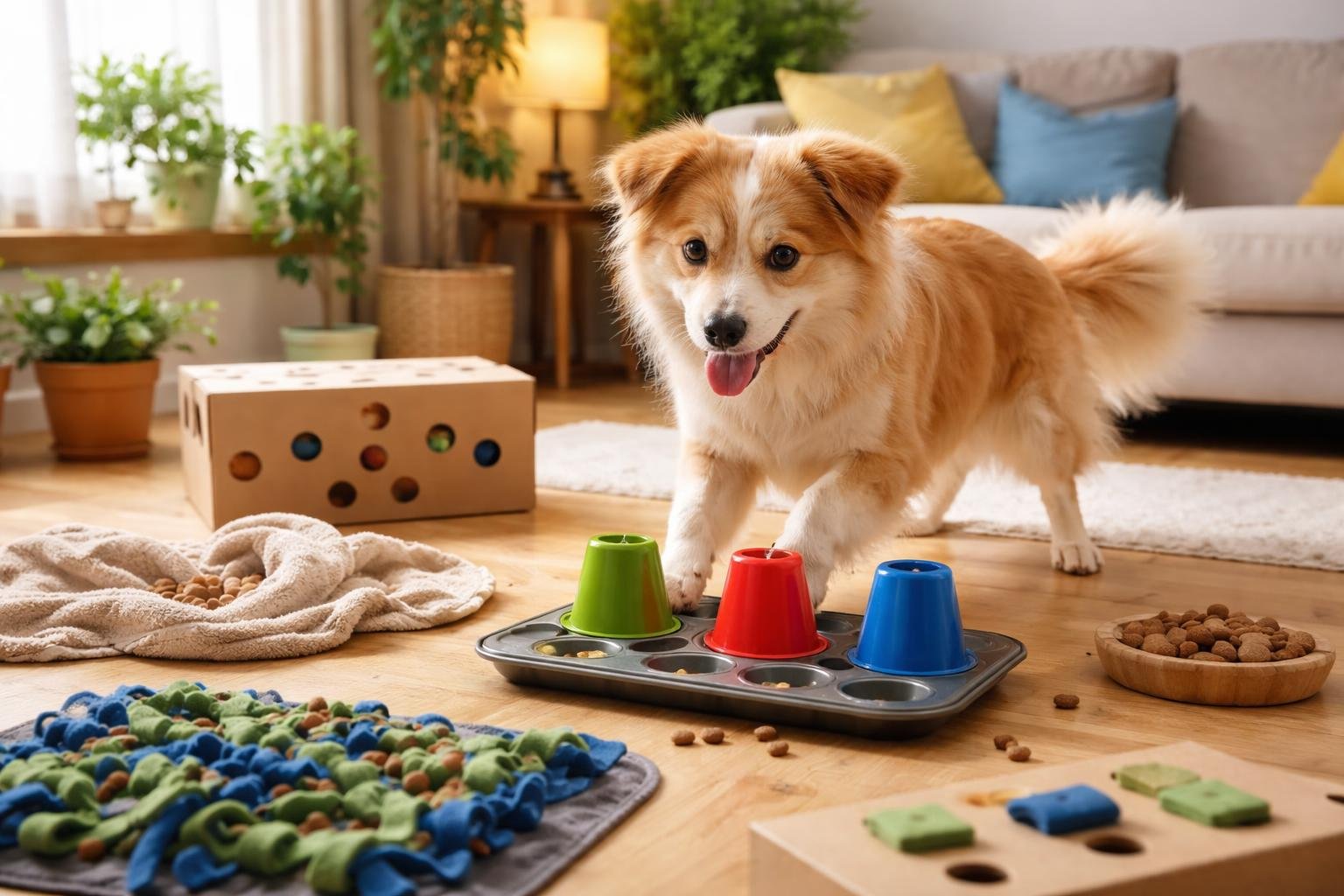
Simple household items can be transformed into brain-stimulating games that tap into your dog’s natural instincts. From puzzle challenges to scent work, these activities provide the mental workout dogs crave while strengthening the bond between pet and owner.
This guide covers five practical enrichment games anyone can set up at home using items already lying around the house. Each game targets different skills and senses, from problem-solving to tracking scents to physical coordination. Whether dealing with a high-energy puppy or a calm senior dog, these adaptable activities offer something for every breed and personality.
Understanding the Benefits of Enrichment for Dogs
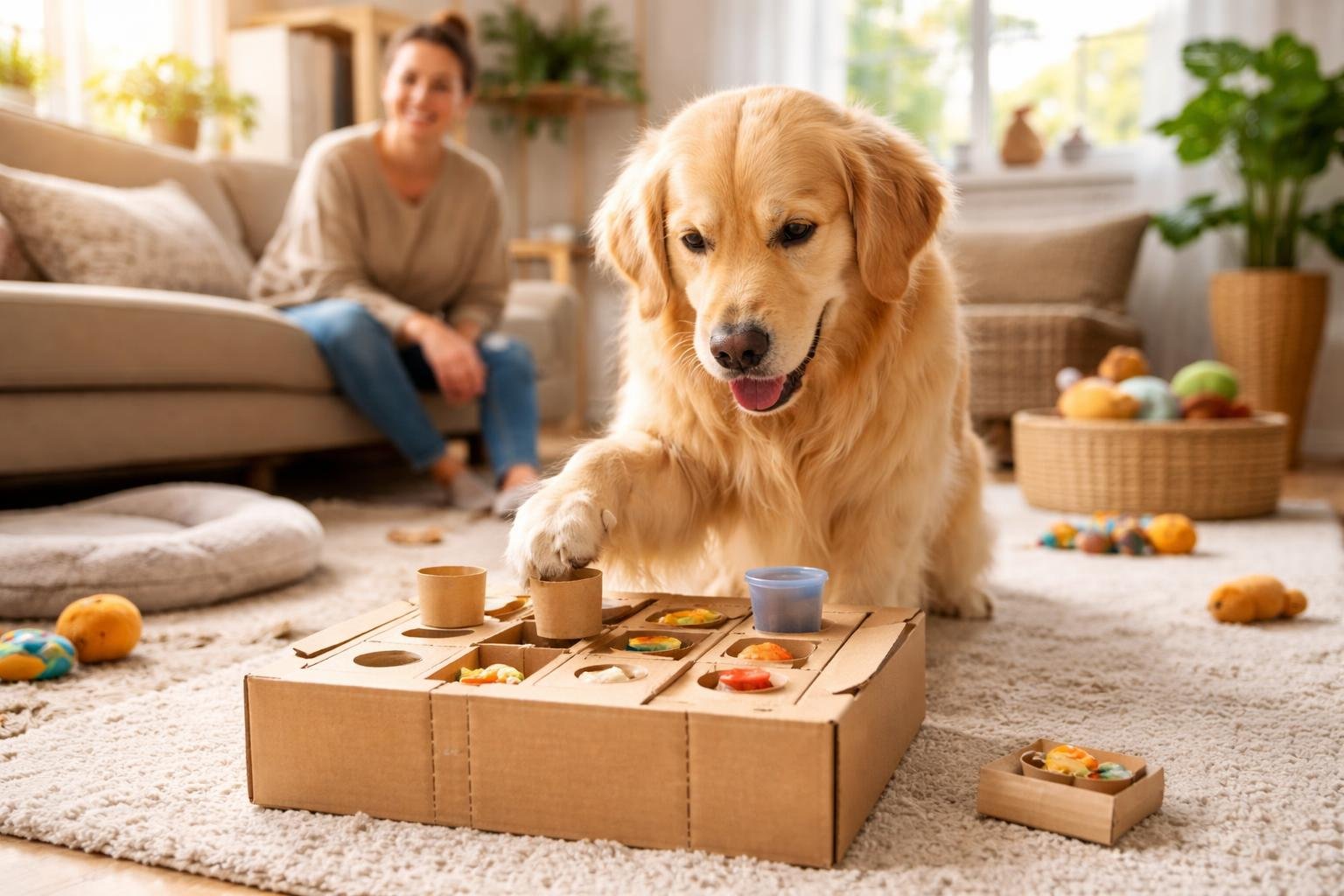
Enrichment activities strengthen a dog’s mental capabilities, reduce problem behaviors, and promote physical health through engaging play. These benefits work together to create a calmer, more confident pet.
Cognitive Development and Mental Stimulation
Mental stimulation through enrichment activities improves a dog’s problem-solving abilities and overall brain function. Dogs who regularly engage in brain games develop better focus and learn new commands more quickly. These activities challenge them to think, which keeps their minds sharp throughout their lives.
Enrichment builds confidence in shy or nervous dogs. When a dog successfully completes a puzzle or finds hidden treats, they gain a sense of accomplishment. This positive reinforcement helps them approach new situations with less fear.
Regular mental stimulation is as important as physical exercise for dogs. A mentally tired dog is often more content and relaxed than one who only gets physical activity. Brain work can tire out a dog just as effectively as a long walk.
Reducing Boredom and Unwanted Behaviors
Bored dogs often develop destructive behaviors like chewing furniture, excessive barking, or digging. Enrichment activities give dogs an appropriate outlet for their energy and natural instincts. When dogs have interesting tasks to complete, they’re less likely to create their own entertainment through unwanted behaviors.
Mental stimulation reduces anxiety and stress in dogs. Enrichment activities provide a healthy way for dogs to release pent-up energy and nervous tension. This leads to calmer behavior at home and fewer stress-related issues.
Dogs have natural instincts for activities like sniffing, chewing, and foraging. Enrichment allows them to engage in these innate behaviors in controlled, positive ways. Meeting these natural needs helps dogs feel physically, emotionally, and mentally satisfied.
Physical Exercise Through Play
Many enrichment activities combine mental challenges with physical movement. Games that involve searching for treats encourage dogs to move around their environment. This dual benefit provides both brain work and body exercise in a single activity.
Enrichment activities can slow down fast eaters, which aids digestion and prevents stomach issues. Puzzle feeders and food-dispensing toys make dogs work for their meals at a healthier pace.
Interactive enrichment games promote healthy movement patterns. Dogs stretch, twist, and use different muscle groups while playing with enrichment toys or completing obstacle courses. This gentle physical activity complements regular walks and playtime.
Materials and Preparation Checklist
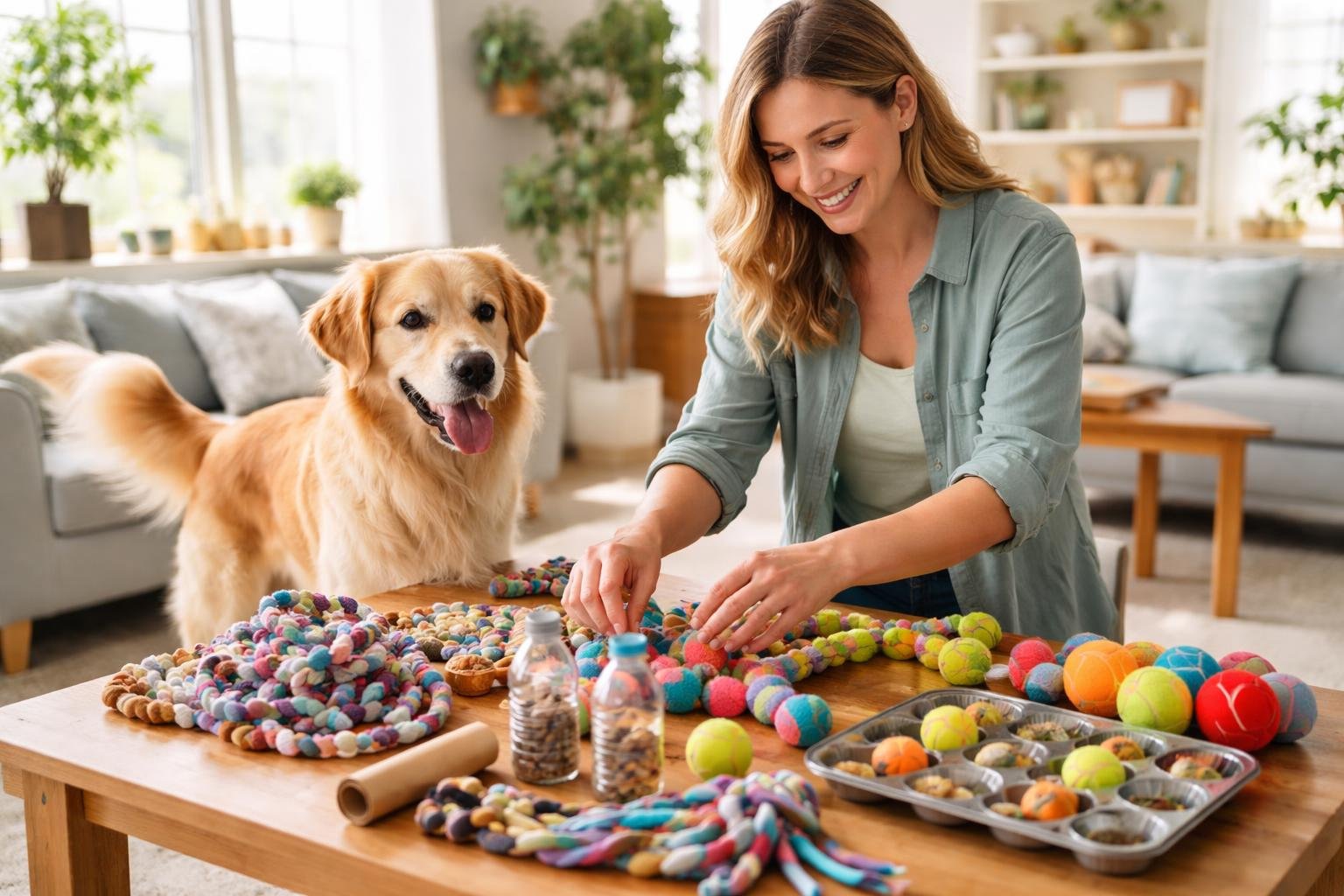
Most DIY dog enrichment games require items already sitting in closets, recycling bins, or kitchen drawers. Understanding which materials work best and how to use them safely helps create effective games without unnecessary purchases or risks.
Common Household Items to Use
Fabric and textiles form the foundation of many enrichment projects. Old t-shirts, fleece blankets, towels, and fabric scraps work well for braiding, knotting, and hiding treats. Cut fleece into 8-inch strips for snuffle mats or use whole towels for simple wrapping games.
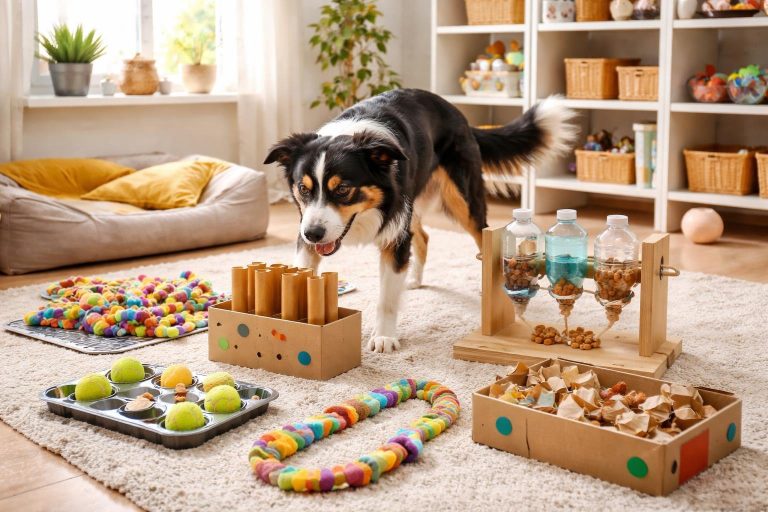
Containers and boxes offer endless puzzle possibilities. Cardboard boxes, muffin tins, plastic bottles (caps removed), paper towel tubes, and egg cartons create hiding spots for treats. Tennis balls fit perfectly into muffin tin cups as cover pieces.
Kitchen supplies double as enrichment tools. Rubber drain mats with holes serve as snuffle mat bases. Measuring cups, wooden spoons, and silicone baking mats add texture variety to games.
The best materials cost nothing and require minimal preparation. Most items need basic cutting with scissors or simple assembly by hand. Gathering these supplies before starting keeps projects moving smoothly.
Safety Tips for Homemade Dog Games
Remove all hazards before giving dogs any homemade toy. Cut off bottle caps, labels, and plastic rings that dogs could swallow. Check fabric for loose threads or small buttons that might detach. Cardboard should have tape and staples removed.
Supervise initial play sessions with every new enrichment game. Some dogs shred materials aggressively while others play gently. This observation determines whether a toy remains safe for unsupervised use.
Match difficulty to the dog’s skill level to prevent frustration or giving up. Start simple and increase challenge gradually as the dog learns how the game works.
Replace worn or damaged toys immediately. Frayed fabric, torn cardboard, or cracked plastic bottles should go straight into the trash.
Puzzle Treat Dispenser Challenges
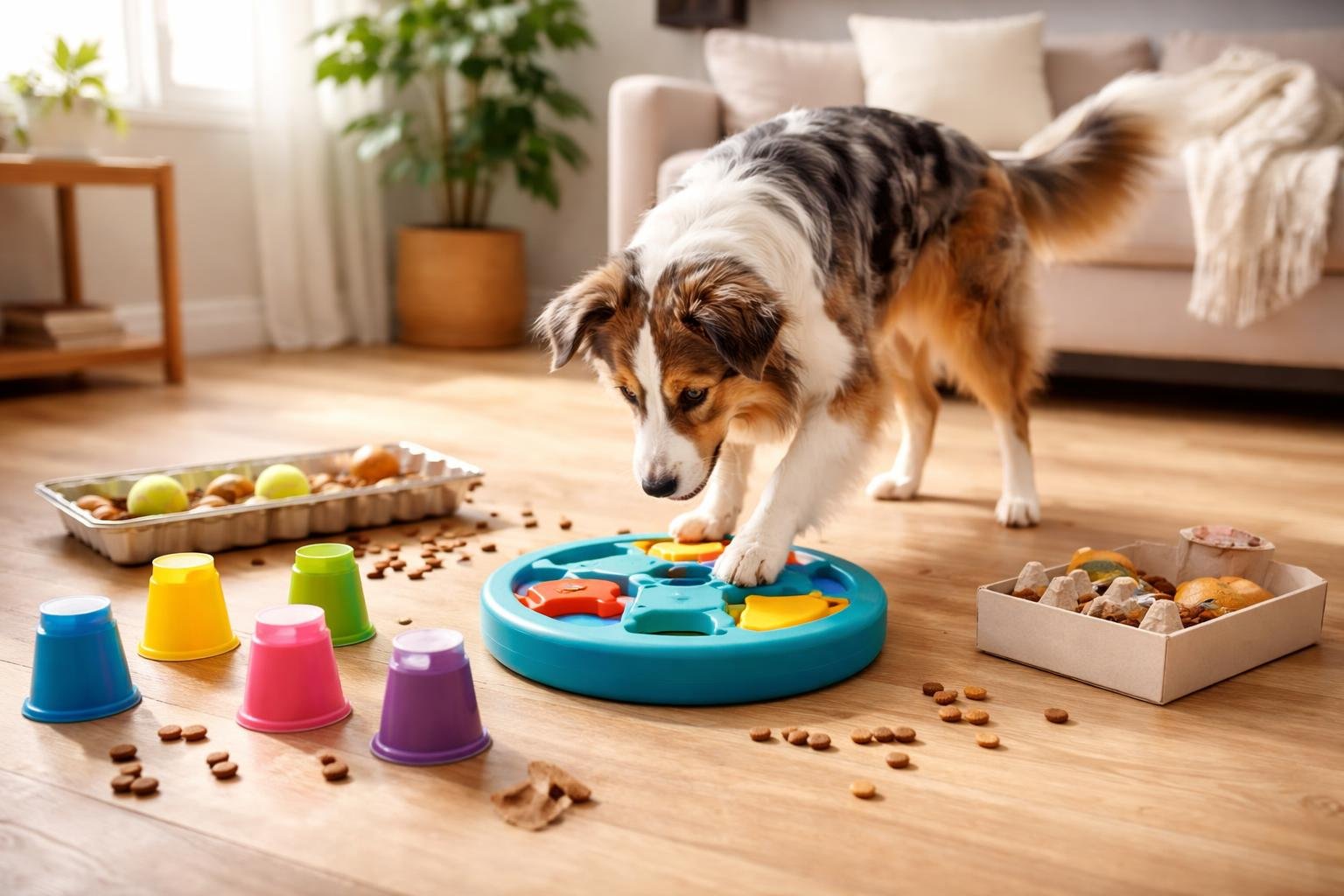
Treat dispensers turn mealtime into an engaging activity that makes dogs work for their food. These puzzles slow down eating while providing mental exercise that can tire out a dog just as much as physical activity.
Making a Bottle Spinner Game
A bottle spinner game requires a plastic bottle, a wooden dowel or sturdy stick, and two supports to hold the dowel in place. The bottle hangs horizontally on the dowel and spins when the dog nudges it with their nose or paw.
To build this game, drill or poke holes in the bottle cap and bottom that are slightly larger than the dowel diameter. The holes should allow the bottle to spin freely. Poke additional small holes in the sides of the bottle so treats can fall out when it rotates.
Mount the dowel between two stable supports like chair legs or a simple wooden frame. Thread the bottle onto the dowel and secure the ends. Fill the bottle with dry treats or kibble through the main opening.
Dogs learn to spin the bottle with their nose or paw to release treats. Start with larger holes if needed and make them smaller as your dog gets better at the game.
Creating a Muffin Tin Puzzle
A muffin tin puzzle uses a standard 12-cup muffin pan and tennis balls or similar-sized toys as covers. This simple setup creates an easy entry-level puzzle for dogs new to enrichment activities.
Place treats or kibble in several cups of the muffin tin. Cover each cup with a tennis ball, rubber ball, or crumpled paper. Dogs must remove each ball to access the hidden treats underneath.
Start by filling only half the cups so success comes easier at first. Gradually increase difficulty by filling more cups or using tighter-fitting balls. Some owners add a snuffle element by placing small fabric pieces in the cups along with treats.
This puzzle works well for dogs of all sizes and skill levels. It teaches problem-solving without frustration since the solution stays fairly obvious.
Scent Games to Engage Your Dog’s Nose
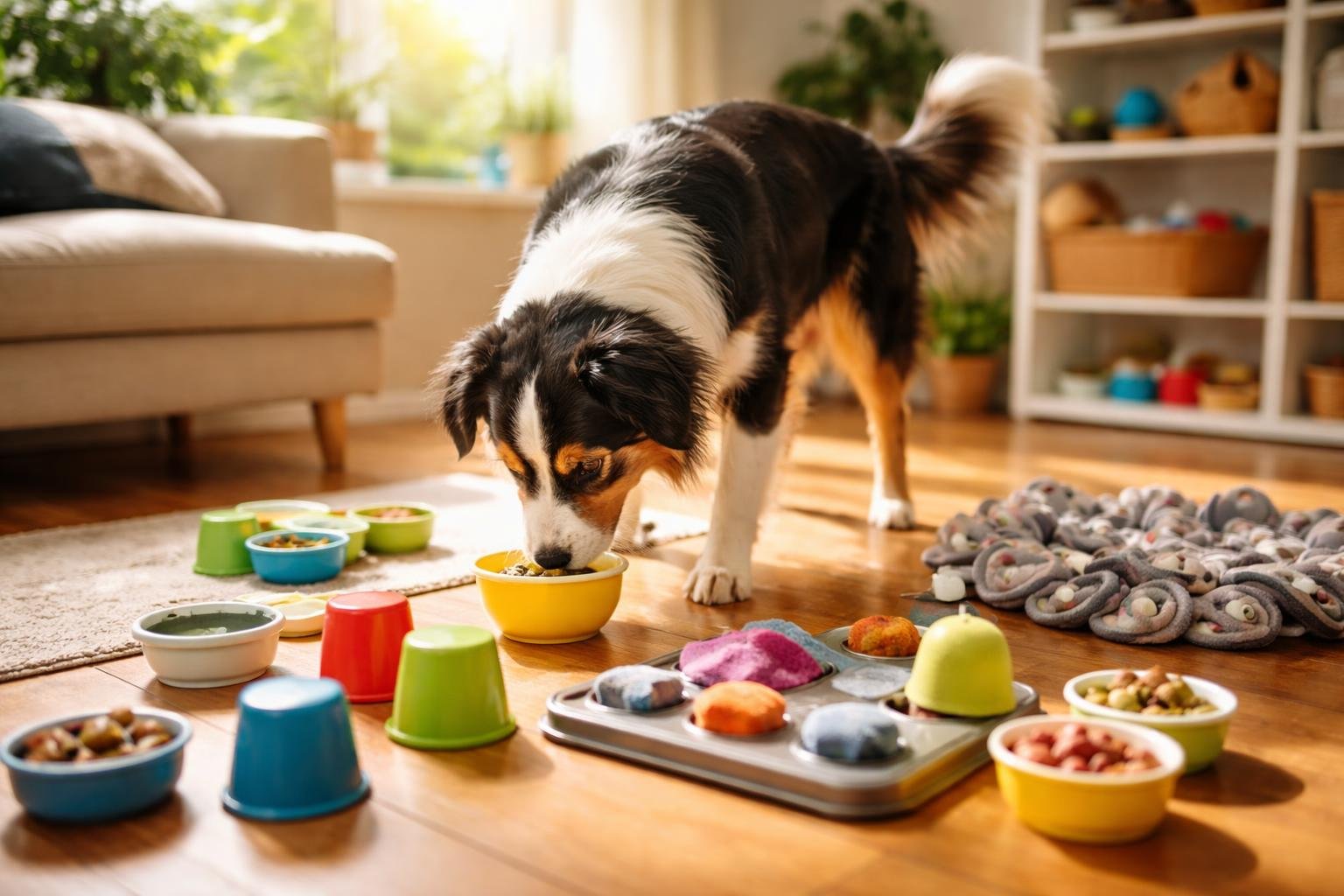
Dogs have up to 300 million scent receptors in their noses, making sniffing one of their strongest natural abilities. These games tap into that instinct to provide mental exercise that can tire a dog out as much as physical activity.
Simple Find-the-Treat Activity
This game requires just treats and a few household items like cups, boxes, or towels. The owner starts by letting their dog watch as they hide a treat under one of three cups. The dog then searches and indicates which cup holds the treat.
Once the dog understands the game, the difficulty increases. The owner can add more cups, use opaque containers, or hide treats while the dog waits in another room. Cardboard boxes work well for this variation.
Game Progression:
- Start with 2-3 containers
- Use high-value treats with strong scents
- Gradually increase hiding spots to 5-8 locations
- Hide treats in different rooms
The activity works for dogs of all ages and sizes. Older dogs benefit from the mental challenge without physical strain.
DIY Scent Trail Adventures
A scent trail mimics tracking work that many dogs naturally enjoy. The owner drags a treat along the floor to create a scent path, then places several treats at the end. The dog follows the scent line to find the reward.
Inside the home, owners can create trails through hallways, around furniture, and between rooms. The trails should start short at 5-10 feet and extend longer as the dog improves. Outside trails work well in yards using grass or dirt surfaces.
Advanced versions include multiple trail branches or aging the trail by waiting 10-15 minutes before releasing the dog. Some owners use specific scented items like essential oil on a cloth instead of food to build scent discrimination skills.
Interactive Tug and Fetch Variations
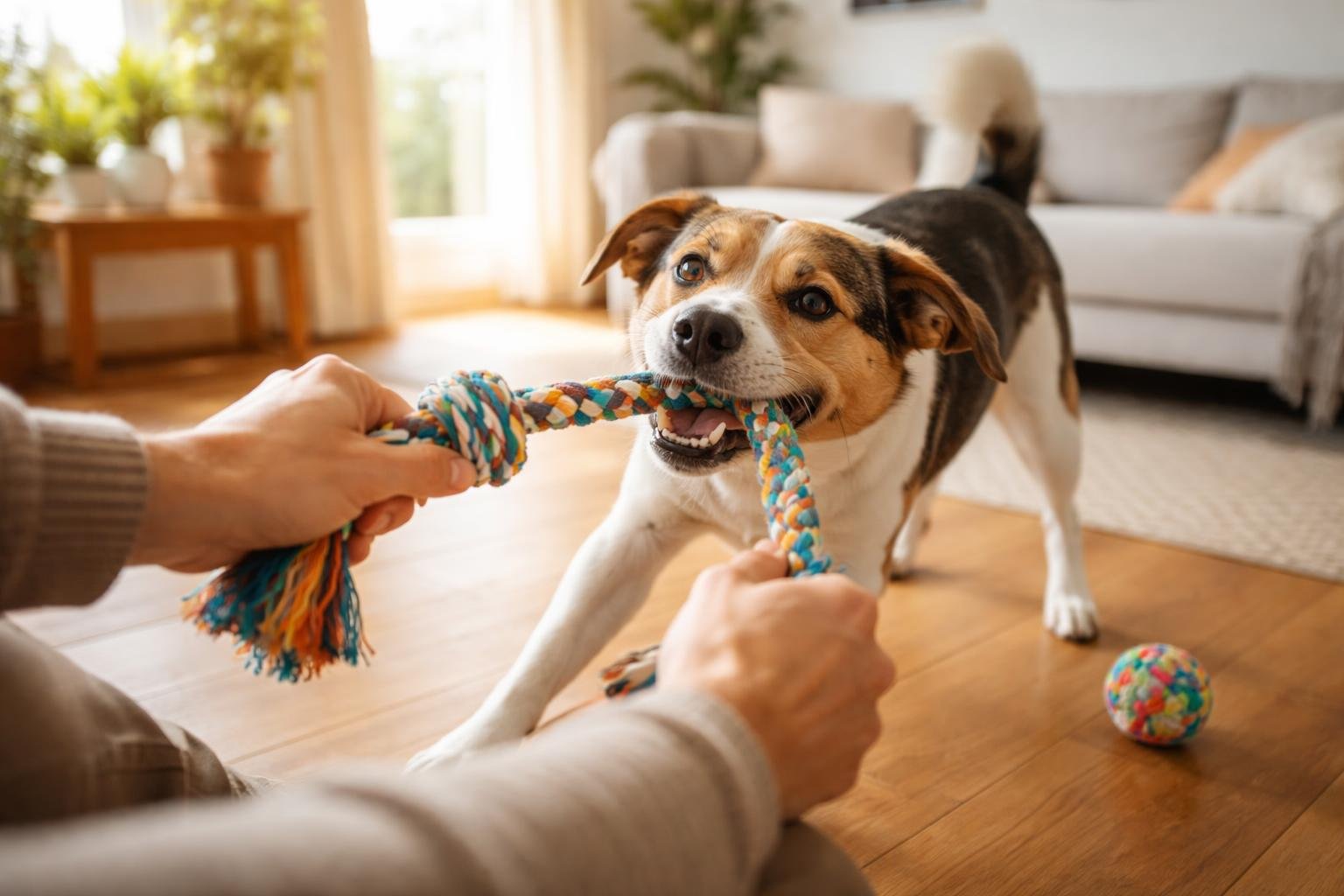
Tug and fetch games provide both physical exercise and mental stimulation when adapted with simple modifications. These classic activities become enrichment tools through DIY elements that challenge a dog’s problem-solving skills.
Homemade Tug Rope Instructions
A basic tug rope requires three strips of fleece fabric, each about 2 inches wide and 3 feet long. The owner should tie all three strips together at one end with a tight knot, leaving about 2 inches of fabric above it.
The three strips get braided together tightly from top to bottom. At the end, another secure knot holds the braid in place. For added texture and grip, tennis balls can be incorporated by cutting small slits and threading the fabric through before braiding.
Materials needed:
- 3 fleece strips (2″ x 3′ each)
- Optional: 1-2 tennis balls
- Scissors
The rope should be checked regularly for fraying or loose threads. Dogs should always be supervised during tug games to prevent swallowing fabric pieces. This toy works well for both solo chewing and interactive play sessions.
Creative Indoor Fetch Games
Indoor fetch requires modifications to keep the game safe and engaging in limited space. A soft, lightweight ball or rolled-up sock works better than hard toys that could damage furniture or walls.
Hallway bowling involves setting up empty plastic bottles as pins and having the dog retrieve the ball after each throw. Stair fetch uses carpeted stairs where the owner tosses a toy up or down for the dog to retrieve, adding physical challenge.
A scent-based fetch game hides the toy in different rooms between throws. The dog must use their nose to locate it before bringing it back. This adds mental stimulation to the physical activity of running.
Obstacle Course and Agility Ideas
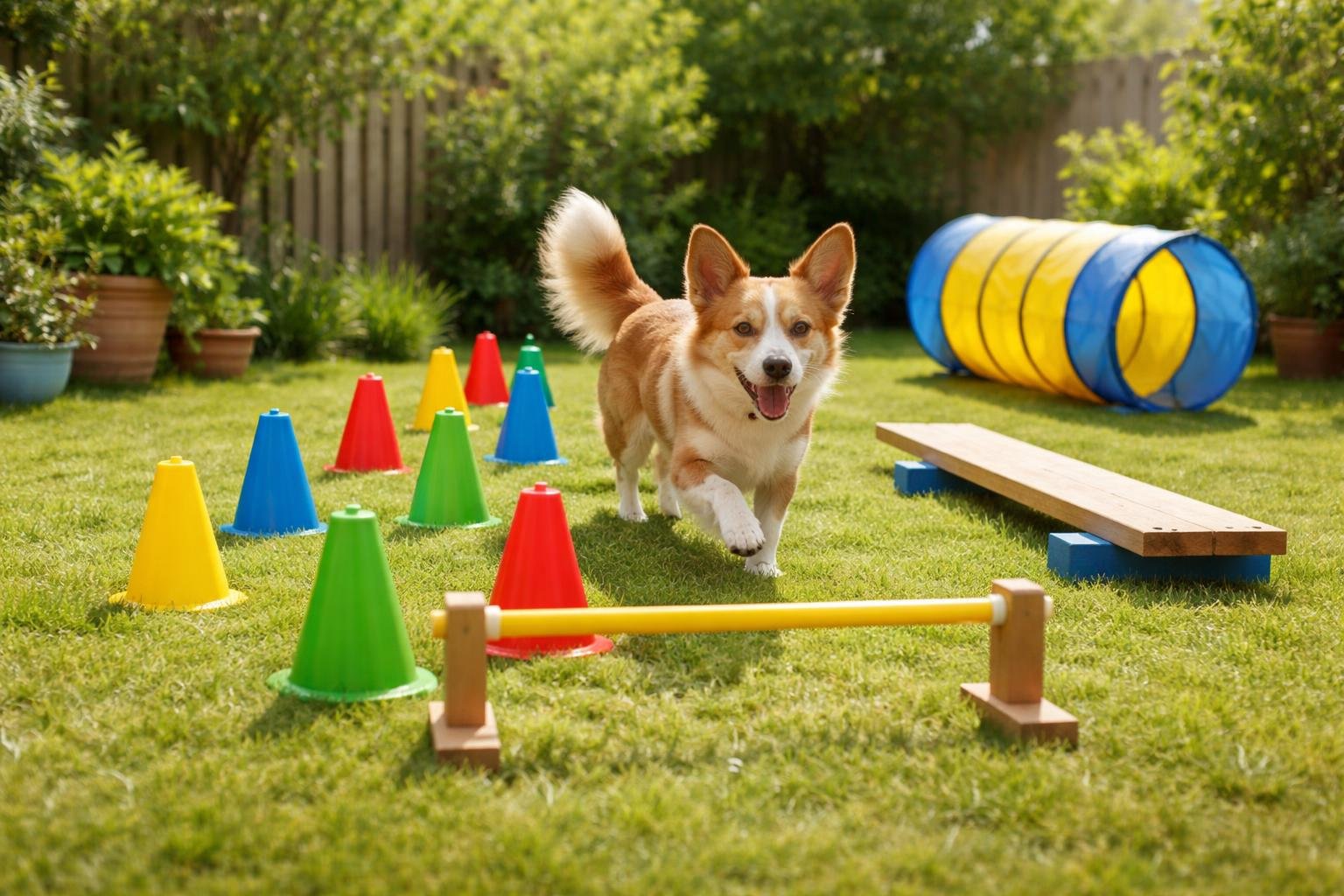
Dog agility courses provide both mental stimulation and physical exercise using simple household items and basic materials. These setups work in living rooms, hallways, and small apartments with minimal equipment.
Building a Basic Indoor Course
A basic indoor agility course requires just a few common items to get started. Broomsticks balanced on stacks of books create simple jumps that dogs can hop over. Chairs placed in a row with a blanket draped over them form a tunnel for dogs to crawl through.
Plastic cones or water bottles set up in a straight line work as weave poles. Dogs learn to zigzag through these obstacles, which builds coordination and focus. A sturdy cardboard box with both ends cut out makes another tunnel option that takes up less space.
For dogs new to agility, start with just two or three obstacles. Place them several feet apart to give the dog room to move between each station. Use treats or toys to guide the dog through each obstacle one at a time before linking them together into a complete course.
Adapting Obstacles for Small Spaces
Small living areas still offer enough room for meaningful agility activities. A single hallway becomes a course by placing cushions on the floor for the dog to step over. The space between furniture pieces serves as natural pathways that guide movement patterns.
Folded towels arranged in a line create low hurdles that fit in tight spaces. A hula hoop held upright or leaned against a wall teaches dogs to jump through openings. Even a yoga mat laid flat can become a “target” where dogs learn to place their paws or lie down on command.
Vertical space works when floor space is limited. Teach dogs to place their front paws on a low ottoman or step stool. This builds strength and body awareness without requiring much room. Most obstacles can be set up and taken down in under five minutes, making them practical for daily use in apartments or small homes.
Tips for Success and Progression
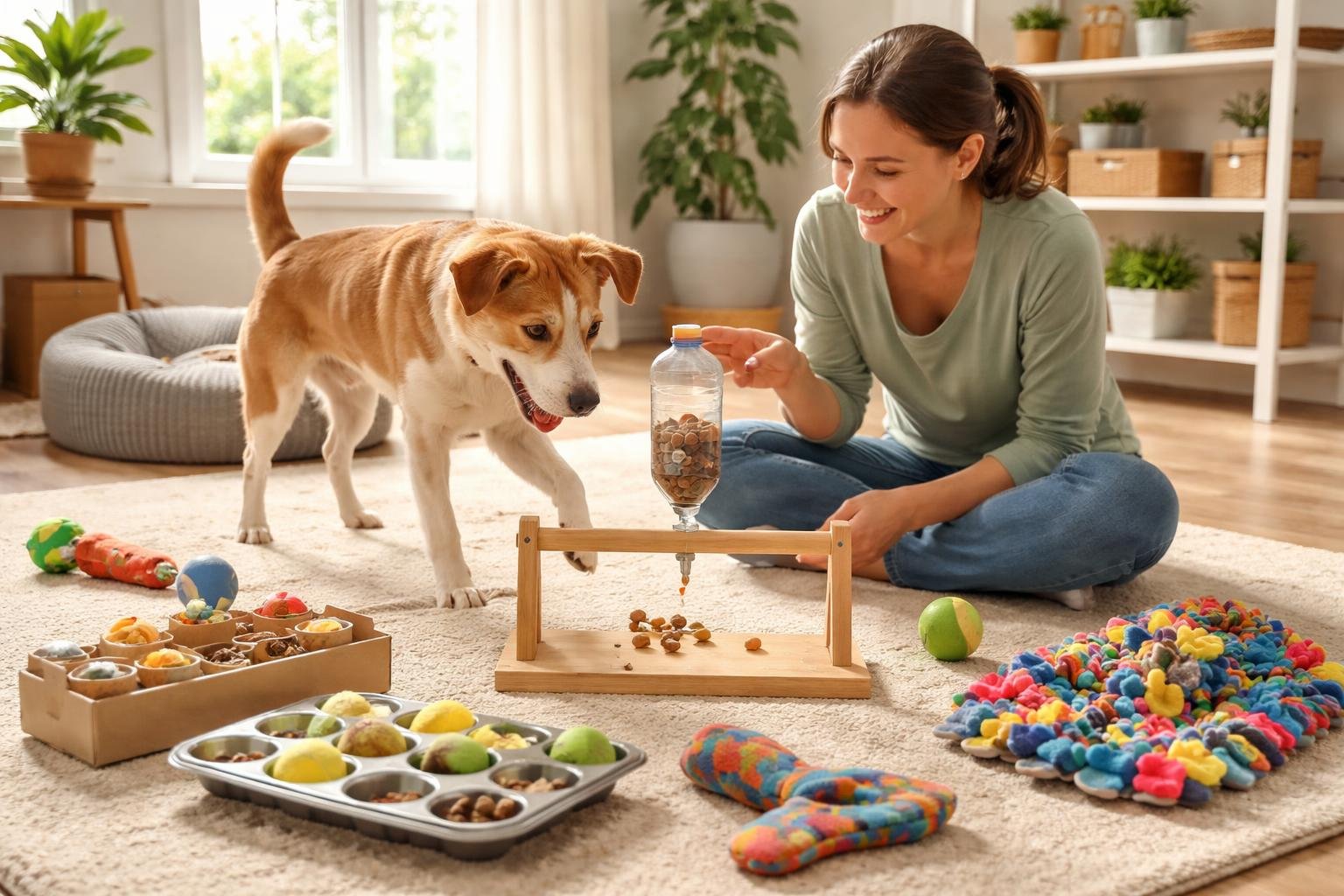
Success with DIY enrichment games depends on reading a dog’s signals, making activities neither too easy nor too hard, and creating a positive experience through guidance and encouragement.
Monitoring Your Dog’s Enjoyment
A dog’s body language reveals whether an enrichment game is working well. Signs of enjoyment include a wagging tail, focused attention on the activity, and persistent problem-solving attempts. Dogs who are enjoying themselves will return to the game even after finding treats or completing a challenge.
Warning signs indicate when a dog is frustrated or disinterested. These include walking away repeatedly, whining, excessive panting, or aggressive behavior toward the game. Some dogs may also show stress through yawning, lip licking, or pinned-back ears.
Owners should watch how long their dog engages with each game. A good enrichment activity holds a dog’s attention for 5-15 minutes. Sessions that are too short may be too easy, while those causing frustration after 2-3 minutes need simplification.
Adjusting Difficulty Levels
Games should start simple and gradually increase in complexity. For a muffin tin puzzle, begin with treats visible in just 2-3 cups with loosely placed tennis balls. As the dog masters this, add balls to more cups and press them down more firmly.
Most dogs need 3-5 successful sessions at one level before moving up. Advancing too quickly causes frustration and can make dogs give up entirely.
Difficulty can be lowered by using smellier treats, reducing the number of steps needed, or providing more obvious hiding spots. It increases through tighter wrapping, more complex obstacles, or less aromatic rewards.
Supervision and Positive Reinforcement
Dogs should never be left alone with DIY enrichment games that contain small parts, fabric pieces, or anything they might swallow. Cardboard boxes, towels, and plastic bottles all pose choking hazards without supervision.
Praise and encouragement keep dogs motivated during enrichment activities. Owners should use an excited voice when their dog makes progress, even if they haven’t completed the entire challenge yet.
Treats work best when they match the difficulty level. High-value rewards like cheese or chicken suit harder games, while regular kibble works for easier activities. The reward itself becomes part of the enrichment experience when dogs must work to access it.
Frequently Asked Questions
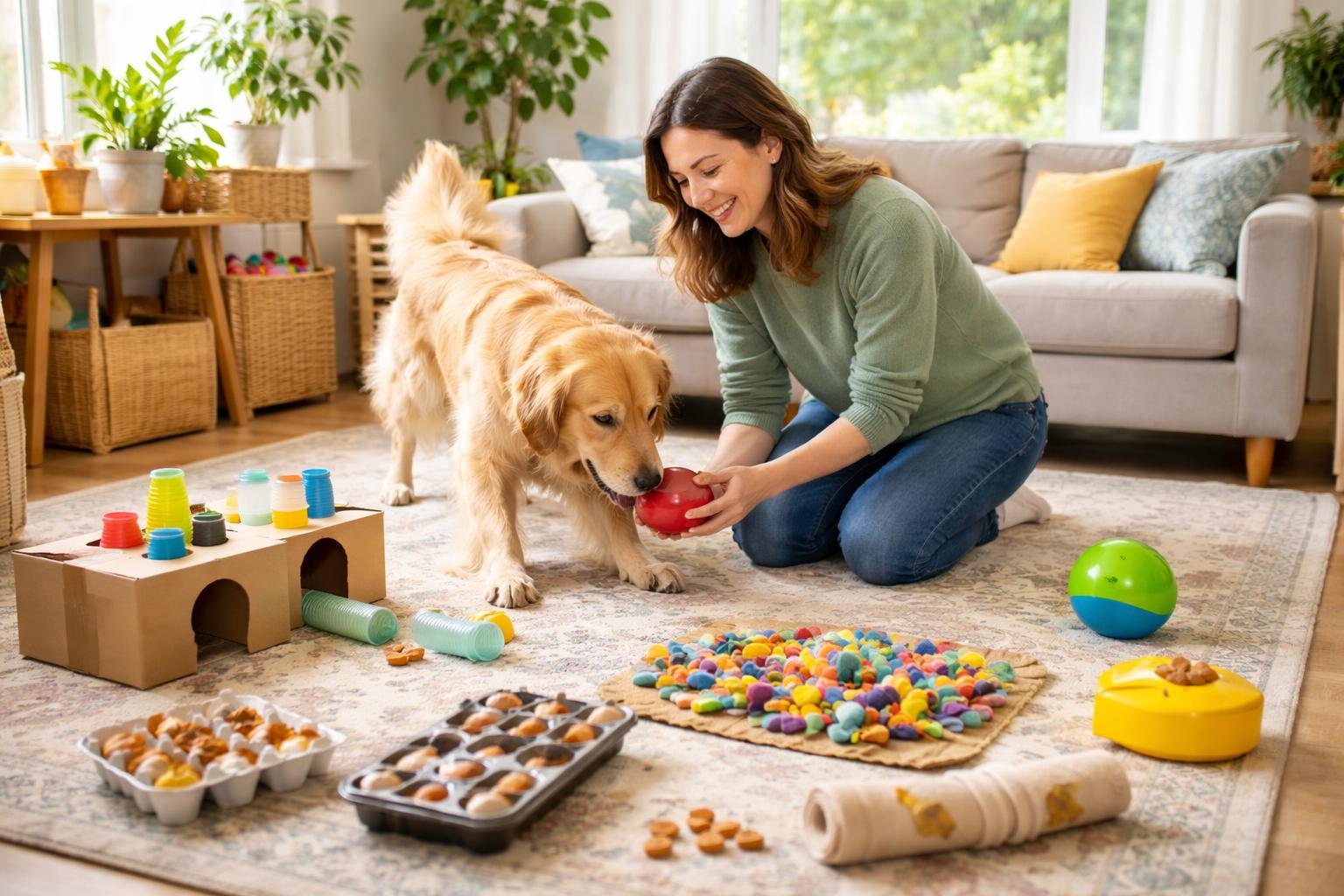
Many dog owners have practical questions about creating enrichment activities at home. The answers below cover indoor entertainment options, work-from-home solutions, non-food enrichment methods, and the core principles that guide effective canine enrichment.
What are some easy DIY enrichment activities to keep a dog entertained indoors?
A muffin tin puzzle offers simple indoor entertainment. Dog owners place treats or kibble in the cups and cover them with tennis balls. The dog must remove each ball to find the reward.
Cardboard box shredding provides another indoor option. Owners can place treats inside empty boxes and let their dog tear them apart. This activity satisfies natural foraging instincts.
A towel roll game works well in small spaces. Owners spread treats on a flat towel, roll it up loosely, and let the dog unroll it to find the food.
Which homemade enrichment games can help a dog stay busy while I’m at work?
Frozen treat puzzles keep dogs occupied for extended periods. Owners can freeze wet dog food or peanut butter in a Kong or similar container. The dog spends time licking and chewing to reach the frozen contents.
A snuffle mat made from fleece strips tied to a rubber mat creates long-lasting entertainment. Owners hide kibble or treats deep in the fabric strips. Dogs use their nose to search through the mat and find each piece.
Puzzle feeders made from plastic bottles also work well. Owners cut holes in empty water bottles and fill them with kibble. As the dog rolls the bottle, food falls out gradually.
What are effective dog enrichment ideas that don’t rely on food or treats?
Scent games using essential oils or spices provide mental stimulation without food. Owners can hide cotton balls dabbed with dog-safe scents around the house. The dog searches for each scented item.
Tug toys made from braided old t-shirts offer physical and mental engagement. Dogs enjoy the pulling game and the texture of the fabric. This activity builds the bond between dog and owner.
Hide and seek games work well for non-food enrichment. One person holds the dog while another hides in the house. When released, the dog uses scent and problem-solving to locate the hidden person.
How do I make a simple towel-based enrichment game for my dog at home?
The basic towel roll requires one flat towel and small treats. Owners lay the towel flat on the floor and scatter treats across the surface. They then roll the towel from one end to the other, creating a loose cylinder.
The dog unrolls the towel by nudging, pawing, and pulling it apart. Treats fall out as the towel opens up. This game takes less than two minutes to prepare.
For increased difficulty, owners can tie knots in the towel before rolling it. Dogs must work harder to access the hidden treats. Multiple towels can be layered for advanced dogs.
What is one easy enrichment game I can set up at home with common household items?
The cup game requires three plastic cups and one treat. Owners place a treat under one cup while the dog watches. They then shuffle the cups around and let the dog choose which cup hides the treat.
This game exercises the dog’s memory and focus. It takes only a few seconds to set up. Most dogs learn the concept quickly and enjoy the challenge.
Owners can increase difficulty by using more cups or faster shuffling. The game works on any flat surface and requires no special preparation.
What are the five pillars of enrichment for dogs, and how can they guide daily activities?
The five pillars include physical, mental, sensory, social, and nutritional enrichment. Each pillar addresses different aspects of a dog’s well-being. Balanced enrichment incorporates elements from multiple pillars.
Physical enrichment involves activities like walks, play, and agility games. Mental enrichment includes puzzle toys and training exercises. Sensory enrichment exposes dogs to different sights, sounds, and smells.
Social enrichment covers interactions with people and other dogs. Nutritional enrichment turns feeding time into an engaging activity through puzzle feeders and food-dispensing toys. Dog owners should aim to include aspects from each pillar throughout the week rather than focusing on just one area.