How To Tell Your Dog You Love Them In a Way They Can Understand: Science-Backed Communication Methods
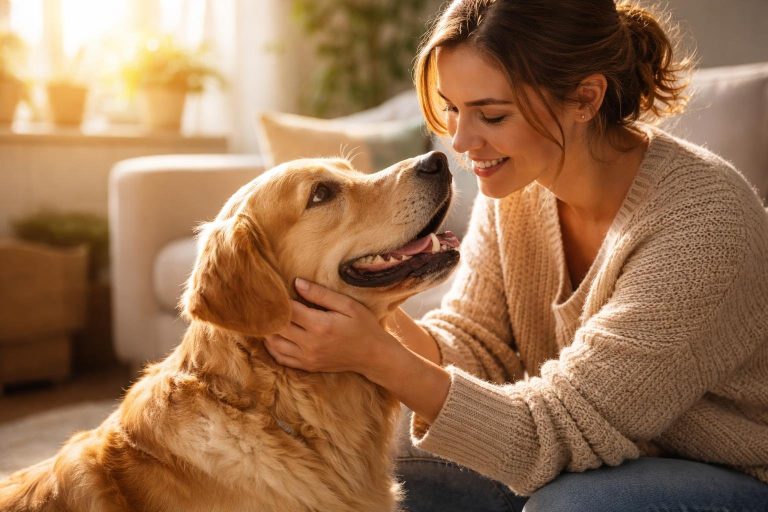
Dogs don’t understand the words “I love you,” but they’re experts at reading actions, energy, and body language. The key to showing dogs affection in a way they truly understand is through consistent actions like physical touch, quality time together, reliable care, and responding to their unique communication style. While humans express love through words and gifts, dogs interpret affection through how their owners behave around them and care for their needs.
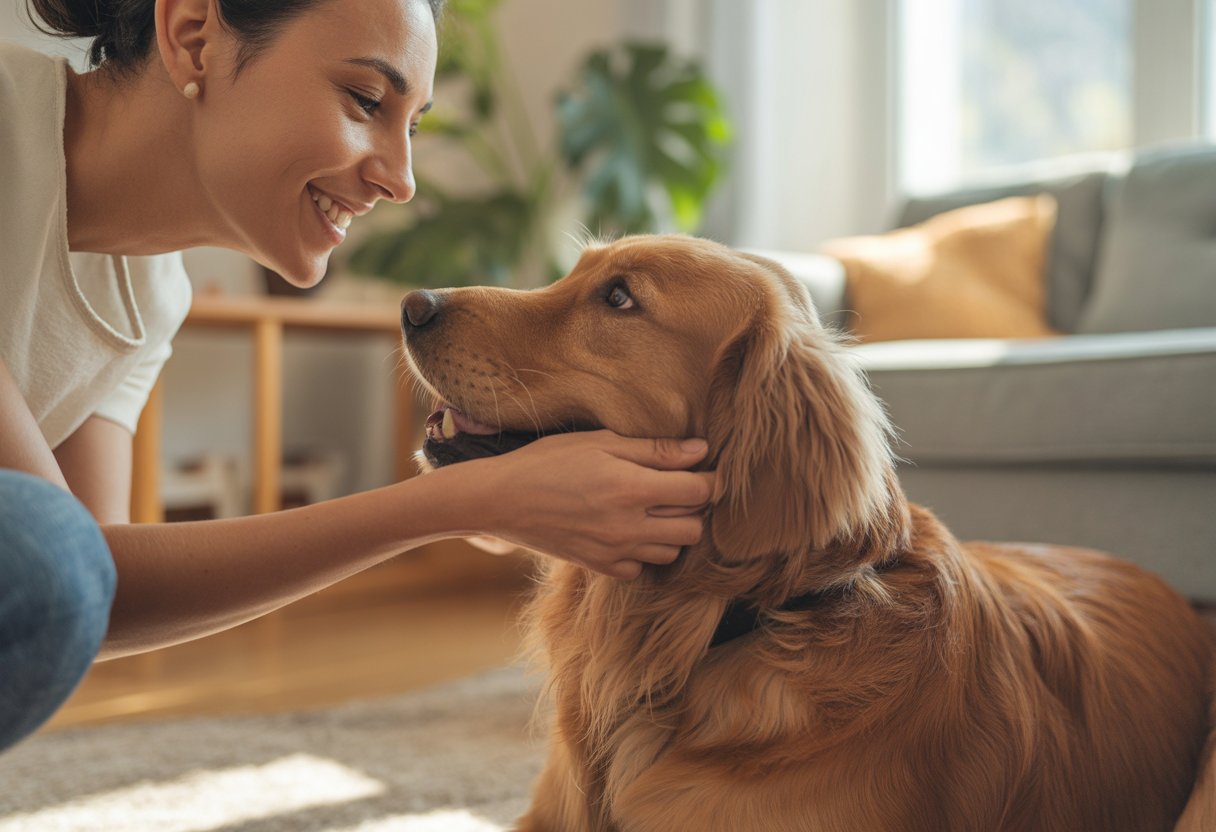
The bond between dogs and their owners grows stronger when people learn to communicate on a dog’s level. This means paying attention to what makes each dog feel safe, happy, and valued. Some dogs crave physical affection while others prefer playtime or simply being near their favorite person.
Understanding how dogs perceive the world helps owners build deeper connections with their pets. From reading body language to providing proper nutrition, there are many ways to demonstrate love that dogs can actually recognize and appreciate. Learning these methods creates a relationship based on trust, consistency, and mutual understanding.
Understanding Canine Communication
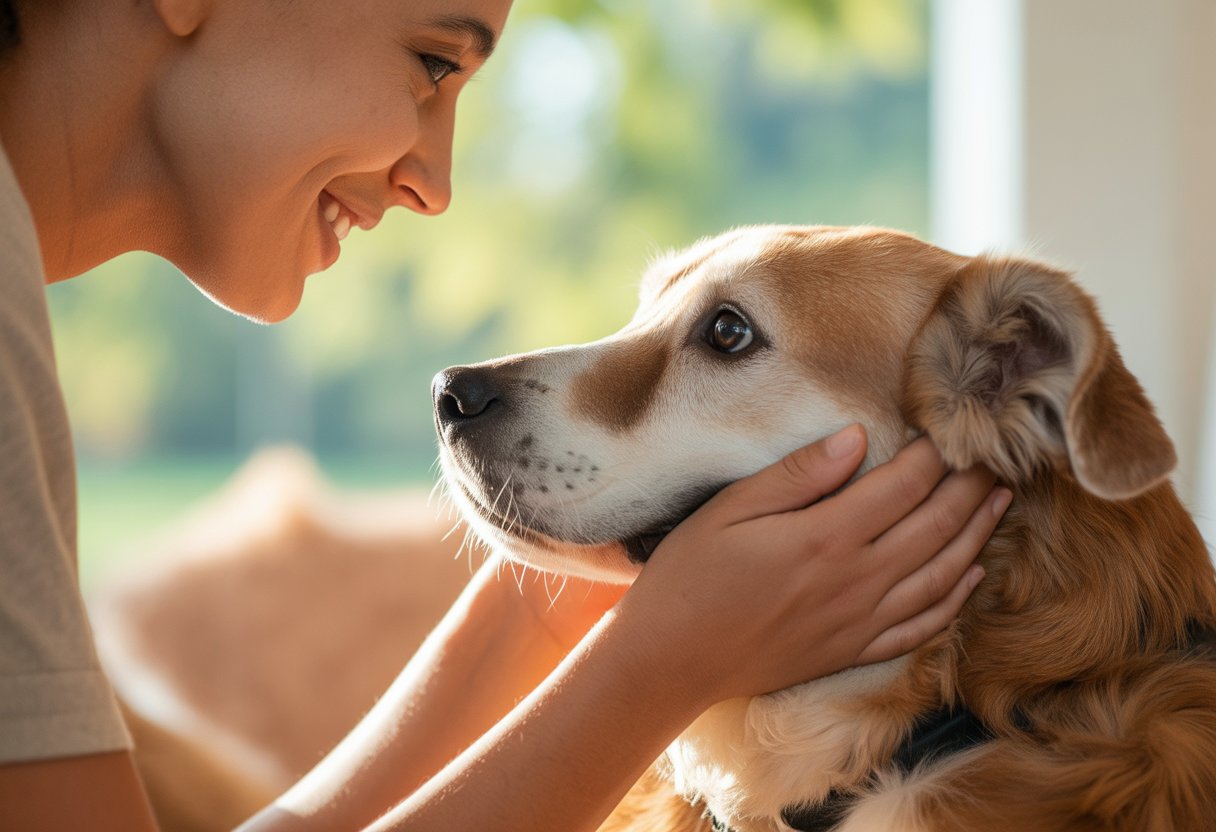
Dogs use their entire body to express emotions and intentions, from the position of their ears to the way they hold their tail. Learning to read these signals helps owners respond appropriately and build stronger connections with their pets.
Interpreting Body Language
A dog’s posture reveals their emotional state and comfort level. A relaxed dog stands with loose muscles, an open mouth, and soft eyes. Their weight distributes evenly across all four paws.
Stress or anxiety shows through different signals. Dogs might lower their body, tuck their tail, or pin their ears back. They may also lick their lips repeatedly or yawn when not tired.
Common body positions include:
- Play bow: Front legs stretched forward, rear end up, inviting interaction
- Stiff stance: Tense muscles indicating alertness or potential aggression
- Belly exposure: Sign of trust or submission when dog rolls over
- Averted gaze: Looking away to show they mean no threat
Direct eye contact means different things based on context. Soft eyes with relaxed features show affection. Hard stares with tense facial muscles signal a warning.
Recognizing Vocal Signals
Dogs produce distinct sounds that communicate specific needs and feelings. Barking varies in pitch, duration, and frequency depending on the situation.
High-pitched barks often express excitement or playfulness. Low, sustained barks typically serve as warnings or alerts to potential threats. Rapid barking sequences usually indicate urgency or alarm.
Whining and whimpering signal discomfort, anxiety, or a desire for attention. Some dogs whine when they need to go outside or want food. Growling doesn’t always mean aggression. Some dogs growl during play or when content.
Howling connects to their ancestral behavior and can express loneliness or response to certain sounds. Sighing often indicates contentment and relaxation when a dog settles down.
Observing Tail and Ear Movements
Tail position and movement speed provide important clues about a dog’s mood. A tail held at natural height with loose wagging shows a calm, happy state. Fast wagging with wide sweeps indicates excitement and friendliness.
A tail tucked between the legs reveals fear or submission. A high, stiff tail signals alertness or potential aggression, especially when combined with slow wagging.
Ear positions communicate:
- Forward-facing ears show interest and attention
- Flattened ears indicate fear or submission
- Relaxed ears suggest a calm, comfortable dog
- One ear up and one down often means curiosity or confusion
The speed and direction of tail movement matter too. Wagging more to the right side typically shows positive emotions. Left-side wagging can indicate negative feelings or uncertainty.
Building Trust and Emotional Bonds
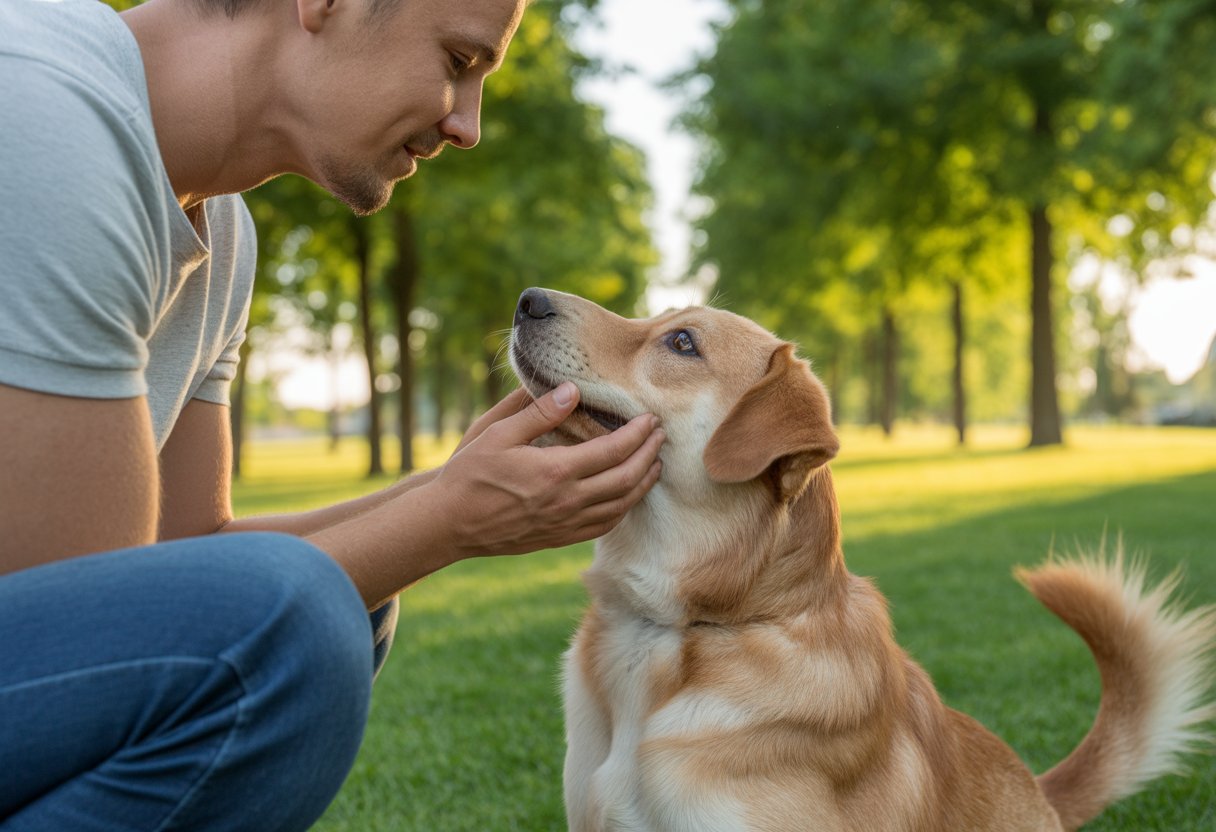
Dogs understand love through consistent actions, secure environments, and respected boundaries. These elements form the foundation of a trusting relationship where dogs feel safe and valued.
Consistency in Daily Interactions
Dogs thrive on predictable routines and reliable responses from their owners. When a person maintains consistent meal times, walk schedules, and training commands, their dog learns what to expect and feels more secure.
Using the same words and hand signals for commands helps dogs understand what their owner wants. If “sit” means sit today but something different tomorrow, the dog becomes confused and anxious. Consistent rules about furniture access, feeding areas, and playtime boundaries give dogs a clear framework.
Responding to a dog’s needs in predictable ways builds trust over time. When a dog knows their owner will always provide food, water, and attention at regular intervals, they develop confidence in the relationship. This reliability reduces stress and strengthens the emotional connection between dog and owner.
Creating Safe Environments
A secure physical and emotional space allows dogs to relax and bond with their owners. Dogs need a designated area where they can retreat when feeling overwhelmed or tired. This might be a crate, bed, or quiet corner of a room.
Safety means protecting dogs from loud noises, unfamiliar people, and stressful situations when possible. Owners should observe their dog’s body language during new experiences and remove them from uncomfortable situations. A dog that tucks its tail, flattens its ears, or tries to hide is communicating discomfort.
Key elements of a safe environment include:
- A comfortable resting area away from high-traffic zones
- Protection from extreme temperatures
- Predictable household routines
- Gradual introductions to new people and animals
Respecting Personal Space
Dogs need time alone and control over physical interactions just like people do. Forcing hugs, kisses, or attention on a dog that moves away or shows avoidance signals damages trust. Owners should let their dog initiate contact or give clear consent before petting.
Signs a dog wants space include turning their head away, moving to another spot, or showing the whites of their eyes. Respecting these signals teaches dogs that their owner listens to their communication. This respect creates mutual understanding and deeper trust.
Allowing dogs to end interactions on their own terms makes them more likely to seek affection later. Children and visitors should learn to let the dog approach them first rather than chasing or cornering the animal.
Expressing Affection Through Physical Interaction
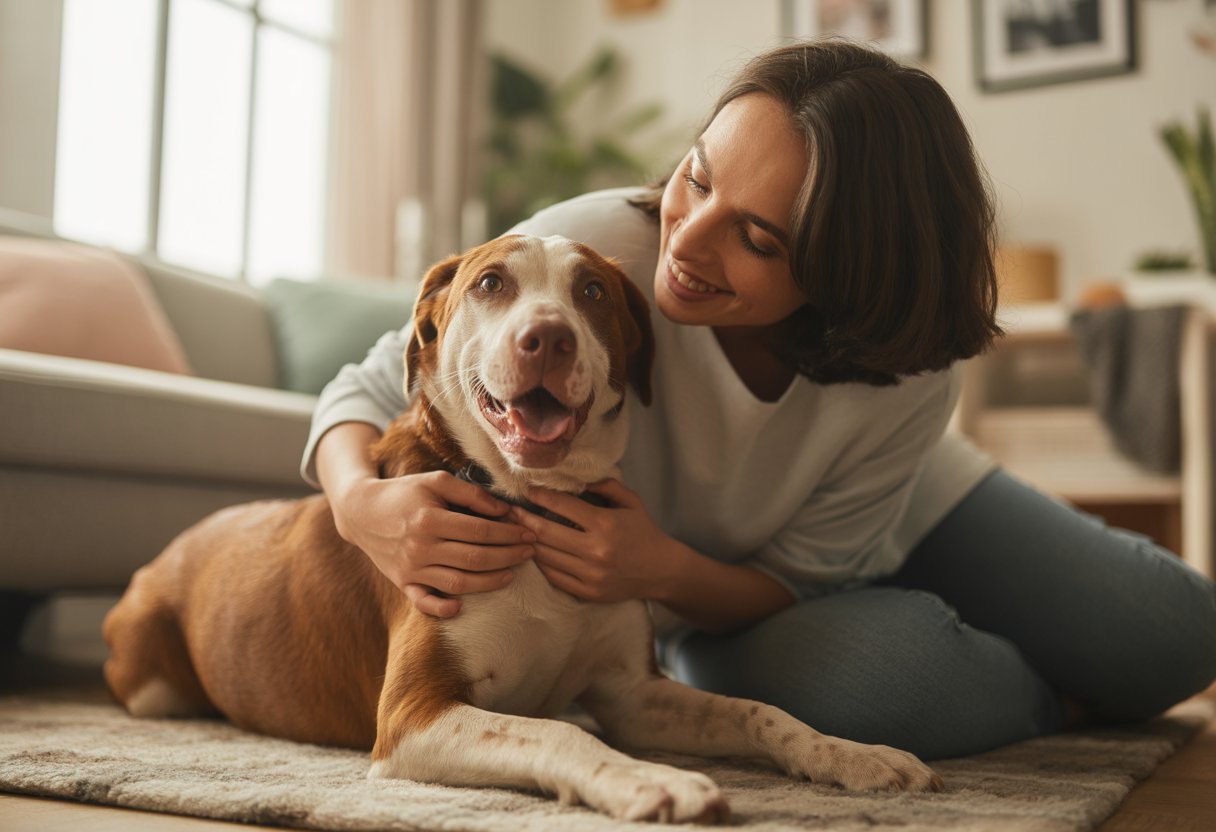
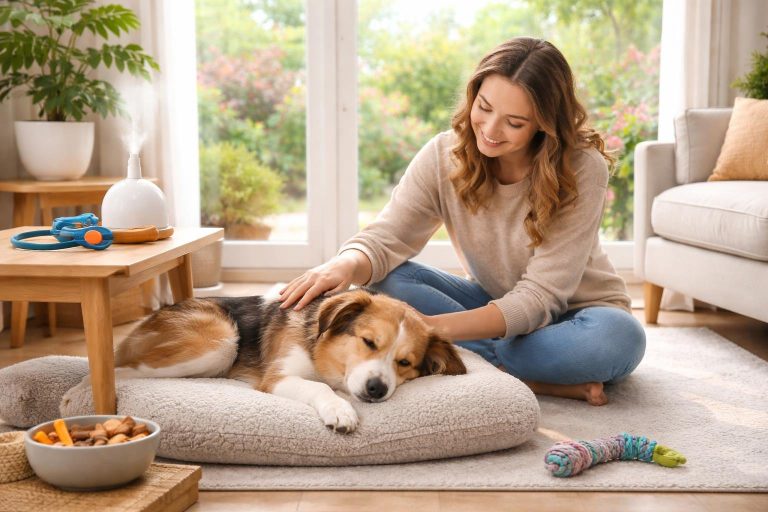
Physical touch helps dogs feel secure and loved when done correctly. The way someone touches their dog matters as much as the frequency of contact.
Appropriate Petting Techniques
Most dogs prefer being petted on their chest, shoulders, and the base of their neck rather than on top of their head. Petting from the side or front allows the dog to see the person’s hand approaching, which reduces anxiety. Owners should avoid reaching over a dog’s head, as this can feel threatening.
Slow, firm strokes work better than quick, light touches. The chest and shoulder areas contain fewer sensitive nerve endings, making them comfortable zones for most dogs. Some dogs enjoy gentle scratches behind their ears or along their back near the tail base.
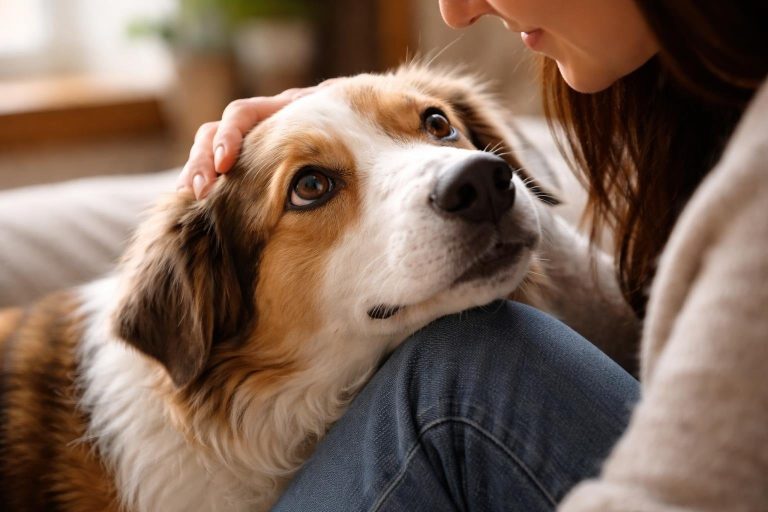
Owners should watch their dog’s body language during petting. Signs of enjoyment include leaning into the touch, relaxed body posture, and soft eyes. If a dog turns away, licks their lips, or moves back, they need space.
The Significance of Gentle Touch
Gentle touch releases oxytocin in both dogs and humans, strengthening their bond. This hormone reduces stress and creates feelings of calm and connection. Regular, gentle contact helps anxious dogs feel more secure in their environment.
A light hand on a dog’s side or back during stressful situations provides comfort. This type of touch works well at the veterinarian’s office or during thunderstorms. The pressure should be steady but not restrictive.
Dogs who receive regular, appropriate touch from their owners often display more confident behavior. They learn to trust physical interaction and become more comfortable with handling for grooming and health checks.
The Power of Verbal Encouragement
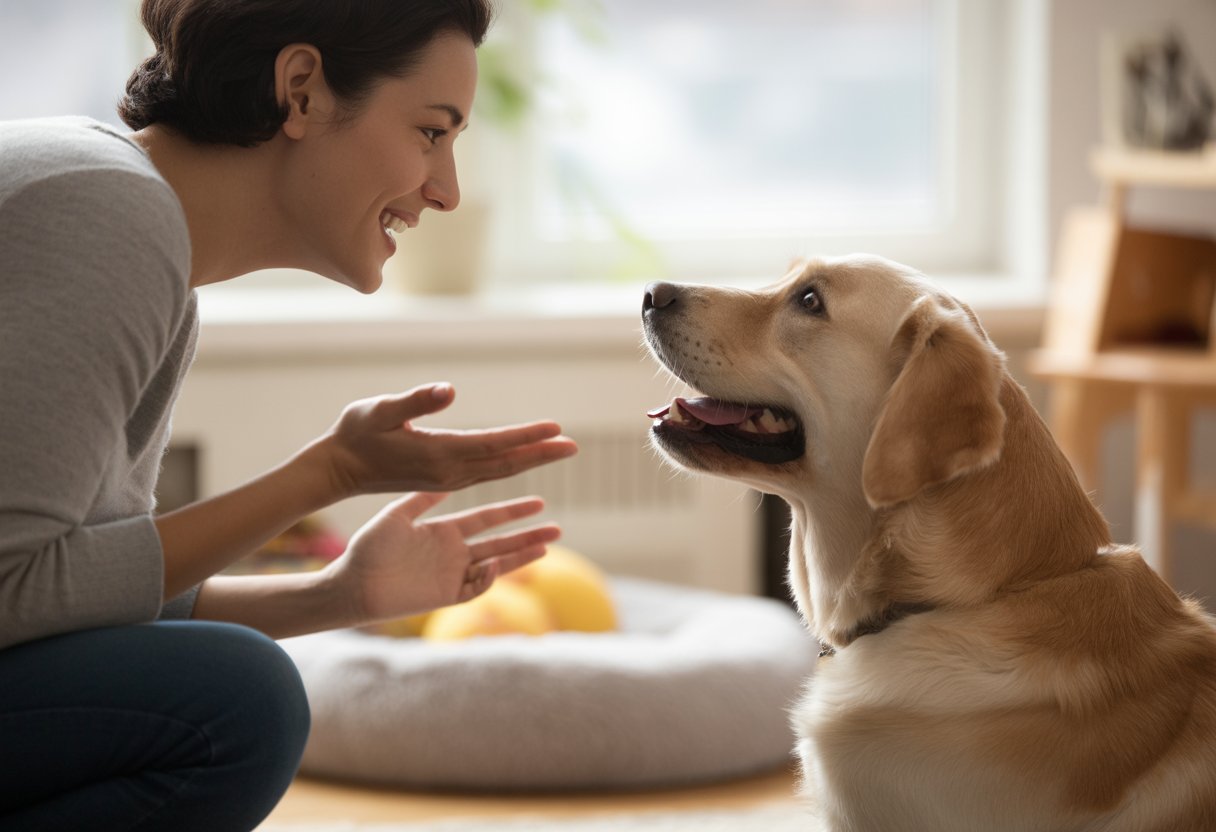
Dogs respond strongly to the sound of their owner’s voice, picking up on tone and emotion rather than the specific words being used. The way someone speaks to their dog can either build trust and happiness or create stress and confusion.
Using a Calm and Positive Voice
A calm and positive voice signals safety and approval to a dog. When an owner speaks in upbeat, gentle tones, their dog’s brain releases feel-good chemicals that strengthen their bond.
Dogs cannot understand words like humans do, but they recognize patterns in speech. A cheerful voice tells them they are doing something right or that good things are happening. This works especially well during activities the dog already enjoys, like walks or playtime.
Effective vocal cues include:
- High-pitched, happy tones for praise
- Soft, soothing sounds for comfort
- Consistent words paired with actions
The volume matters too. Loud or harsh voices create fear and anxiety, even if the owner does not intend it. Speaking at a normal or slightly raised pitch in a warm tone works best for most situations.
Repetition and Tone Awareness
Dogs learn through repetition of sounds they hear regularly. Using the same words in the same tone helps them connect specific sounds to positive experiences.
Saying phrases like “good dog” or their name in an encouraging tone creates a pattern they recognize. The repetition builds meaning over time. Dogs start to associate these sounds with praise and affection.
Tone carries more weight than the actual words. A person could say anything in a happy, loving voice and their dog would respond positively. The emotional quality of the voice is what dogs pick up on most clearly.
Consistency in tone helps dogs feel secure. When an owner maintains steady, positive vocal patterns during daily interactions, their dog learns to trust and feel loved through these familiar sounds.
Quality Time and Shared Activities
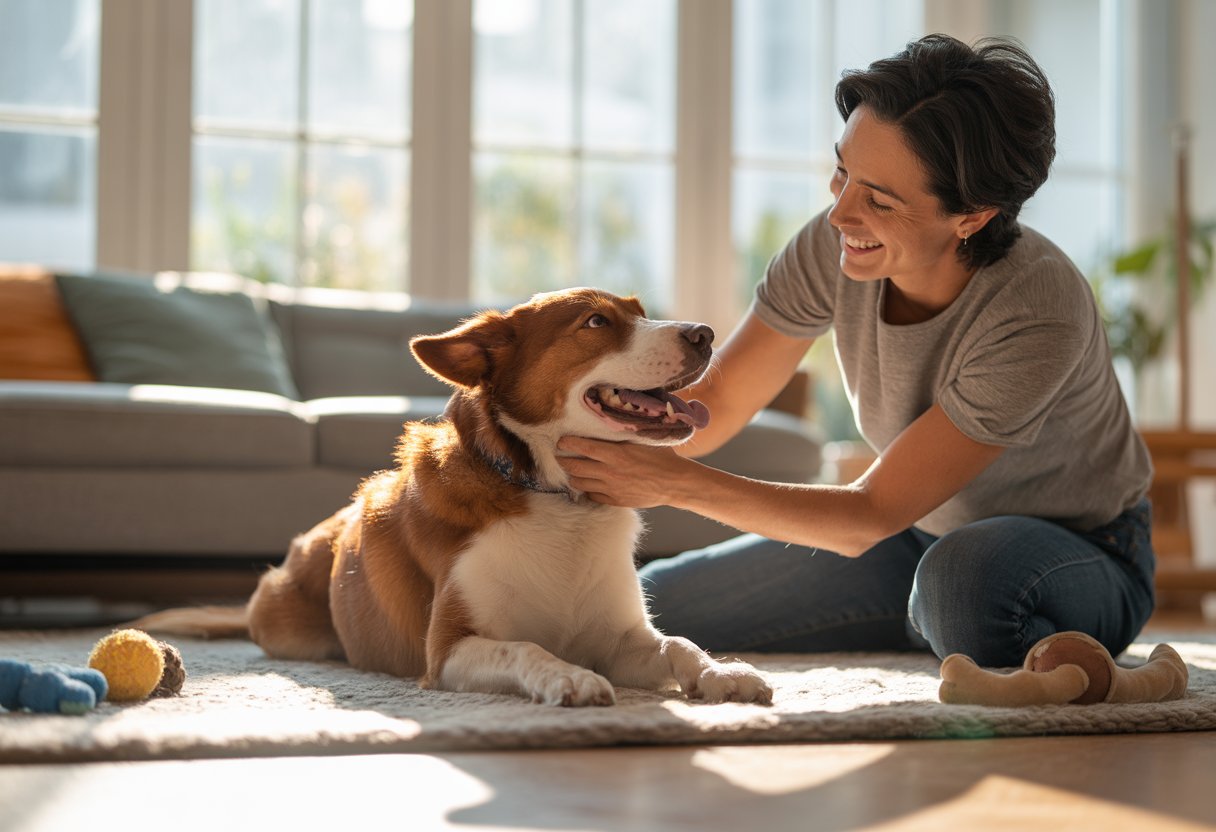
Dogs thrive on engagement and interaction with their owners. Dedicating time to play and learn together builds trust and shows them they matter.
Playing Interactive Games
Interactive games create strong emotional bonds between dogs and their owners. Games like fetch, tug-of-war, and hide-and-seek tap into a dog’s natural instincts while providing mental and physical exercise.
Fetch allows dogs to use their natural retrieving drive. Owners should start with short distances and praise their dog each time they bring the toy back. This game works well in yards or parks where dogs have space to run.
Tug-of-war teaches dogs impulse control when played with rules. Owners should use a designated tug toy and establish clear “take it” and “drop it” commands. This game strengthens the bond through physical interaction and mutual play.
Hide-and-seek engages a dog’s problem-solving skills. Owners can hide treats around the house or hide themselves and call their dog. This game provides mental stimulation and rewards dogs for seeking out their owner. Dogs feel valued when their humans set aside distractions to focus entirely on play with them.
Incorporating Training Sessions
Training sessions demonstrate care by helping dogs understand what their owners expect from them. Dogs feel more secure when they know the rules and boundaries in their environment.
Short training sessions of 5-10 minutes work better than long ones. Dogs learn best when training feels like a game rather than work. Owners should use positive reinforcement with treats, praise, or toys when their dog performs correctly.
Basic commands like sit, stay, and come give dogs structure and keep them safe. Teaching new tricks challenges their minds and prevents boredom. Even older dogs can learn new behaviors when training stays fun and rewarding.
Key training tips:
- Keep sessions brief and positive
- End on a successful note
- Practice in different locations
- Use high-value treats for difficult tasks
- Stay patient and consistent
Training time shows dogs that their owners invest effort into their relationship and well-being.
Nourishment and Special Treats
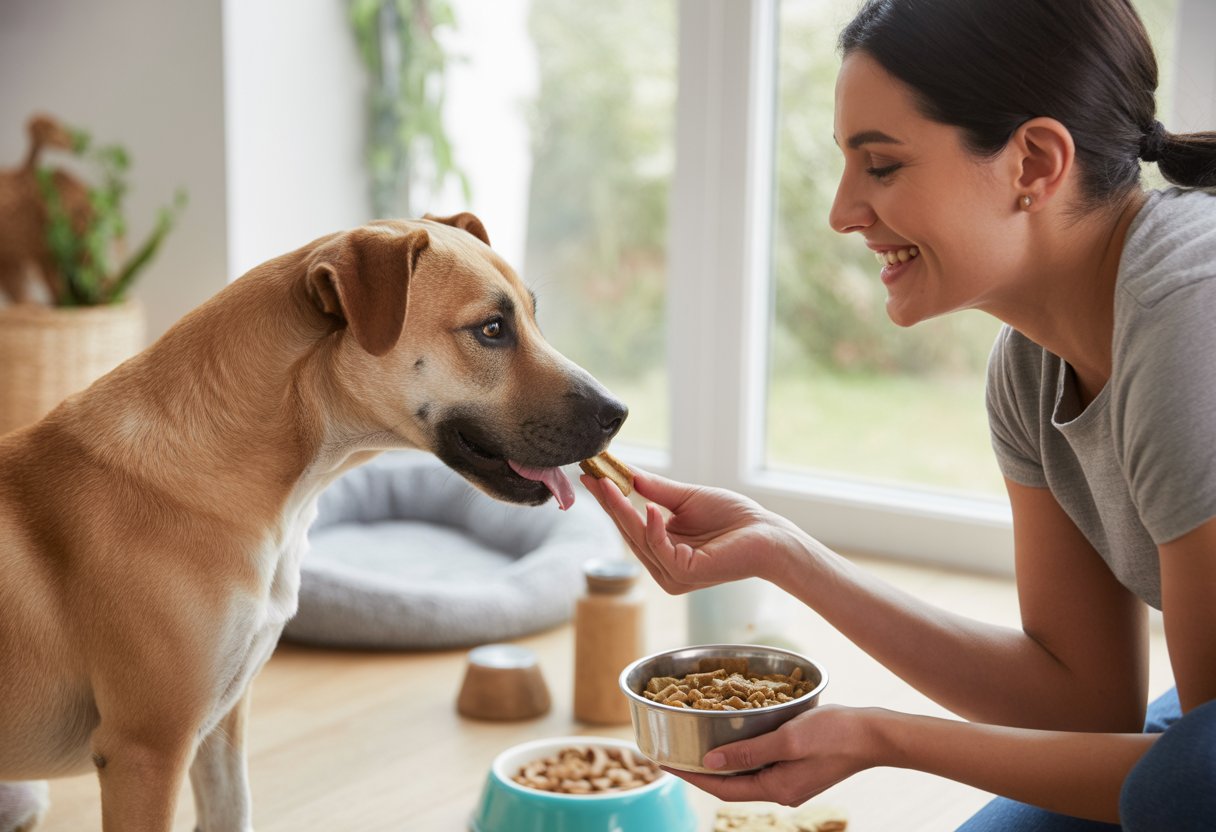
Food serves as a powerful language of love that dogs naturally understand. The way pet owners approach feeding and treating their dogs can strengthen trust and deepen their bond.
Choosing Healthy Reward Options
Dogs associate food with care and affection, making nutritional choices an important way to show love. Pet owners should select treats that support their dog’s health rather than just satisfying temporary cravings.
High-quality treats contain real meat, fish, or vegetables as primary ingredients. These options provide nutritional value while avoiding artificial colors, excessive fillers, and harmful preservatives. Small training treats work well for frequent rewards, while longer-lasting chews can satisfy natural urges.
Fresh foods also make excellent occasional treats. Small pieces of carrots, blueberries, or plain cooked chicken offer vitamins and variety. Pet owners should always verify that human foods are safe for dogs before sharing.
Portion control matters just as much as quality. Treats should make up no more than 10% of a dog’s daily caloric intake. This prevents weight gain while maintaining the special nature of rewards.
Using Treats to Reinforce Connection
Treats become meaningful when paired with attention and positive experiences. Simply tossing food to a dog misses the opportunity to strengthen the relationship.
Hand-feeding treats creates direct interaction and builds trust. This practice encourages gentle taking behaviors and reinforces the bond between dog and owner. Dogs learn to associate their person with good things.
Timing treats with desired behaviors teaches dogs what makes their owner happy. Rewarding calm behavior, successful training, or good manners communicates approval in a language dogs understand immediately.
Treats also help create positive associations with necessary activities. Offering a special reward after grooming, nail trims, or vet visits helps dogs view these experiences more favorably.
Supporting Your Dog’s Wellbeing
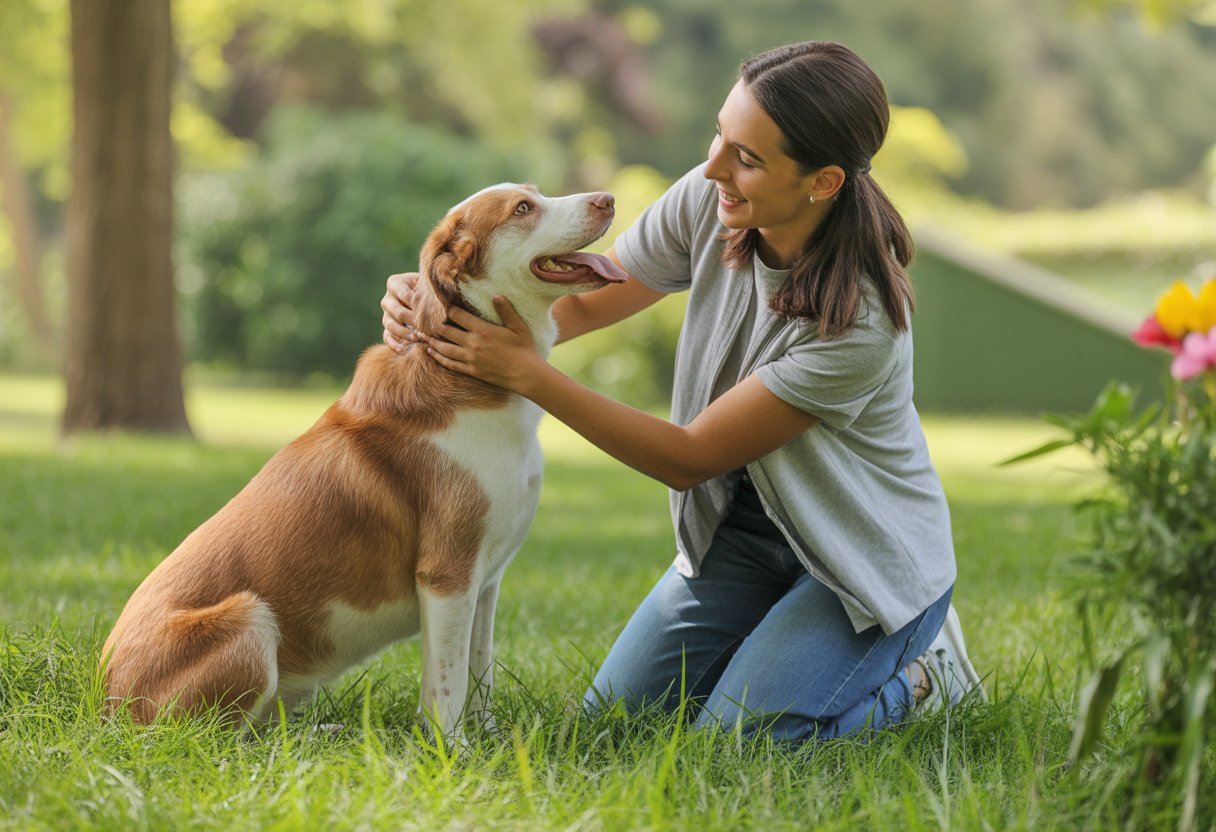
Dogs understand love through consistent care that keeps their bodies and minds healthy. Meeting their physical and medical needs builds trust and shows dedication to their quality of life.
Regular Exercise Routines
Daily exercise does more than burn energy. It releases endorphins that improve a dog’s mood and reduces anxiety and destructive behaviors.
Most dogs need 30 minutes to 2 hours of physical activity each day, depending on their breed, age, and health status. High-energy breeds like Border Collies and Australian Shepherds require more activity than low-energy breeds like Bulldogs or Basset Hounds.
Effective exercise options include:
- Brisk walks around the neighborhood
- Fetch games in a yard or park
- Swimming sessions for joint-friendly cardio
- Agility training or obstacle courses
- Running alongside a bike (for appropriate breeds)
Exercise routines should happen at consistent times each day. Dogs thrive on predictable schedules and will anticipate these activities as special bonding time with their owner. The mental stimulation from exploring new environments during walks matters as much as the physical movement itself.
Prioritizing Health and Veterinary Care
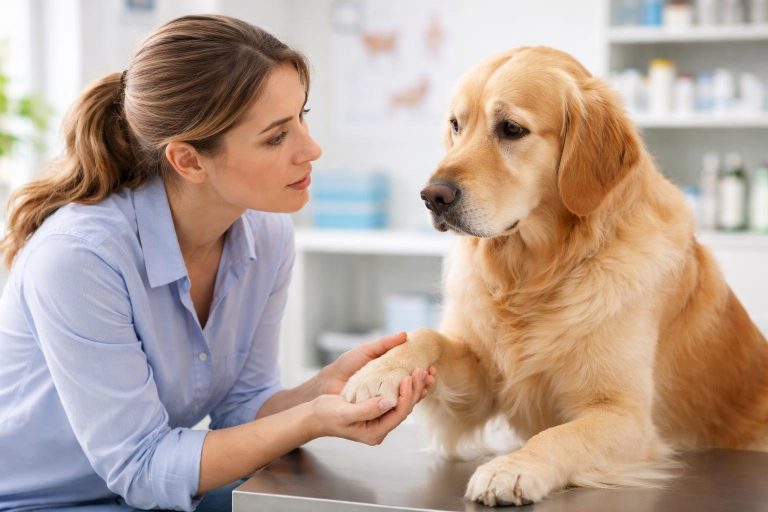
Regular veterinary visits prevent serious health problems and catch issues early when they’re easier to treat. Adult dogs need annual checkups, while puppies and senior dogs require more frequent visits.
Preventive care includes vaccinations, parasite prevention, dental cleanings, and routine bloodwork. These services protect dogs from diseases and painful conditions that affect their daily comfort. Dental disease, for example, impacts up to 80% of dogs over age three and can lead to organ damage if left untreated.
Owners should also monitor their dog’s weight, as obesity strains joints and organs. They need to watch for changes in eating habits, energy levels, or bathroom routines that signal potential health concerns. Quick action on health issues demonstrates attentiveness to a dog’s needs and prevents unnecessary suffering.
Reading and Responding to Feedback
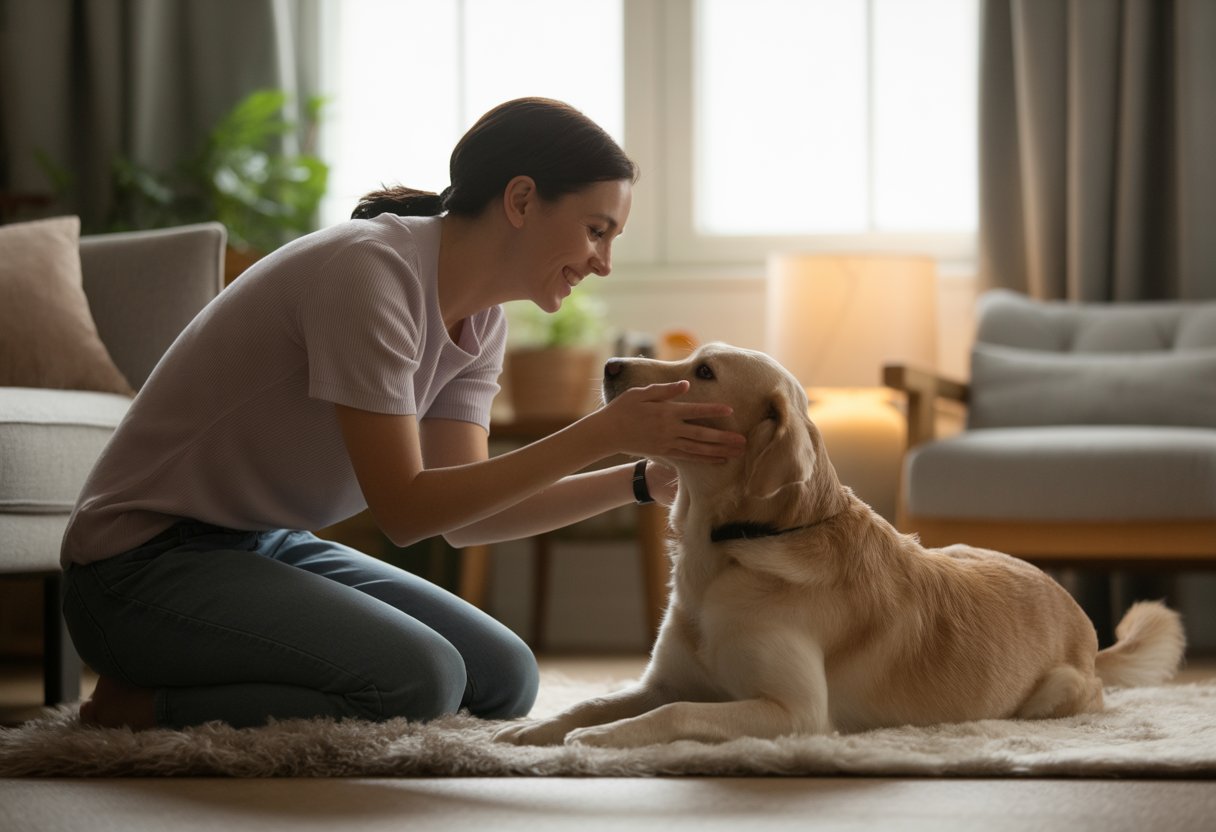
Dogs communicate their feelings through body language and behavior, not words. Learning to recognize when a dog feels uncomfortable and adjusting how you show affection helps build trust and respect.
Noticing Signs of Discomfort
Dogs display specific signals when they feel stressed or uncomfortable with interaction. A dog might turn their head away, lick their lips repeatedly, or yawn when not tired. These are subtle ways of saying they need space.
More obvious signs include pulling their ears back flat against their head, tucking their tail between their legs, or moving away from touch. Some dogs will freeze in place or show the whites of their eyes (called whale eye). A dog might also pant heavily when not hot or exercising.
Common stress signals to watch for:
- Avoiding eye contact or turning away
- Stiff body posture
- Raised hackles along the back
- Low growling or whining
- Attempting to hide or escape
Pet owners should stop what they’re doing immediately when they notice these signs. Forcing affection on an uncomfortable dog damages the relationship and can lead to fear or defensive behavior.
Adjusting Approaches as Needed
Each dog has unique preferences for how they like to receive affection. Some dogs enjoy belly rubs while others find them threatening. A dog might love being hugged by their owner but dislike it from strangers.
Pet owners should test different ways of showing love and observe their dog’s response. If a dog leans into petting and seeks more contact, they enjoy it. If they move away or show stress signals, try a different approach.
The timing of affection matters too. A dog might not want attention while eating, sleeping, or focusing on something else. Respecting these boundaries teaches the dog that their owner understands their needs.
Try offering affection and then pausing to see if the dog asks for more. A dog who truly enjoys the interaction will nudge for continued petting or stay close. One who needed space will use the opportunity to move away.
Celebrating Individual Personality
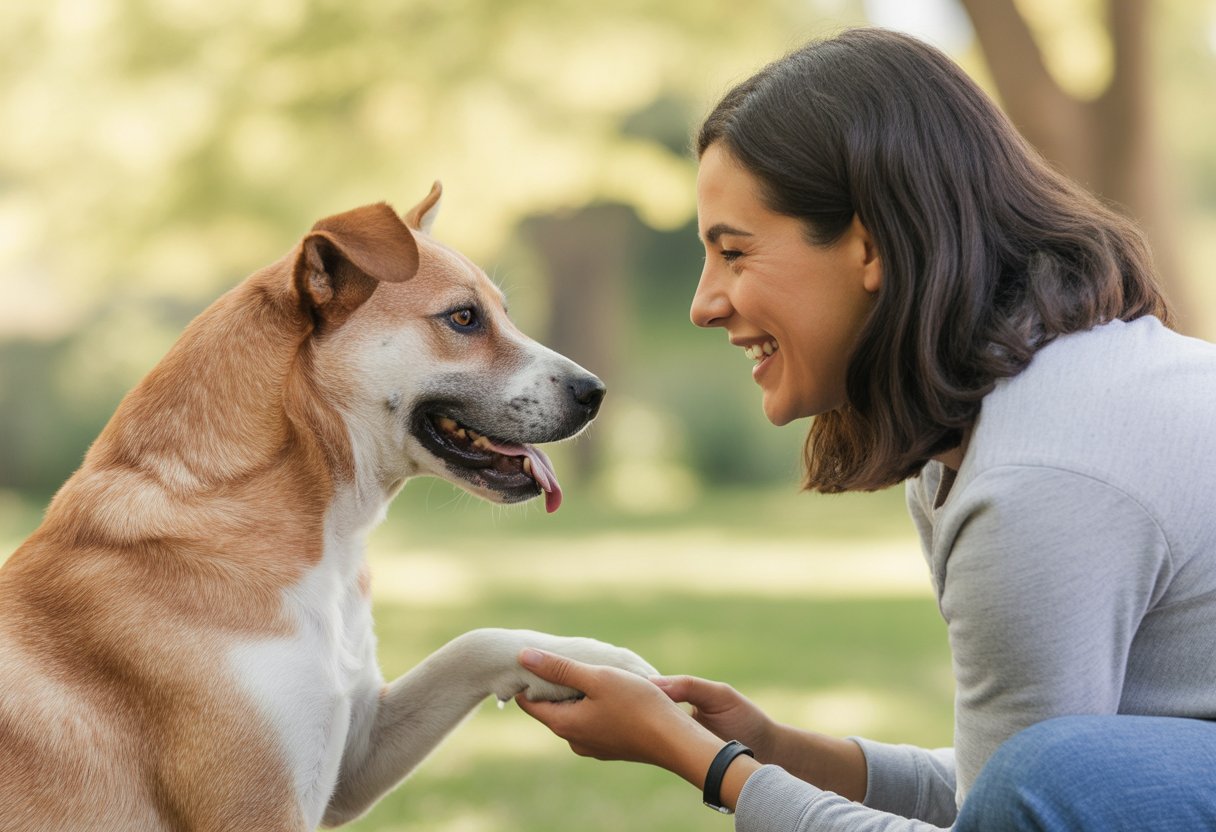
Every dog has a unique personality. Some dogs love to play fetch for hours, while others prefer quiet cuddles on the couch. Recognizing what makes each dog special shows them love in a way they can truly feel.
Paying attention to a dog’s likes and dislikes matters. One dog might get excited about going to the park, but another might feel stressed by crowds and noise. When owners adjust activities to match their dog’s preferences, they communicate respect and care.
Common personality traits to notice:
- Energy level (high, moderate, or low)
- Social preferences (loves everyone or selective)
- Play style (gentle or rough)
- Comfort zones (adventurous or cautious)
- Communication style (vocal or quiet)
Dogs feel more secure when their humans understand them. A shy dog needs patient introductions to new experiences. An energetic dog thrives with active adventures. A food-motivated dog responds well to training treats, while a toy-driven dog prefers playtime rewards.
Taking time to learn what brings a specific dog joy shows thoughtful love. This means watching their body language and noticing what makes their tail wag fastest. It means remembering that a neighbor’s dog might love something their dog fears.
Each dog deserves to be loved as an individual, not according to general dog stereotypes. When owners celebrate what makes their dog different, they build a stronger bond based on genuine understanding.
Frequently Asked Questions
Dogs respond to specific actions and signals rather than words alone. Understanding what makes them feel safe, loved, and connected helps strengthen the bond between dogs and their owners.
What are the best ways to show affection to a dog using signals they naturally understand?
Physical touch works well when done in ways dogs find calming. Gentle scratches behind the ears, soft belly rubs, and slow strokes along the back communicate care. Spending quality time together through walks, play sessions, or simply sitting nearby builds trust and connection.
Eye contact with soft eyes and slow blinks shows affection in dog language. Leaning into a dog gently or allowing them to lean against you creates a sense of security. Dogs also understand love through consistent routines like regular feeding times, daily walks, and predictable schedules.
Playing with dogs using their favorite toys strengthens bonds. Training sessions with positive reinforcement show dogs they’re valued. Even simple acts like letting a dog sniff during walks or giving them choices demonstrates respect for their natural instincts.
Do dogs interpret eye contact and slow blinking as signs of trust and affection?
Dogs do recognize soft eye contact as a sign of trust and affection. When a person looks at their dog with relaxed eyes rather than a hard stare, it communicates warmth and safety. A direct, intense stare can feel threatening to dogs, but gentle gazing with soft features signals love.
Slow blinking works as a calming signal between dogs and humans. This behavior mimics how dogs communicate comfort with each other. When a person slowly closes and opens their eyes while looking at their dog, it can help the dog feel more relaxed and secure.
Dogs who trust their owners will often maintain soft eye contact without looking away quickly. This mutual gaze releases bonding hormones in both dogs and humans. The key is keeping the eyes soft and the body language relaxed rather than tense or confrontational.
Which types of touch do most dogs find comforting, and which petting styles can stress them out?
Most dogs find gentle scratches behind the ears, under the chin, and on the chest calming. Slow, firm strokes along the back and sides help dogs relax. Light massaging of the shoulder area also tends to soothe dogs.
Petting the top of the head can make some dogs uncomfortable, especially if the hand comes down from above their field of vision. Patting or tapping motions often create more stress than smooth strokes. Touching a dog’s paws, tail, or belly when they haven’t shown they’re comfortable with it can cause anxiety.
Dogs show their preferences through body language. A dog who leans into touch, closes their eyes softly, or stays relaxed is enjoying the interaction. Dogs who pull away, stiffen, lick their lips repeatedly, or show the whites of their eyes may feel stressed by the type of touch.
Can certain tones of voice or sounds communicate affection to dogs more clearly than words?
The tone of voice matters more to dogs than the actual words spoken. A higher-pitched, warm, and gentle tone typically conveys affection and friendliness. Dogs respond positively to this tone because it signals non-threatening interaction and excitement.
A calm, soothing voice with a slower pace helps dogs feel safe and relaxed. This tone works well for comforting anxious dogs or helping them settle down. Harsh or loud tones, even when saying loving words, can create stress or fear in dogs.
Dogs pay attention to patterns and rhythms in speech. Consistent praise words delivered in an upbeat tone during positive moments help dogs associate those sounds with affection. The emotional quality behind the voice creates the connection rather than vocabulary.
How can you tell whether your dog feels loved and secure based on their body language?
A relaxed dog shows soft eyes, a loose body posture, and natural breathing. Their tail wags in a loose, wide motion or hangs naturally without tension. Their mouth may be slightly open with the tongue visible, creating a relaxed expression.
Dogs who feel secure seek out their owner’s presence without seeming anxious or clingy. They sleep peacefully in the home and show confidence exploring their environment. A dog who brings toys to their owner or initiates gentle play demonstrates trust and comfort.
Stressed or insecure dogs often show tension in their bodies. They might pant heavily without exercise, pin their ears back, tuck their tail, or avoid eye contact. Excessive licking, yawning when not tired, or destructive behavior can signal a dog doesn’t feel secure.
How can one person become a dog’s favorite without creating jealousy or stress in the household?
Building a strong bond with a dog involves being the primary provider of positive experiences. The person can handle most feeding times, walks, play sessions, and training activities. Consistency in these interactions helps dogs form strong attachments without excluding others.
Other household members should maintain their own positive interactions with the dog. Everyone can participate in different activities the dog enjoys. This approach prevents the dog from becoming overly dependent on one person while still having a preferred companion.
Jealousy reduces when all family members respect the dog’s space and choices. If a dog seeks out their favorite person, others shouldn’t force interaction. Each person can develop their own special activities with the dog, creating multiple positive relationships rather than competition.