4 Steps In Teaching Your Dog The Quiet Command: A Complete Training Guide
Dogs bark for many reasons, from alerting their owners to danger to expressing excitement or anxiety. While barking is natural, excessive barking can disrupt household peace and strain relationships with neighbors. Teaching a dog the “quiet” command gives them an “off switch” that allows them to bark when needed but stop when asked.

The quiet command is not about silencing a dog completely. It’s about helping them learn when barking is appropriate and when it’s time to settle down. This skill requires patience and consistency, but the results create a calmer home environment for everyone.
This guide breaks down the training process into four clear steps. Readers will learn why their dog barks, how to prepare for effective training sessions, and proven methods to teach and reinforce the quiet command. The article also covers common setbacks and how to maintain progress over time.
Understanding Why Dogs Bark

Dogs bark for specific reasons, from alerting their owners to danger to expressing boredom or anxiety. Recognizing what drives a dog to bark helps owners address the root cause and makes teaching the “quiet” command more effective.
Common Triggers for Barking
Dogs react to their environment in predictable ways. The doorbell ranks among the most common barking triggers because it signals potential intruders or visitors entering their territory. Passing joggers, cyclists, and other dogs often spark barking as they move quickly past windows or yards.
Other frequent triggers include:
- Separation anxiety when left alone
- Boredom from lack of exercise or mental stimulation
- Fear of unfamiliar sounds like thunder or fireworks
- Excitement during playtime or when owners return home
- Attention-seeking when dogs want food, toys, or interaction
Environmental changes matter too. A new neighbor, construction noise, or changes in daily routine can increase barking behavior. Some dogs bark more at specific times, like early morning or evening when activity levels peak in the neighborhood.
Communication Through Barking
Barking serves as a primary communication tool for dogs. They use different bark types to convey distinct messages to humans and other animals. A sharp, rapid bark typically signals alarm or warning. A higher-pitched bark often indicates excitement or play invitation.
Dogs also bark to express needs. A persistent bark near the door means they need to go outside. Barking near an empty water bowl communicates thirst. This natural instinct to vocalize helps dogs survive and interact with their pack.
The volume, pitch, and frequency of barks carry meaning. Low, slow barks suggest threat assessment. Quick, repetitive barks show urgency or excitement. Understanding these patterns helps owners determine when barking is normal communication versus a behavior that needs addressing.
Identifying Problematic Barking Behavior
Normal barking differs from excessive barking in duration, frequency, and context. A few barks when someone approaches the door is appropriate. Continuing to bark for several minutes after the visitor enters crosses into problem territory.
Warning signs of problematic barking include:
- Barking that lasts more than 5-10 minutes continuously
- Barking triggered by minor or non-threatening stimuli
- Barking that occurs throughout the day without clear triggers
- Barking that disturbs neighbors or disrupts household peace
The underlying cause matters when identifying problems. Barking from boredom requires more exercise and mental enrichment. Anxiety-driven barking needs different interventions than territorial barking. Dogs that bark excessively may lack proper training, socialization, or physical outlets for their energy.
Tracking when and why barking occurs reveals patterns. Owners should note the time of day, what triggered the barking, and how long it lasted. This information helps target training efforts and address specific situations where the dog struggles to remain quiet.
Preparing for Training Sessions

Success with the quiet command depends on setting up the right conditions before the first training session begins. The training environment, reward system, and household rules need careful planning to help a dog learn effectively.
Choosing the Right Environment
Training should start in a quiet room with minimal distractions. A familiar space like a living room or bedroom works well because the dog already feels comfortable there. Windows, doors, and other noise sources should be considered when picking the location.
The area needs enough space for the dog to move around but should feel contained and focused. Remove toys, food bowls, and other items that might grab the dog’s attention during practice. Other pets and family members should stay out of the training space during initial sessions.
Once the dog responds well to the quiet command in this controlled setting, training can move to areas with more activity. This gradual approach helps the dog understand the command applies everywhere, not just in one room.
Selecting Effective Rewards
High-value treats work best for teaching new commands. Small pieces of chicken, cheese, or commercial training treats are good options. The treats should be tiny enough that the dog can eat them quickly without losing focus.
Effective reward types:
- Small soft treats (pea-sized)
- Verbal praise in a happy tone
- Brief petting or scratching
- Favorite toys for play-motivated dogs
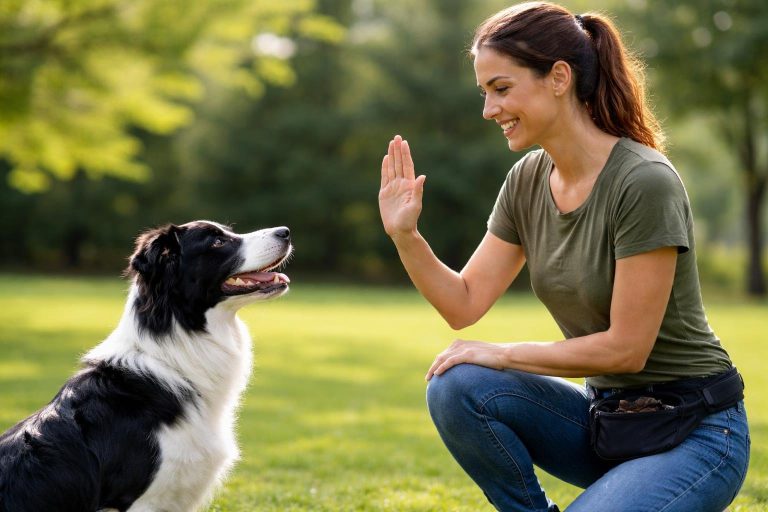
The reward needs to be given within two seconds of the quiet behavior. This timing helps the dog connect staying quiet with getting the treat. Keep treats in a pouch or pocket for quick access during training sessions.
Setting Consistent Expectations
Everyone in the household must use the same command word and training approach. If one person says “quiet” while another says “hush” or “stop,” the dog will get confused. A family meeting before training starts can prevent these mixed signals.
The command word should be spoken in a calm, firm tone every time. Yelling or showing frustration during training makes the lesson less effective. Dogs learn better when handlers stay patient and consistent.
Training sessions should last only two to three minutes and happen multiple times throughout the day. Short, frequent practice works better than one long session. The dog’s attention span stays stronger with these brief intervals.
Teaching the Foundational Cues

Before a dog can learn to stop barking on command, they need to understand how to bark on cue first. Building focus helps the dog pay attention to their owner during training sessions.
Establishing a Reliable ‘Speak’ Command
Teaching a dog to bark on command creates a clear starting point for the quiet command. The owner should wait for their dog to bark naturally, then immediately say “speak” and reward the behavior with a treat. This process links the word with the action.
Most dogs bark in response to specific triggers like doorbells or seeing people walk by. The owner can use these triggers during training sessions to encourage barking. Once the dog barks, they mark it with the “speak” command and give a reward.
Practice sessions should be short, around 5-10 minutes. The dog needs to consistently bark when hearing “speak” before moving forward. This usually takes several days of regular practice.
Key markers of success:
- Dog barks within 3 seconds of hearing “speak”
- Behavior happens in different rooms or locations
- Dog responds without needing the original trigger
Building Focus and Engagement
A dog must learn to pay attention to their owner before any command training works well. Eye contact serves as the foundation for all training sessions. The owner holds a treat near their face and waits for the dog to look at them. When the dog makes eye contact, they get the treat immediately.
Training sessions work best when the dog is slightly hungry and in a quiet space with few distractions. The owner should practice focus exercises for 3-5 minutes before teaching new commands.
The dog should respond to their name by looking at the owner right away. If the dog gets distracted easily, the owner needs to spend more time on focus work. Strong engagement means the dog watches their owner even when interesting things happen nearby.
Implementing Step-by-Step Training Methods

Training a dog to respond to the “quiet” command requires a structured approach that builds on natural behaviors and clear communication. Success depends on rewarding calm moments, teaching the actual command word, and perfecting the timing of feedback.
Shaping Calm Behavior
The foundation of quiet command training starts with recognizing and rewarding natural moments of silence. Dog owners should watch for any pause in barking, even if it only lasts a second or two. These brief quiet moments are opportunities to reinforce the behavior with treats or praise.
Starting with short intervals makes the training realistic for the dog. When the dog stops barking for just two seconds, the owner should immediately provide a reward. This creates a connection between staying quiet and receiving something positive.
Key times to reward calm behavior:
- Right after barking stops
- When the dog chooses not to bark at a trigger
- During naturally quiet moments throughout the day
As the dog begins to understand, owners can gradually wait for longer periods of quiet before giving rewards. The goal is to extend these calm periods from two seconds to five seconds, then to ten seconds, and eventually to a full minute or more.
Introducing the ‘Quiet’ Cue
Once the dog reliably pauses when barking, owners can add the verbal command. The word “quiet” should be spoken in a calm, firm voice while the dog is actually being quiet. Shouting the command defeats the purpose and may increase the dog’s excitement.
The cue word must be paired with the moment of silence. When the dog stops barking naturally, the owner says “quiet” and immediately follows with a reward. This three-part pattern helps the dog connect the word with the action and the reward.
Consistency matters with the chosen cue word. All family members should use the same word and the same calm tone. Using different words like “hush,” “enough,” or “stop” will confuse the dog and slow down training progress.
Timing Rewards and Feedback
Proper timing separates successful training from frustrating attempts. Rewards must arrive within one to two seconds of the dog being quiet. Any longer delay breaks the connection between the behavior and the reward in the dog’s mind.
Treats work best as initial rewards because they are immediate and highly motivating. The treat should be small, soft, and easy to eat quickly so training can continue without long interruptions. Verbal praise can accompany treats but should not replace them during early training stages.
Effective reward timing sequence:
- Dog stops barking
- Owner says “quiet” (if dog already knows the cue)
- Owner delivers treat within 1-2 seconds
- Owner adds verbal praise like “good quiet”
Owners should avoid accidentally rewarding barking by giving attention too soon. If a dog barks and the owner immediately approaches to give the quiet command, the dog may learn that barking brings attention. Instead, owners should wait for even the briefest pause before engaging with the dog.
Managing Setbacks and Common Challenges

Training doesn’t always go smoothly, and dogs may struggle with the quiet command even after showing initial progress. Two main issues often arise: inconsistent responses to the command and barking triggered by heightened emotional states.
Addressing Inconsistent Results
Dogs sometimes respond to the quiet command one day but ignore it the next. This happens when training sessions lack consistency or when different family members use different cues or reward timing.
The solution requires everyone in the household to use the exact same word and hand signal. Training should occur at the same times each day, even if only for two to three minutes per session. If a dog stops responding, the owner should return to an earlier training step where the dog was successful.
Common fixes for inconsistent results:
- Use higher-value treats when the dog seems unmotivated
- Reduce distractions in the training environment
- Shorten training sessions if the dog appears tired or unfocused
- Practice the command when the dog is calm, not during peak excitement
Some dogs need more repetitions than others. A dog that masters the command in quiet settings but fails near the front door needs more practice in that specific location.
Handling Overexcitement or Anxiety
Dogs experiencing strong emotions struggle to respond to any command, including quiet. An anxious dog barking at strangers or an overexcited dog barking at other animals cannot process instructions effectively.
The owner must first reduce the dog’s emotional intensity before expecting the quiet command to work. This means increasing distance from the trigger, whether that’s a doorbell, another dog, or a visitor. The dog needs to be in a mental state where it can still think and respond.
For anxiety-driven barking, owners should identify the root cause. A dog that barks from separation anxiety needs different strategies than one barking at perceived threats. Working at the dog’s threshold—the distance where it notices the trigger but doesn’t react intensely—allows for successful training repetitions.
Reinforcing Success and Generalizing the Command

Once a dog understands the quiet command in one location, owners need to practice it in new places and add more distractions to make the training stick in real-world situations.
Practicing in Different Settings
Dogs don’t automatically transfer skills from one location to another. A dog that responds well to “quiet” in the living room might bark freely at the park or in the backyard. Owners should practice the command in at least five different locations around the home first, such as the kitchen, bedroom, yard, garage, and front porch.
After the dog succeeds indoors, training should move to outdoor spaces. These might include the driveway, local parks, pet stores, or friends’ homes. Each new location requires several practice sessions before the dog fully understands that “quiet” means the same thing everywhere.
Key practice locations:
- Multiple rooms inside the home
- Front and back yards
- Neighborhood walks
- Pet-friendly stores
- Friends’ or family members’ homes
Gradually Increasing Distractions
Distractions make the quiet command harder for dogs to follow. Owners should start training with zero distractions, then slowly add more challenging situations. The first distractions might be someone walking past a window or a toy placed nearby.
As the dog improves, owners can introduce stronger distractions. These include doorbells ringing, other dogs barking, people talking loudly, or food being prepared. Each new distraction level requires multiple successful repetitions before moving forward. If the dog struggles at any stage, owners should return to the previous level and practice more before advancing again.
The goal is to build the dog’s ability to respond even when exciting or stressful things happen around them.
Long-Term Maintenance and Behavioral Support

Dogs need ongoing practice to keep the “quiet” command strong over time. Without regular reinforcement, even well-trained dogs can forget what they learned or start barking excessively again.
Preventing Regression
Regular practice keeps the “quiet” command fresh in a dog’s mind. Owners should continue to reward their dog randomly when they stay quiet, even months after initial training. This reinforcement reminds the dog that being quiet still earns treats and praise.
Dogs test boundaries in new situations. When a dog encounters unfamiliar environments, different sounds, or new people, owners need to practice the “quiet” command in these settings. Starting with low-distraction situations and slowly adding harder challenges helps the dog succeed.
Common regression triggers include:
- Moving to a new home
- Changes in household routine
- New pets or family members
- Reduced training practice
- Inconsistent responses from family members
Owners should practice the command at least once per week. Short five-minute sessions work better than long, infrequent training periods. Everyone in the household needs to use the same command word and follow the same rules.
When to Seek Professional Help
Some barking problems require expert guidance. If a dog barks constantly despite consistent training for several weeks, a professional dog trainer or veterinary behaviorist can identify underlying issues.
Warning signs that indicate professional help is needed:
- Barking that increases in frequency or intensity
- Aggressive behavior during barking episodes
- Signs of anxiety or fear-based barking
- Medical issues affecting behavior
- Barking that disrupts daily life despite training efforts
Professional trainers can spot training mistakes that owners miss. They also recognize when barking stems from separation anxiety, fear, or other behavioral problems that need specialized treatment plans. A veterinarian can rule out medical causes like pain, cognitive decline, or hearing loss that might trigger excessive barking.
Frequently Asked Questions

Training a dog to be quiet on command requires understanding the basic steps, knowing how to reward properly, and recognizing what to do when challenges arise during the process.
How do I teach my dog the “quiet” command step by step?
The first step involves identifying what triggers the dog’s barking, whether it’s doorbells, passing joggers, or other stimuli. Once the trigger is known, the owner sets up a controlled situation where the dog is likely to bark.
When the dog starts barking, the owner waits for a brief pause or moment of silence. At that exact moment, they say “quiet” in a calm, firm voice. As soon as the dog stops barking, they immediately give a treat and verbal praise.
The owner repeats this process multiple times during each training session. They gradually increase the length of time the dog must remain quiet before receiving the reward. Consistency across all training sessions helps the dog understand what behavior earns the reward.
What’s the best way to reward silence when training the “quiet” cue?
The most effective reward comes immediately after the dog stops barking, even if just for a second. Timing matters because the dog needs to connect the quiet behavior with the positive outcome.
High-value treats work best during initial training sessions. These should be small, soft pieces that the dog can eat quickly without losing focus. Verbal praise should accompany the treat to reinforce the desired behavior.
Some owners find success using a marker word like “yes” or a clicker right when the dog becomes quiet. This marks the exact moment of the correct behavior before delivering the treat.
How can I get my dog to stop barking at everything that passes by?
Dogs often bark at passing people, cars, or animals because they’re alerting their owners or protecting their territory. The owner needs to manage the dog’s environment during training by controlling what the dog can see and hear.
Closing curtains or moving the dog away from windows reduces visual triggers. The owner can then practice the quiet command in controlled situations before addressing real-world distractions.
When the dog barks at something passing by, the owner uses the quiet command. They reward immediately when the dog stops, even if another trigger appears moments later. Building up the dog’s ability to stay quiet for longer periods happens through gradual practice.
How do I train my dog to be quiet when I leave the house?
Barking when left alone often stems from separation anxiety or boredom rather than simple habit. The owner should start by leaving for very short periods, just a few seconds at first.
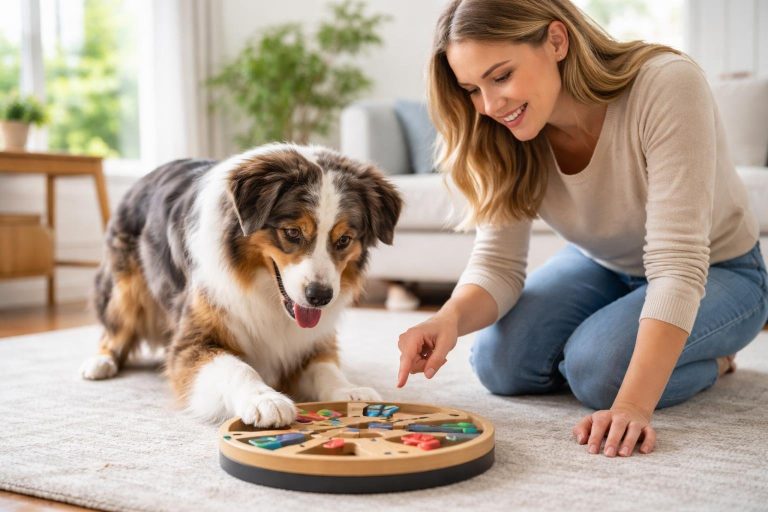
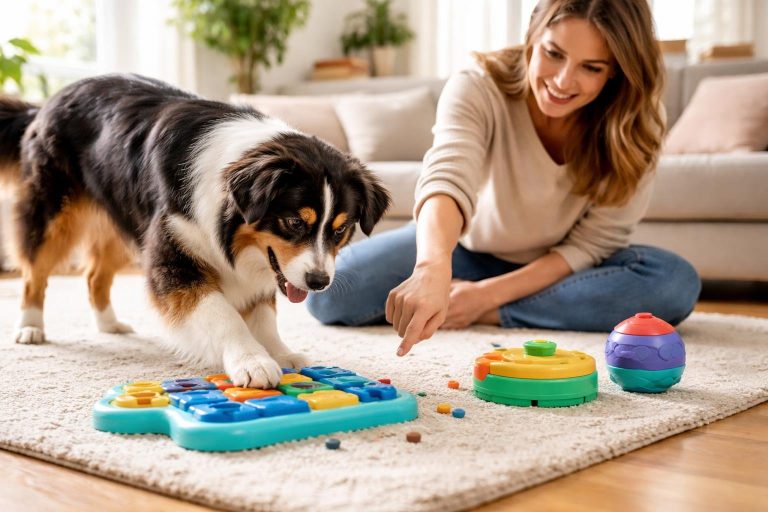
Before leaving, the owner gives the dog a puzzle toy or long-lasting chew to keep them occupied. They practice the quiet command, then step out briefly and return before the dog starts barking. When they return to a quiet dog, they offer calm praise and a treat.
The owner gradually increases the time away as the dog becomes more comfortable. They should avoid making departures and arrivals dramatic, keeping them calm and matter-of-fact. If the dog barks during practice sessions, the owner should not return until there’s a moment of quiet.
What should I do if my dog ignores the “quiet” command or keeps barking?
When a dog ignores the command, the owner may be asking for too much too soon. They need to go back to an easier level where the dog can succeed and build from there.
The owner should check if the rewards are valuable enough to the dog. Some dogs need higher-value treats or different types of rewards like toys or play. Environmental distractions might also be too strong for the dog’s current skill level.
If the dog continues barking despite training efforts, the owner should ensure the dog’s basic needs are met. A tired, well-exercised dog with proper mental stimulation barks less than a bored, pent-up dog. Sometimes the barking has an underlying cause like pain or anxiety that requires professional help from a veterinarian or certified dog trainer.
What are the four stages of learning in dog training, and how do they affect teaching a new cue?
The first stage is acquisition, where the dog is just learning what the quiet command means. During this stage, the owner needs a controlled environment with minimal distractions and must reward every successful response.
The second stage is fluency, where the dog understands the command but needs practice to perform it reliably. The owner practices in various low-distraction settings and begins to space out rewards slightly.
The third stage is generalization, where the dog learns to respond in different environments and situations. The owner practices the quiet command in new locations with gradually increasing distractions. The dog must learn that “quiet” means the same thing whether at home, in the yard, or at the park.
The fourth stage is maintenance, where the command becomes a reliable part of the dog’s behavior. The owner continues to practice occasionally and rewards intermittently to keep the behavior strong. Dogs at this stage can perform the quiet command even with significant distractions present.