3 Things You Can Do Now to Teach Your Dog to Come Every Time You Call: A Simple Training Guide
Getting a dog to come when called can feel impossible, especially when distractions are everywhere. Many dogs ignore their owners or even run in the opposite direction when they hear “come.” Teaching a reliable recall takes the right approach from the start, along with proper motivation and consistent practice that builds a strong response over time.
The good news is that any dog can learn to come when called. It requires understanding what makes dogs want to return to their owners instead of chasing after more exciting things. This skill keeps dogs safe from traffic, prevents them from getting lost, and gives them more freedom to enjoy off-leash time.
This guide covers the foundation needed for successful recall training. It explains the specific steps that work for both puppies and adult dogs. The article also addresses common problems that prevent dogs from responding and shows how to keep progress going strong.
Laying the Right Foundation
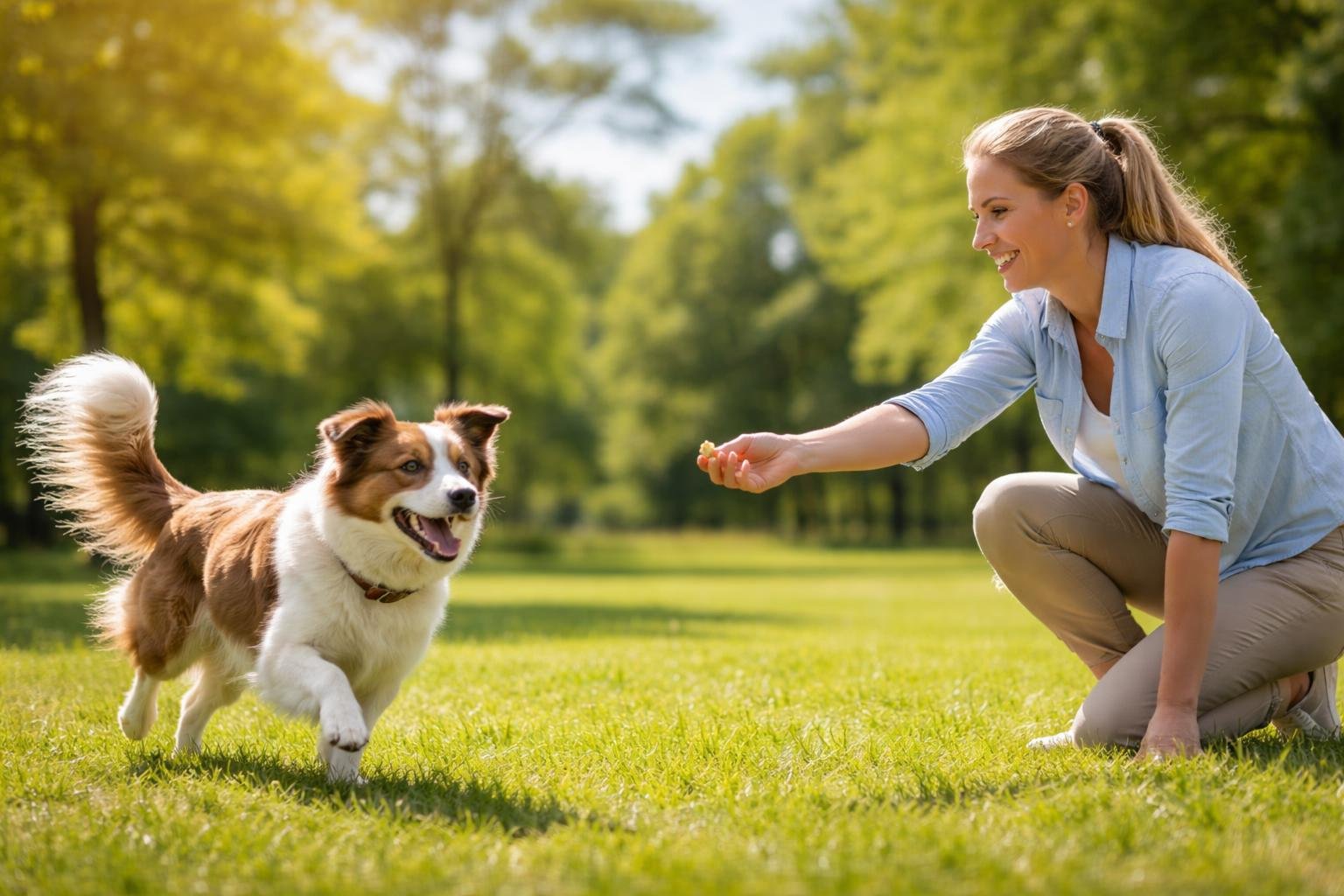
Success with recall training depends on three core elements: focus, communication, and trust. These building blocks create the conditions needed for a dog to respond reliably when called.
Strengthening Your Dog’s Focus
A dog needs to pay attention before it can follow commands. Owners should start practicing focus exercises in quiet spaces with few distractions. This means working inside the home first, where the dog feels comfortable and external stimuli are minimal.
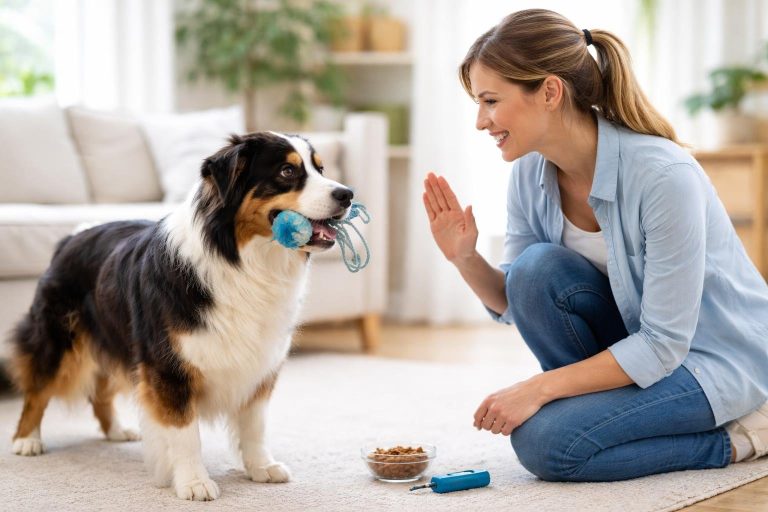
Simple eye contact exercises work well for building focus. The owner can hold a treat near their face and reward the dog when it makes eye contact for 1-2 seconds. Over time, the duration can increase to 5-10 seconds.
Focus training tips:
- Practice in 5-10 minute sessions
- Gradually add mild distractions like toys or other people
- Reward immediately when the dog looks at the owner
- Use high-value treats that the dog doesn’t normally receive
Dogs that struggle with focus may benefit from mental stimulation activities before training sessions. A quick play session or puzzle toy can help settle an energetic dog.
Establishing Reliable Communication
Clear communication means using consistent words, tones, and body language. The owner should choose one specific word for the recall command and stick with it. Common choices include “come,” “here,” or the dog’s name followed by “come.”
The tone of voice matters as much as the word itself. A happy, upbeat voice encourages the dog to move toward the owner. Harsh or angry tones can create hesitation or fear, making the dog less likely to respond.
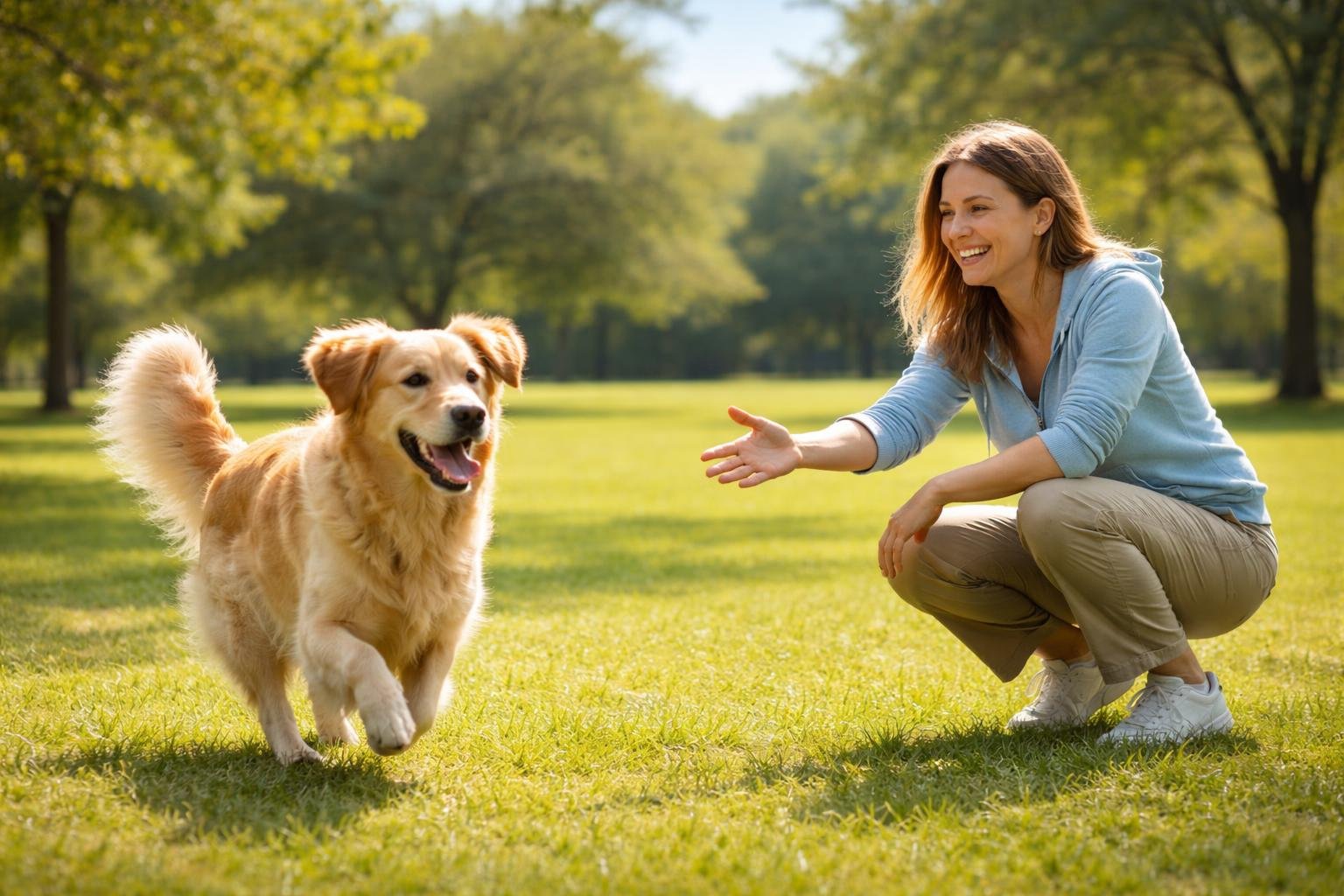
Body language should match the verbal cue. Owners can crouch down, open their arms, or move backward to make themselves more inviting. These visual signals help the dog understand what behavior is expected.
Building Trust Through Positive Reinforcement
Trust forms when a dog learns that coming when called leads to good outcomes. Positive reinforcement means rewarding the desired behavior with something the dog values. This could be treats, praise, toys, or play time.
Effective rewards include:
- Small, soft treats that can be eaten quickly
- Enthusiastic verbal praise
- Brief play with a favorite toy
- Petting or physical affection
The reward must happen within 1-2 seconds of the dog reaching the owner. This immediate timing helps the dog connect the action with the positive outcome. Delayed rewards confuse the learning process.
Owners should never punish a dog that comes when called, even if it took longer than expected. Punishment destroys trust and teaches the dog to avoid the owner when called in the future.
Essential Recall Training Steps
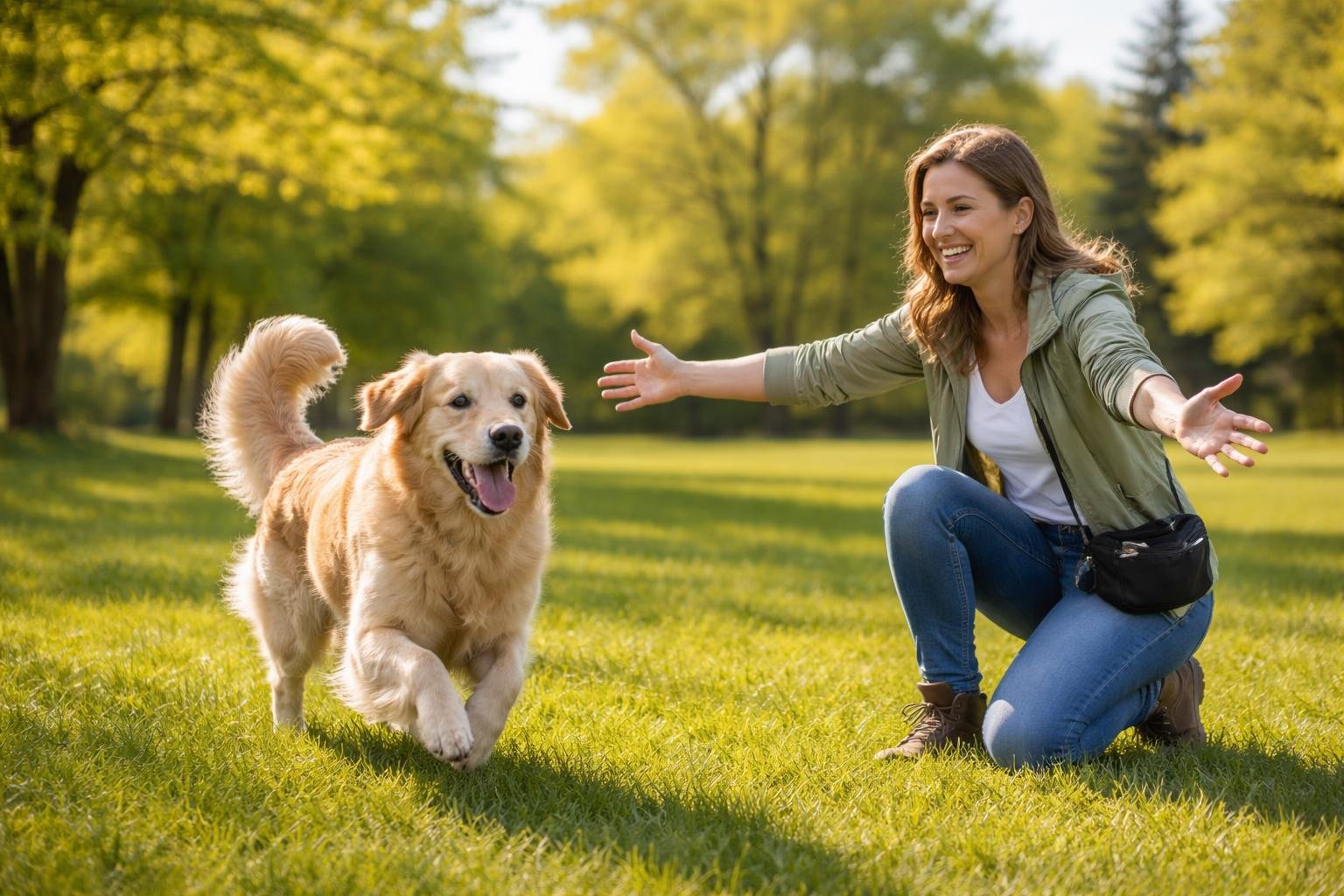
Teaching a dog to come when called requires a structured approach that builds gradually from simple exercises to real-world situations. The foundation starts with selecting the right word and rewarding the behavior consistently before moving through increasingly challenging environments.
Choosing and Reinforcing a Consistent Cue
The owner should pick one specific word for recall and stick with it throughout training. Common choices include “come,” “here,” or the dog’s name followed by a command. Using multiple words or changing the cue confuses the dog and slows progress.
Every family member must use the same word. Mixed signals make it harder for the dog to understand what behavior earns a reward.
The chosen cue needs strong positive associations from day one. When the dog responds to the word, the owner should provide high-value rewards immediately. These rewards work best when they’re items the dog doesn’t get regularly.
Good reward options include:
- Small pieces of chicken or cheese
- Favorite toys
- Enthusiastic praise and petting
- Special treats reserved only for recall training
The owner should never use the recall cue to call the dog for something unpleasant like bath time or nail trimming. This creates negative associations that weaken the command’s effectiveness.
Starting Recall Practice in Low-Distraction Environments
Initial training sessions work best indoors where the dog can focus without competing stimuli. The owner starts by standing just a few feet away from the dog.
When the dog looks at the owner, they say the recall cue once in a friendly, upbeat tone. As soon as the dog moves toward them, they reward immediately upon arrival. Short distances ensure quick success and frequent reinforcement.
Practice sessions should last only 5-10 minutes to maintain the dog’s interest. Three to five repetitions per session prevent the dog from getting bored or tired.
Once the dog responds reliably at short distances, the owner gradually increases the space between them. They can also practice in different rooms of the house to build flexibility. The reward should happen within one second of the dog reaching the owner.
Progressing to Higher Distraction Settings
After the dog masters indoor recall, training moves to a fenced yard or enclosed area. The outdoor environment introduces new smells, sounds, and visual stimuli that compete for attention.
A long training line (15-30 feet) keeps the dog safe while allowing freedom to explore. The owner lets the dog sniff around, then calls using the established cue. If the dog doesn’t respond immediately, the owner can use the line to gently guide them in the right direction without pulling hard.
Distraction levels should increase gradually. The owner might start practicing when the yard is quiet, then add challenges like:
- Training when birds are nearby
- Practicing with another person walking past
- Calling the dog away from interesting smells
- Working around other calm dogs at a distance
The owner must continue using high-value rewards in distracting environments. What worked indoors might not be motivating enough outside, so they may need to upgrade to even better treats. Success in each setting requires multiple practice sessions before moving to more challenging locations like parks or trails.
Motivating Your Dog for Reliable Responses
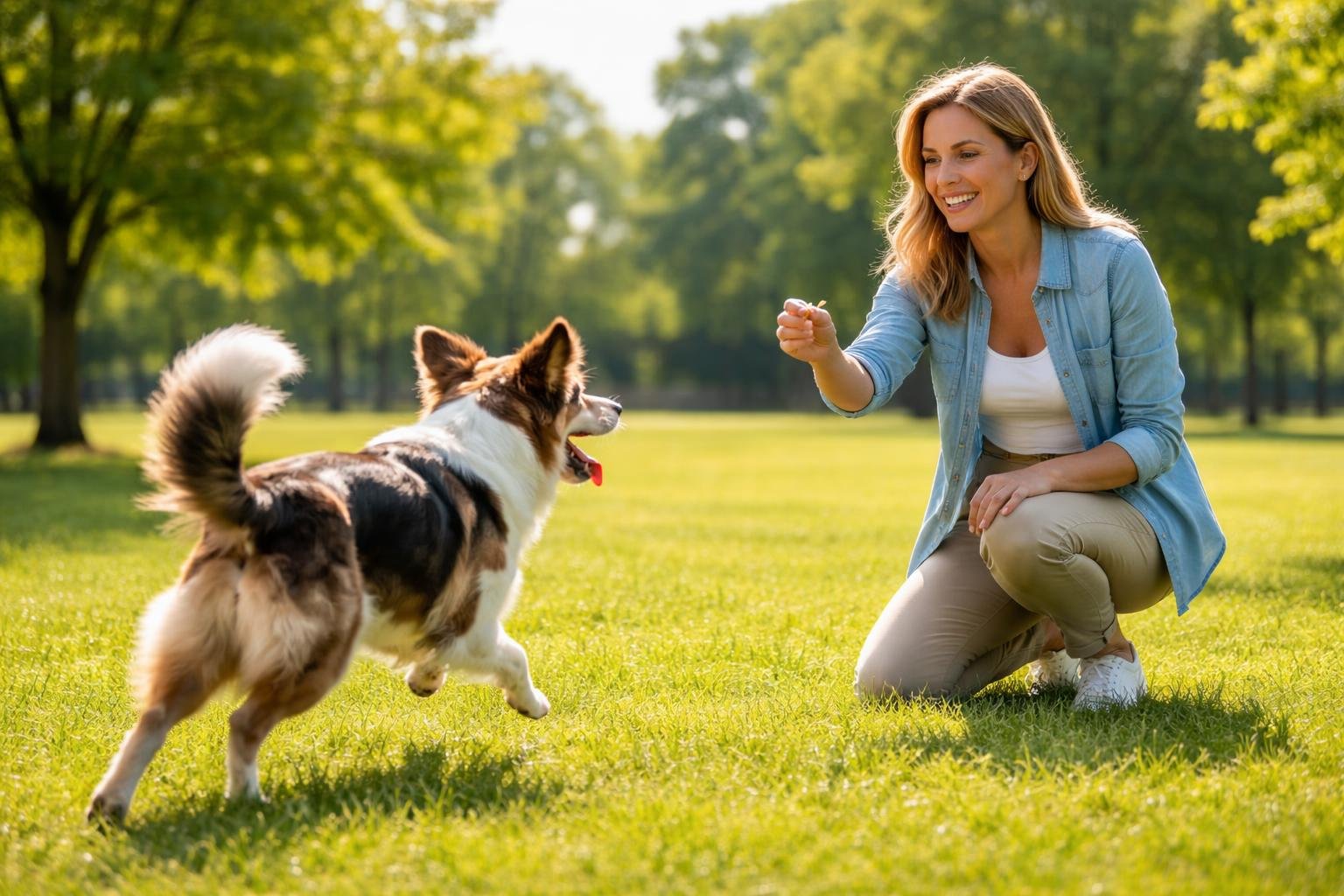
Dogs need strong reasons to leave behind interesting smells, other animals, or exciting activities and return to their owners. The right motivation makes the difference between a dog that ignores calls and one that races back every time.
Using High-Value Rewards Effectively
High-value rewards are treats or items that a dog finds more exciting than anything else in their environment. These aren’t regular kibble or standard dog biscuits. They’re special foods like small pieces of chicken, cheese, hot dogs, or liver treats that dogs only get during recall training.
The key is variety and unpredictability. Dogs stay more engaged when they don’t know exactly what reward they’ll receive. An owner might use chicken one time, cheese the next, and a favorite toy after that.
Reward size matters too. The treats should be small enough that a dog can eat them quickly without losing focus. Pea-sized pieces work well for most dogs.
Timing is critical. The reward must come within one to two seconds of the dog reaching the owner. This immediate payoff helps the dog connect the action of coming back with getting something valuable. Owners should keep high-value treats in their pockets during every training session and outdoor walk.
Incorporating Play and Praise
Some dogs respond better to play than food. A quick game of tug, a toss of a favorite ball, or a brief chase game can be just as motivating as treats. This approach works especially well for high-energy dogs or those who aren’t food-motivated.
Enthusiastic verbal praise matters more than many owners realize. A happy, excited voice tells the dog they made the right choice. The tone should sound genuinely pleased, not flat or disappointed.
Physical affection works for many dogs too. Belly rubs, chest scratches, or gentle pats can serve as rewards. The owner should learn what their specific dog enjoys most.
Combining rewards creates even stronger motivation. An owner might give a treat, offer verbal praise, and scratch behind the ears all at once. This triple reward makes coming back feel like the best decision the dog could make.
Avoiding Common Motivation Mistakes
Never punish a dog after they finally come, even if they took a long time or got into trouble first. The dog only remembers what happened right before the punishment. They’ll learn that coming to their owner leads to bad things.
Calling a dog for unpleasant activities destroys motivation fast. Owners who only call their dogs to end playtime, give baths, or leave the park teach their dogs that “come” means fun is over. Instead, owners should call their dogs randomly during activities, reward them, then let them go back to playing.
Repeating the command multiple times weakens its power. When owners say “come, come, come, come,” they teach their dog that the first command doesn’t matter. They should say the word once and wait. If the dog doesn’t respond, they need to go back to easier training situations rather than keep repeating themselves.
Using the recall command when success isn’t likely also damages reliability. If a dog is deeply focused on something and unlikely to respond, using the command anyway teaches them it’s optional.
Troubleshooting and Preventing Recall Problems
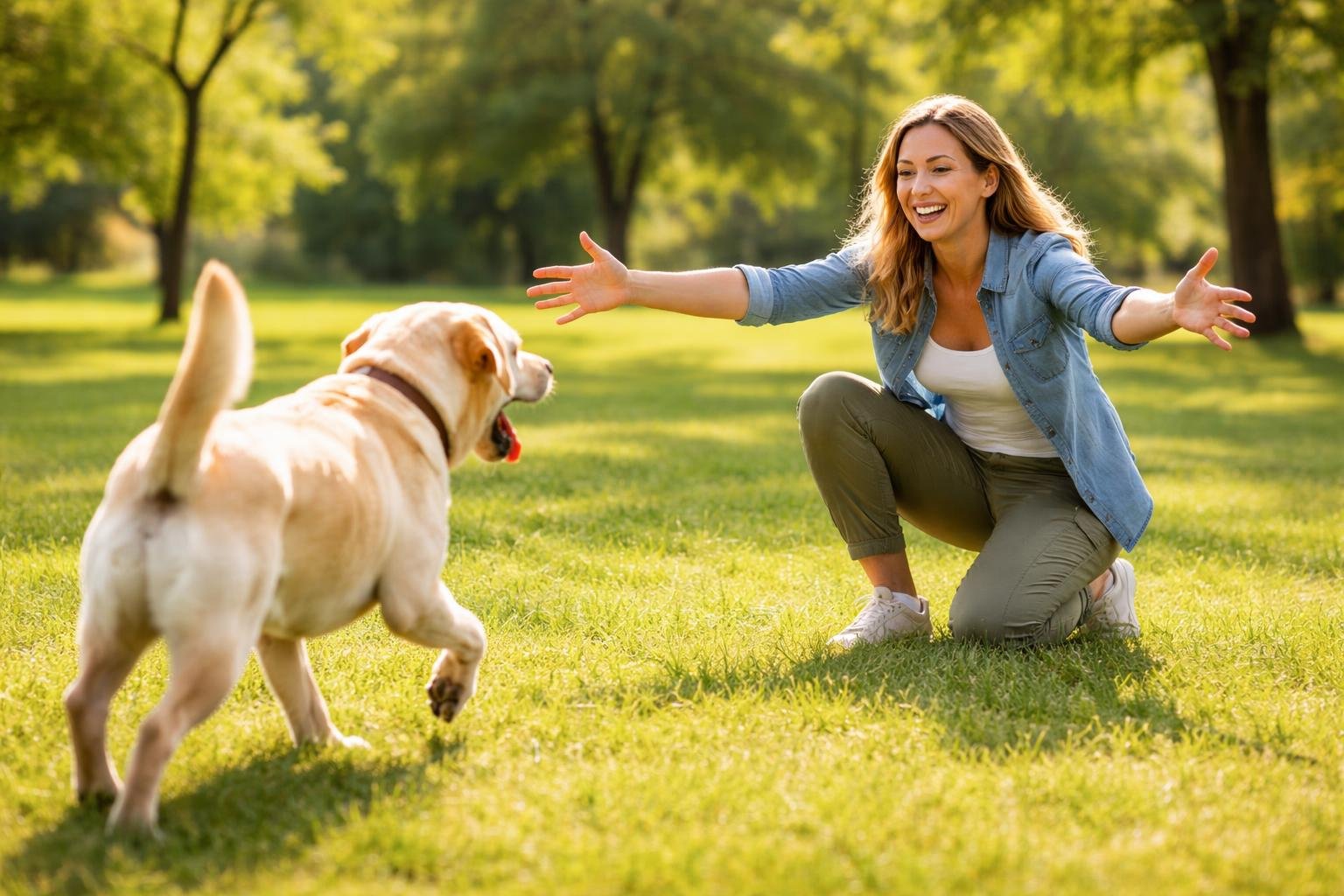
Even well-trained dogs can develop recall issues over time. Common problems include ignoring commands when distracted, responding slowly, or avoiding their owner entirely when called.
Recognizing Overuse and Recall Fatigue
Dogs can become desensitized to their recall command when owners use it too frequently. This happens when the word loses its special meaning and becomes background noise. Dog trainers recommend limiting recall commands to situations where the owner can enforce the response.
Recall fatigue occurs when a dog hears their name or recall word dozens of times daily for minor reasons. The solution involves using different words for everyday interactions. For example, an owner might say “here” for casual check-ins while reserving “come” strictly for important recalls.
Signs of recall fatigue include:
- Delayed responses to the command
- Looking at the owner but not moving
- Complete disregard of the recall word
- Coming partway then stopping
To prevent overuse, owners should practice recall only 3-5 times per training session. Between formal training, they can use the dog’s name for attention without expecting a full recall response.
Addressing Inconsistent Responses
Inconsistent recall happens when a dog obeys sometimes but not others. This usually stems from inconsistent training methods or mixed signals from family members. Every person in the household must use the same recall word and reward system.
Environmental factors play a major role in inconsistent responses. A dog might come reliably at home but ignore commands at the park. Owners need to practice in gradually more distracting settings. Start in a quiet backyard, then move to a calm park, and finally try busier locations.
Distance also affects reliability. Dogs that come from five feet away might not respond from fifty feet. Training should increase distance slowly over weeks or months, not all at once.
Preventing Negative Associations
Dogs avoid coming when they associate the recall command with unpleasant experiences. Common mistakes include calling a dog to end playtime, give medicine, or start a bath. These negative associations make the command something to avoid rather than celebrate.
The solution requires calling the dog for positive reasons at least 80% of the time. Owners should use recalls for treats, praise, or brief check-ins before releasing the dog to play again. When something unpleasant must happen, the owner should go get the dog instead of calling them over.
Never punish a dog after they come, even if:
- They took a long time to respond
- They ran away first
- They got into trouble before coming
Punishment teaches dogs that coming to their owner leads to bad outcomes. Even a frustrated tone of voice can create negative associations that damage recall training for months.
Maintaining Progress and Consistency
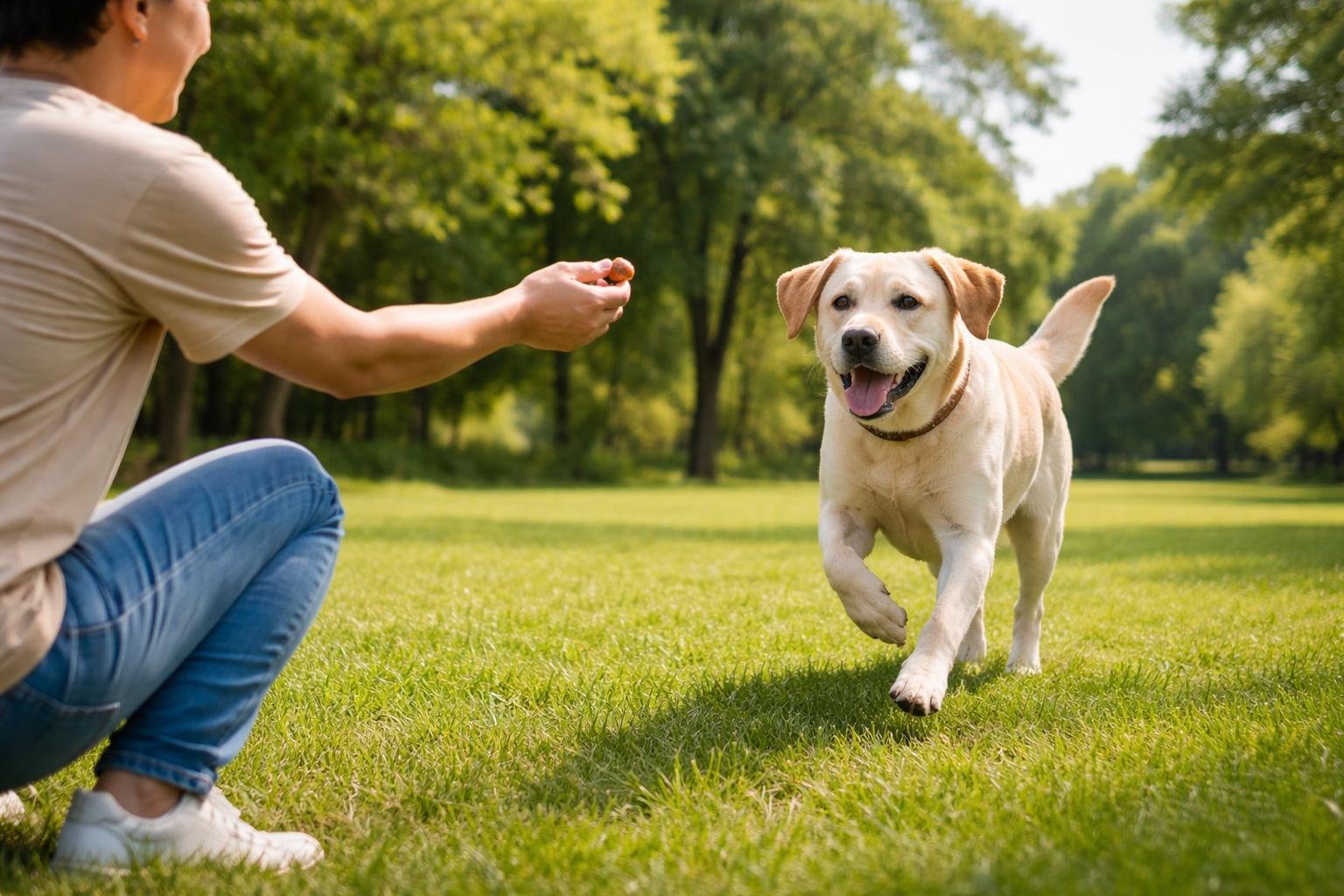
Teaching a dog to come reliably requires regular practice and careful planning to keep skills sharp. Success depends on practicing in different settings, adjusting reward schedules thoughtfully, and keeping sessions interesting for the dog.
Generalizing Recall in Real-World Scenarios
Dogs learn best when they practice commands in many different places. A dog that comes perfectly in the backyard might ignore the same command at a busy park because the environment is new.
Owners should start by practicing recall in the original training location until the dog responds every time. Then they can move to slightly more challenging spots like a quiet park or empty parking lot. Each new location adds mild distractions that help the dog learn to focus.
The training should progress slowly through different environments. This includes areas with other people, places with interesting smells, and spaces where other dogs are visible. Each setting requires several successful practice sessions before moving to the next level.
Dogs need extra support when learning in new places. Keeping sessions short and using high-value treats in difficult environments helps maintain success. If the dog struggles in a new location, the owner should return to an easier setting temporarily.
Gradually Reducing Reliance on Treats
Dogs eventually need to respond to recall commands without expecting a treat every single time. The transition away from constant food rewards should happen slowly to maintain reliable responses.
The first step involves switching to a variable reward schedule. Instead of treating after every successful recall, the owner gives treats randomly. The dog might receive a reward after the first recall, then after the third, then after the second. This unpredictability actually strengthens the behavior because the dog never knows which response will earn the treat.
Life rewards can replace some food treats. These include opportunities to play with a favorite toy, permission to greet another dog, or release to go sniff an interesting spot. Many dogs find these experiences just as valuable as treats.
Owners should never eliminate rewards completely. Even well-trained dogs need occasional reinforcement to maintain strong recall habits over months and years.
Keeping Training Engaging Over Time
Recall training loses effectiveness when it becomes boring or predictable for the dog. Fresh approaches help maintain enthusiasm and strengthen the response.
Varying the training routine prevents boredom. Owners can practice at different times of day, call from different distances, or change their body position when calling. Sometimes calling while sitting or lying down adds novelty that captures the dog’s attention.
Playing recall games makes practice feel less like work. Hide and seek works well, where one family member holds the dog while another hides and calls. Racing recalls between two people create excitement and speed. Adding obstacles or having the dog recall through tunnels or around objects adds challenge.
Short, frequent training sessions work better than long ones. Three five-minute sessions throughout the day maintain interest better than one fifteen-minute session. Dogs stay focused and eager when training ends while they still want to continue.
Ensuring Safety and Responsibility
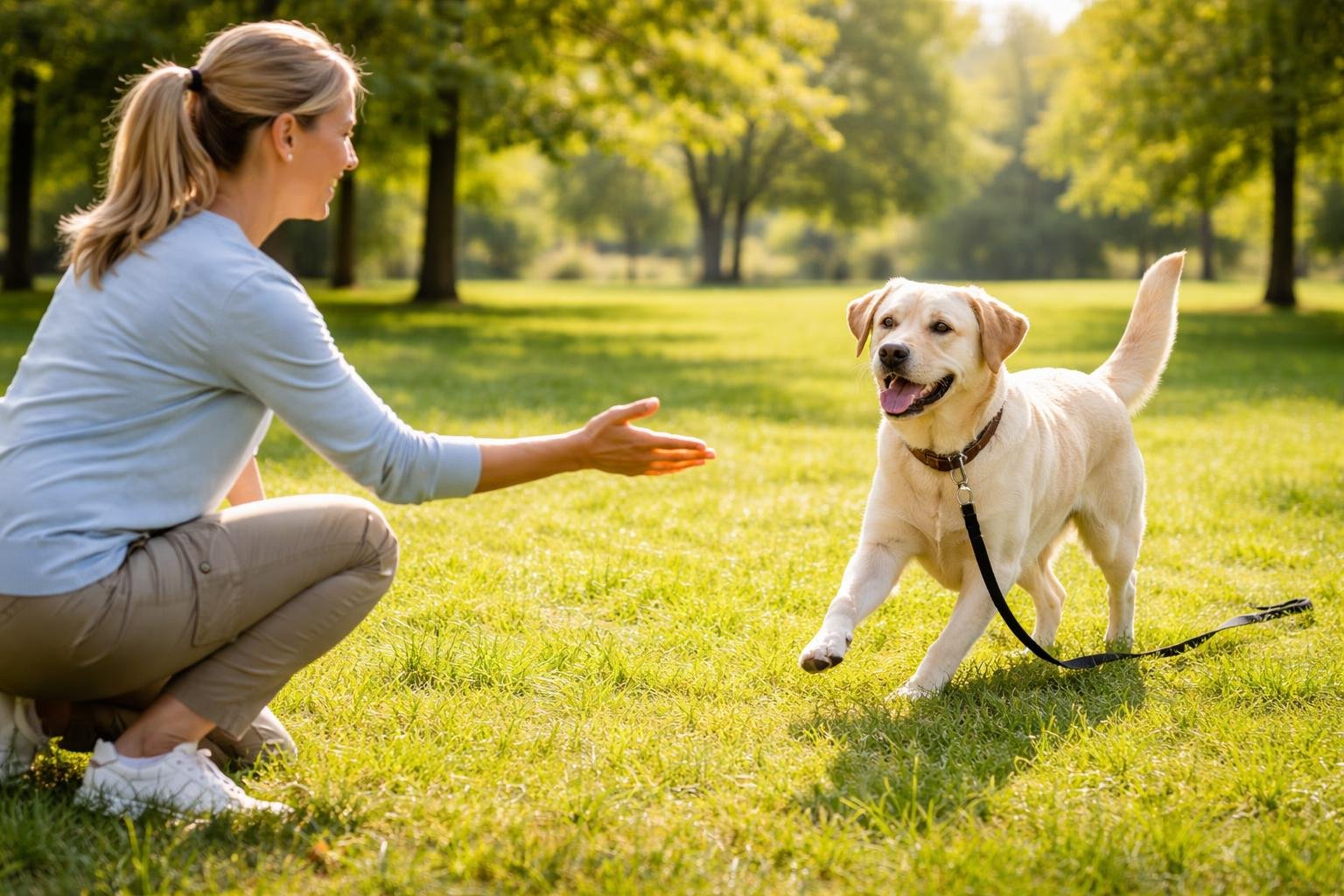
Teaching a dog to come when called is about more than convenience. This command can save a dog’s life in dangerous situations.
A reliable recall helps prevent dogs from running into traffic or approaching aggressive animals. It also stops them from eating harmful items they might find on the ground. When a dog responds to the come command every time, owners can give them more freedom to explore safely.
Key Safety Benefits:
- Prevents escape through open doors or gates
- Allows safe off-leash time in appropriate areas
- Protects dogs from wildlife encounters
- Reduces risk of getting lost
Owners should practice recall in controlled environments before trying it in public spaces. A long training leash provides safety while the dog learns. This lets the dog feel free while keeping them secure.
Dog owners must also know local leash laws. Even dogs with perfect recall need to stay leashed in areas where laws require it. Recall training does not replace responsible leash use in public places.
Owner Responsibilities:
- Follow local leash laws
- Use a leash in unfamiliar areas
- Never test recall near busy roads
- Keep training sessions positive
The come command works best when dogs trust their owners. Punishment after a dog comes when called teaches them to avoid coming next time. Every recall should end with something good, whether that’s praise, treats, or play.
Frequently Asked Questions
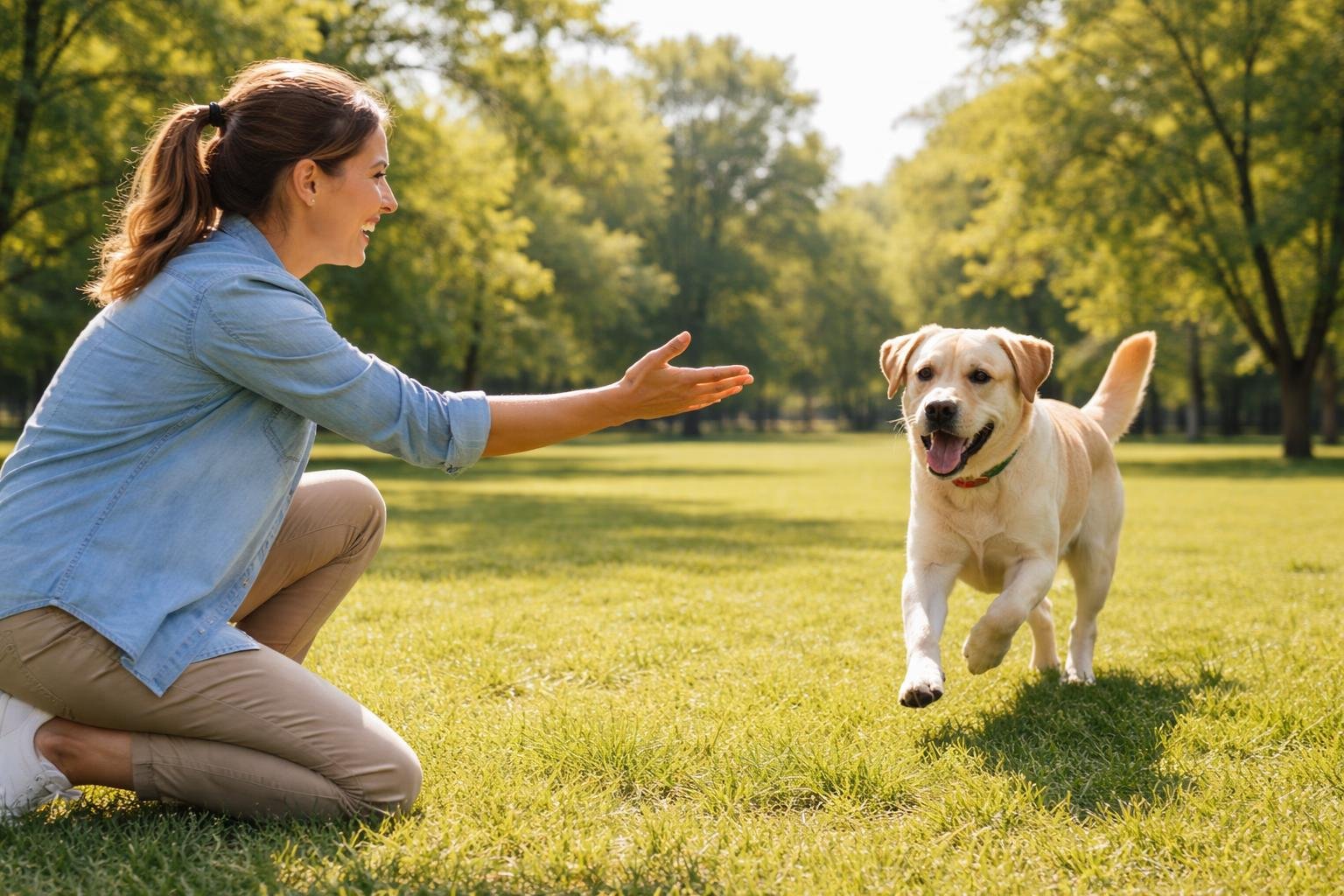
Teaching a dog to come when called involves understanding the right training methods, timing, and troubleshooting common problems. These questions address the most important challenges dog owners face when building a reliable recall.
How can I train my dog to come when called every time?
Training a reliable recall starts with making the owner more interesting than any distraction. The dog needs to associate coming when called with positive experiences every single time.
Start training in a quiet space with no distractions. Use a happy, upbeat voice and reward the dog immediately when it comes. Practice multiple times per day in short sessions.
Gradually add distractions as the dog improves. Move from indoor training to a fenced yard, then to longer distances. Never call the dog for something unpleasant like bath time or the end of playtime, as this teaches the dog that coming has negative consequences.
The key is consistency. Every family member must use the same command word and reward system so the dog doesn’t get confused.
What is the best age to start teaching a puppy a reliable recall?
Puppies can start learning recall as early as 8 weeks old. Young puppies naturally want to stay close to their owners, which makes early training easier.
The critical socialization period between 8 and 16 weeks is ideal for building strong recall habits. Puppies learn quickly during this time and haven’t yet developed the independence that makes older dogs harder to train.
Starting early prevents bad habits from forming. A puppy that learns to come reliably from the beginning won’t develop the pattern of ignoring calls later.
How do I get my dog to come to me when it doesn’t listen?
A dog that doesn’t listen usually finds the environment more rewarding than the owner. The solution involves increasing the value of coming when called and reducing the dog’s reward for ignoring the command.
Never chase a dog that doesn’t come. This turns the situation into a game where running away gets attention. Instead, try running in the opposite direction or making interesting noises to spark curiosity.
Go back to basic training in a controlled environment. Use a long training leash to prevent the dog from practicing the behavior of ignoring commands. When the dog comes, provide high-value rewards like special treats or favorite toys.
Avoid repeating the command multiple times. This teaches the dog that the first call doesn’t matter.
How can I teach recall without using treats as the main reward?
Dogs respond to rewards beyond food, including toys, play, praise, and access to what they want. The reward just needs to be something the dog values highly in that moment.
Some dogs prefer a quick game of tug or fetch over treats. Others respond best to enthusiastic praise and petting. Watch what naturally excites the dog and use those activities as rewards.
Life rewards work well for recall training. If the dog wants to go outside, ask for a recall first. If the dog wants to greet another dog, make coming when called the price of admission.
Rotate between different types of rewards to keep training interesting. This prevents the dog from only responding when treats are visible.
Why won’t my dog come when called outside, and how can I fix it?
Outdoor environments contain overwhelming distractions like smells, sounds, and other animals. A dog that responds indoors may struggle outside because the training didn’t prepare it for that level of distraction.
The fix requires building the behavior gradually. Practice in the yard before trying a park. Start at times when fewer distractions are present, like early morning instead of peak hours.
Use a long training leash during outdoor practice. This prevents the dog from learning that it can ignore commands outside while still allowing freedom to explore. The leash acts as a safety net, not a punishment tool.
Increase the value of rewards outdoors. Bring special treats or toys that only appear during outdoor training sessions. The dog needs a compelling reason to choose the owner over the environment.
What should I do if my dog runs away and won’t come back when called?
Stay calm and avoid chasing the dog, as this makes the situation worse. Chasing triggers the dog’s prey drive and turns the escape into an exciting game.
Try moving away from the dog instead. Sit down, lie down, or walk in the opposite direction. Many dogs will return out of curiosity when the owner stops pursuing them.
Make inviting sounds like clapping, squeaking a toy, or opening a car door. Some dogs respond to the sound of treats shaking in a container. The goal is to trigger the dog’s curiosity or desire without using an angry tone.
If the dog doesn’t return, don’t punish it when it finally comes back. Even if hours have passed, the dog will associate punishment with the act of returning, not with the initial running away. This guarantees the dog will be harder to catch next time.