6 Exercises You Can Do With Your Dog to Boost Fitness and Bonding
Dogs make excellent workout partners who can help their owners stay active and healthy. From running and hiking to strength training and fun games, there are many ways to exercise with your dog that benefit both pet and owner. Research shows that people who walk their dogs regularly tend to meet national fitness standards and work out more than those without pets.
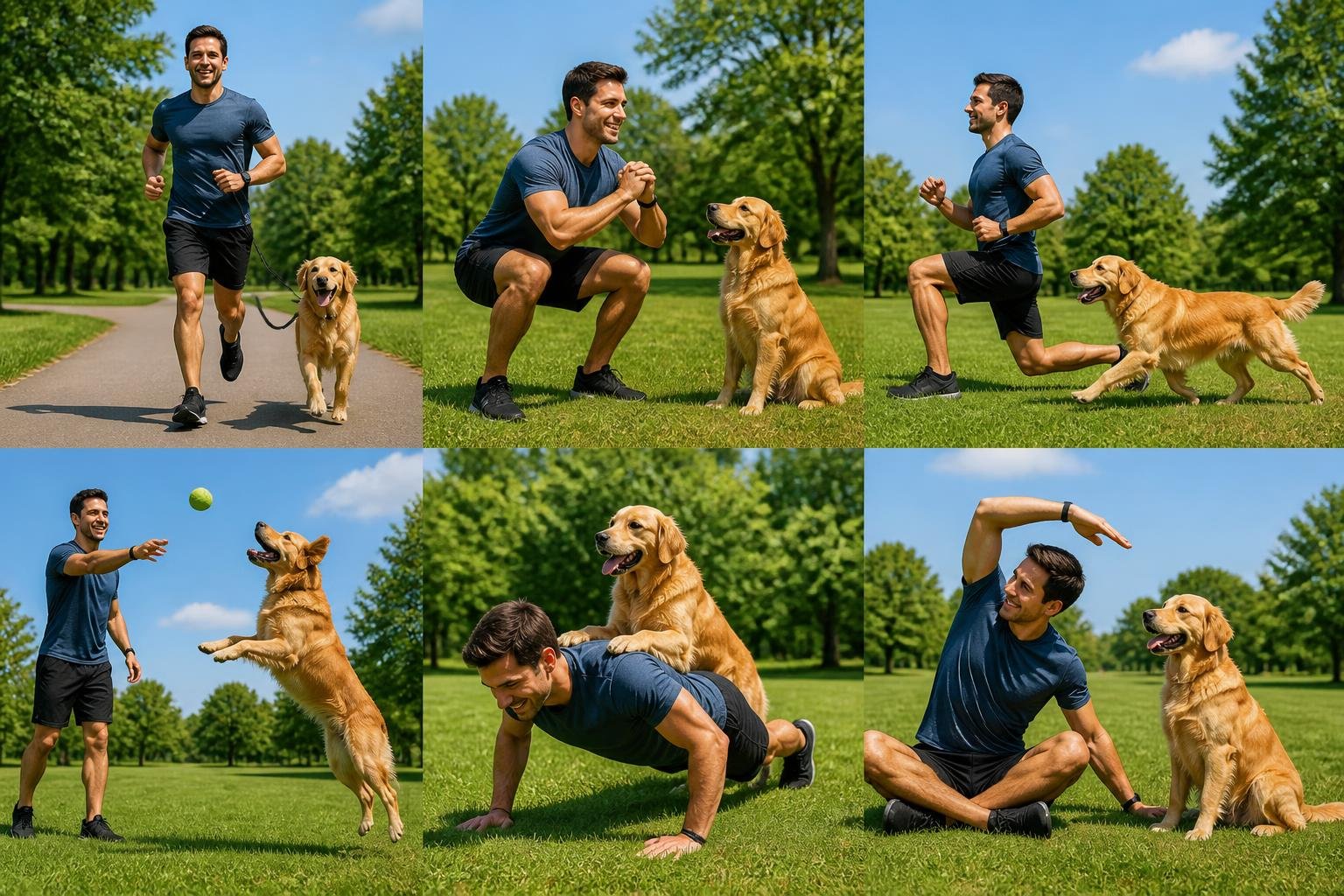
Before starting any fitness routine with a dog, owners should think about their pet’s age, breed, and current fitness level. Some dogs need more activity than others based on their size and energy. The good news is that working out with a dog doesn’t have to be complicated or boring.
This guide covers everything from basic safety tips to creative partner exercises that keep both humans and dogs engaged. Whether someone wants to try traditional activities like walking or more adventurous options, they’ll find practical ways to build a fun fitness routine with their furry friend.
Benefits of Exercising With Your Dog
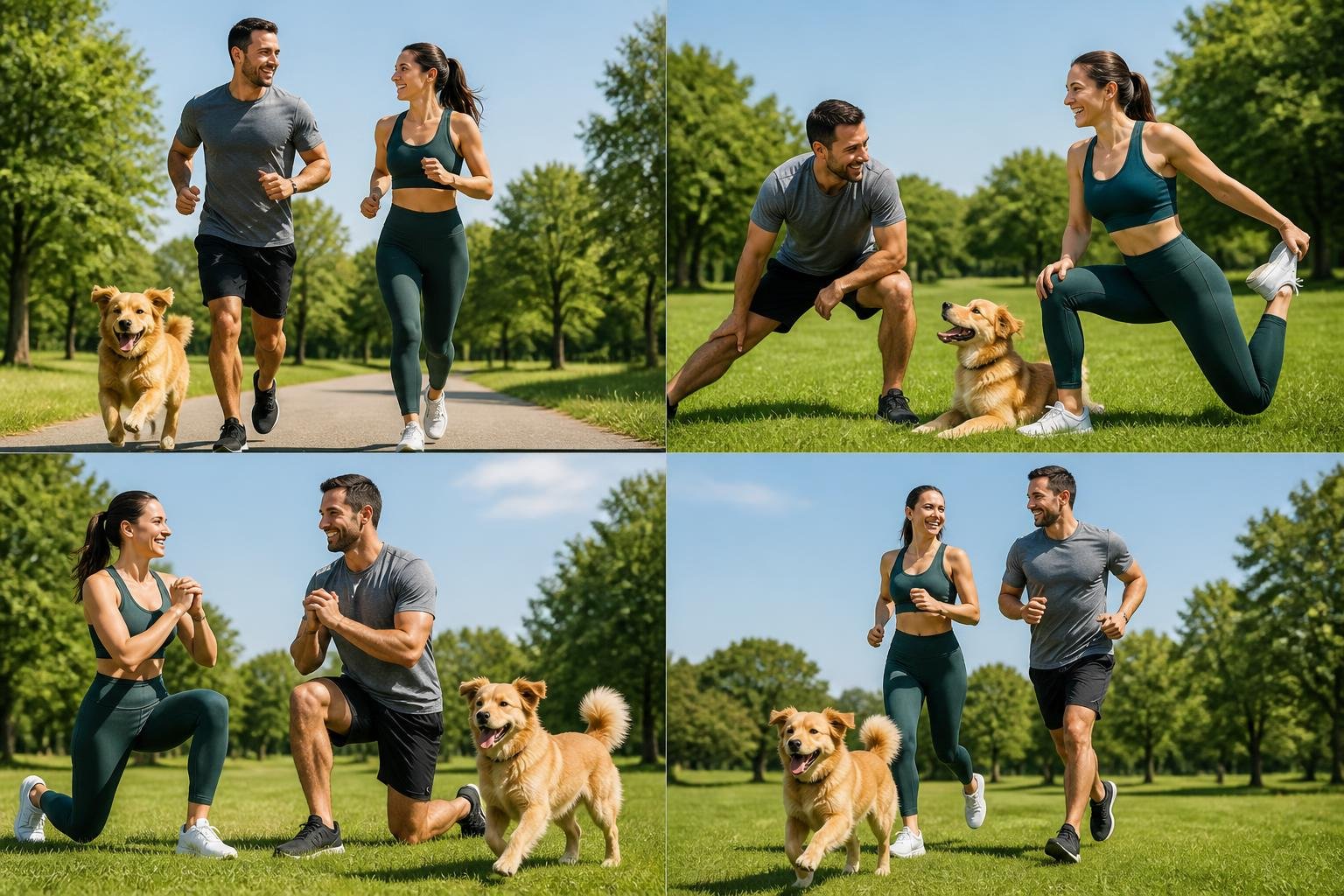
Working out with a dog creates advantages for both the owner and the pet. These benefits range from better health outcomes to improved relationships and more consistent exercise habits.
Physical and Mental Health Advantages
Dog owners who walk their pets regularly get about 30 minutes more exercise each week compared to people without dogs. This extra activity helps maintain a healthy weight, improves heart health, and builds stronger muscles and bones.
Beyond physical fitness, exercising with dogs provides mental health benefits that enhance mood and reduce stress levels. The combination of physical activity and time spent with a pet creates positive effects on emotional well-being.
Dogs also need regular exercise to stay physically and mentally fit. Active dogs tend to have fewer behavior problems, less anxiety, and better overall health. When owners and pets work out together, both receive the mental stimulation needed for good mental health.
Strengthening the Human-Canine Bond
Shared activities create stronger connections between dogs and their owners. Exercising together serves as quality bonding time that deepens trust and understanding.
Dogs view exercise time as play and interaction with their favorite person. This shared experience builds positive associations and improves communication between pet and owner. The time spent together during workouts reinforces the relationship in ways that sitting at home cannot match.
Group activities like K9 Fit Club meetings add social benefits for both dogs and owners. These gatherings allow pets to interact with other dogs while owners connect with fellow dog lovers who share similar fitness goals.
Motivation and Consistency
Dogs create accountability for their owners’ exercise routines. A pet waiting at the door for a walk makes it harder to skip a planned workout. Since dogs rely on their owners for daily exercise, this responsibility helps people establish and maintain consistent fitness habits.
Key motivation factors include:
- Dogs show excitement about exercise time
- Pets need regular activity regardless of weather or mood
- Guilt about an under-exercised dog pushes owners to stay active
- Routine walks and activities become expected daily events
This built-in motivation system helps people stick to fitness goals longer than they might when working out alone. The enthusiasm dogs show for physical activity proves contagious and makes exercise sessions more enjoyable.
Essential Safety Tips Before Starting
Before beginning any exercise routine with a dog, owners need to evaluate their pet’s current health status, select appropriate activities based on breed characteristics, ensure proper hydration in various weather conditions, and recognize warning signs that indicate when to stop.
Assessing Your Dog’s Fitness and Health
A veterinary consultation is the first step before starting any new exercise program with a dog. The veterinarian can identify underlying health conditions that may limit physical activity, such as heart problems, joint issues, or respiratory concerns.
Dogs with pre-existing conditions require modified exercise plans. Older dogs may have arthritis that makes high-impact activities painful. Puppies under 18 months need limited exercise to protect their developing joints and growth plates.
Pet owners should consider their dog’s current activity level. A sedentary dog cannot immediately jump into intense workouts. Gradually increasing exercise intensity helps prevent injuries and allows the dog’s body to adapt.
Weight status affects exercise capability. Overweight dogs tire more quickly and face increased joint stress. These dogs benefit from starting with low-impact activities like swimming or short walks.
Choosing the Right Exercises for Your Dog’s Breed and Age
Different breeds have distinct exercise requirements based on their original purposes. Herding breeds like Border Collies need high-intensity activities, while brachycephalic breeds like Bulldogs struggle with prolonged physical exertion.
High-Energy Breeds:
- German Shepherds
- Australian Shepherds
- Belgian Malinois
- Jack Russell Terriers
Low-Energy Breeds:
- Basset Hounds
- English Bulldogs
- Shih Tzus
- Pugs
Age plays a critical role in exercise selection. Puppies need short play sessions rather than long runs. Adult dogs in their prime years can handle more demanding activities. Senior dogs benefit from gentle, low-impact movements that maintain mobility without straining joints.
Body type and breed characteristics determine which exercises work best. Long-legged breeds excel at running, while short-legged breeds may prefer activities that don’t require extensive jumping.
Hydration and Weather Considerations
Dogs need access to fresh water before, during, and after exercise sessions. Dehydration occurs quickly during physical activity, especially in warm weather. Pet owners should bring a portable water bowl and offer water every 15-20 minutes during extended workouts.
Temperature affects a dog’s ability to exercise safely. Dogs cool themselves primarily through panting, making them vulnerable to heat exhaustion. Exercise should occur during cooler parts of the day when temperatures exceed 75°F.
Weather Safety Guidelines:
- Hot weather: Exercise early morning or late evening
- Cold weather: Limit exposure for short-haired breeds
- Humidity: Reduce exercise intensity and duration
- Rain/snow: Use reflective gear for visibility
Pavement temperature requires attention during summer months. If the pavement feels too hot for a person’s bare hand after five seconds, it will burn a dog’s paw pads.
Monitoring for Signs of Fatigue or Injury
Dogs may push themselves past safe limits to please their owners. Recognizing fatigue signs prevents injuries and dangerous health situations. Excessive panting that doesn’t slow after a brief rest indicates the dog needs a break.
Warning Signs to Stop Exercise:
- Limping or favoring a leg
- Reluctance to continue moving
- Disorientation or confusion
- Bright red or pale gums
- Difficulty breathing
Owners should watch their dog’s gait throughout the workout. Changes in how a dog moves may indicate muscle strain or joint pain. Signs of discomfort require immediate attention and rest.
Heat stroke is a medical emergency. Symptoms include excessive drooling, vomiting, collapse, and seizures. If these occur, the dog needs immediate cooling and veterinary care.
Regular breaks during exercise allow dogs to recover. A good rule is to stop every 20-30 minutes for water and rest, even if the dog seems eager to continue.
Warm-Up and Preparation
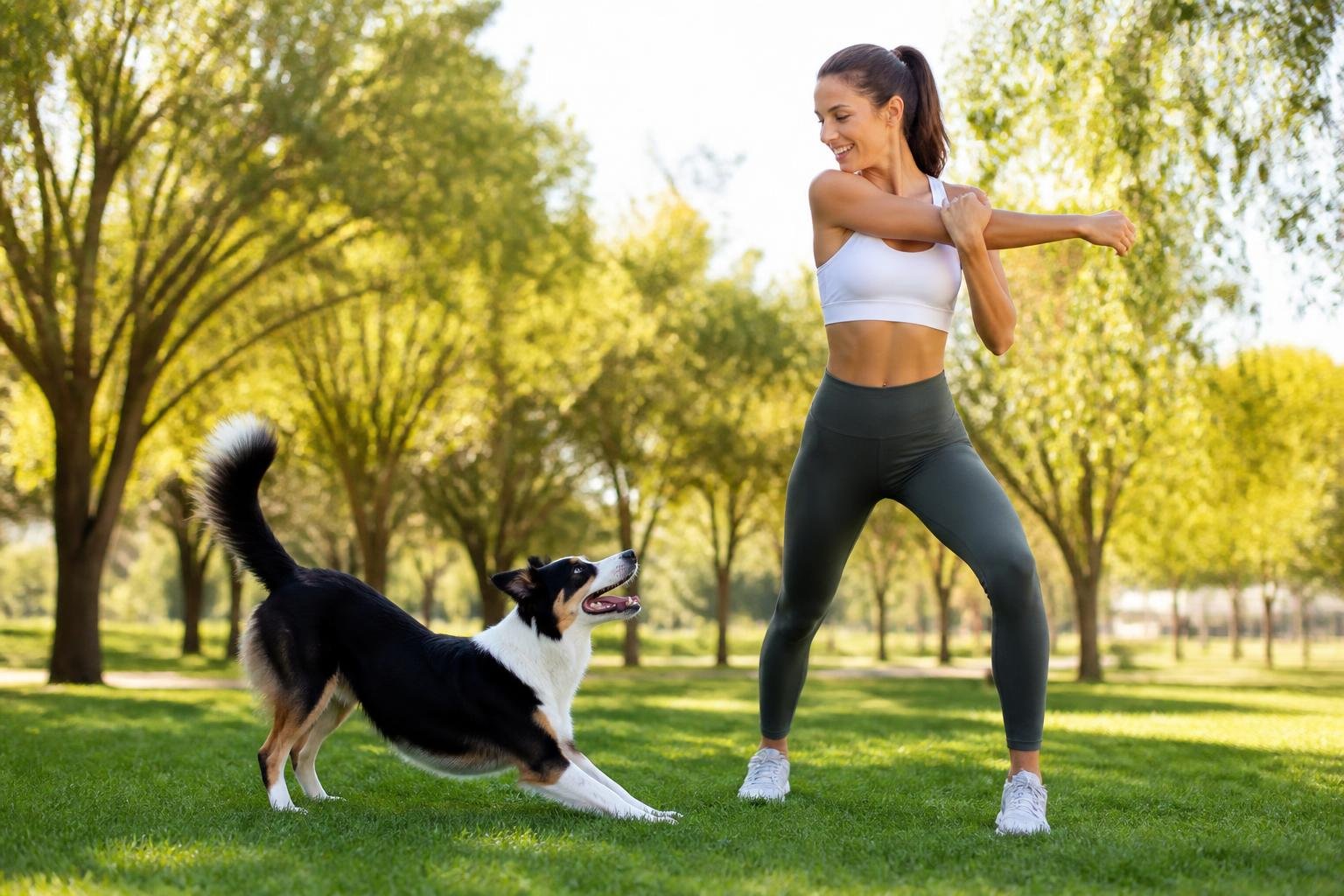
Preparing a dog’s body before exercise reduces injury risk and helps muscles work better during activity. A proper warm-up increases blood flow, loosens joints, and gets dogs mentally ready for physical work.
Gentle Stretching and Range of Motion
Dogs need stretching just like humans do before physical activity. Leg stretches help warm up muscles by gently extending each front and back leg for a few seconds at a time.
Owners should move each leg slowly and never force a stretch. The goal is to increase range of motion in the shoulders, hips, and knees without causing discomfort.
Basic stretching routine:
- Hold each front leg forward for 3-5 seconds
- Extend back legs behind the body for 3-5 seconds
- Gently rotate shoulders in small circles
- Move hips through their natural range of motion
Stretching is useful for warming up before exercise and cooling down after. Dogs should show relaxed body language during stretches. If a dog pulls away or shows signs of pain, stop immediately and check with a veterinarian.
Short Leash Power Walks
A brisk walk on a short leash serves as an effective warm-up before more intense exercise. This activity gets blood flowing to muscles and raises body temperature gradually.
Power walks should last 5-10 minutes at a steady pace. The dog should walk at the owner’s side on a loose leash without pulling or stopping frequently.
This warm-up helps transition from rest to activity mode. It also gives dogs a chance to sniff their environment and take care of bathroom needs before structured exercise begins.
Dog Yoga Techniques
A simple yoga flow can serve as a wonderful warm-up that prepares dogs for exercise through three-second stretching poses. Dog yoga engages core muscles and improves balance while keeping the activity gentle and controlled.
Common dog yoga positions:
- Play bow (front end down, rear up)
- Sit-to-stand transitions
- Controlled down positions
- Gentle twists while standing
These movements help dogs focus mentally while warming up physically. Each pose should be held briefly and repeated several times. The practice works well for dogs of all fitness levels since movements stay low-impact and easy to modify.
Core Workouts for You and Your Dog
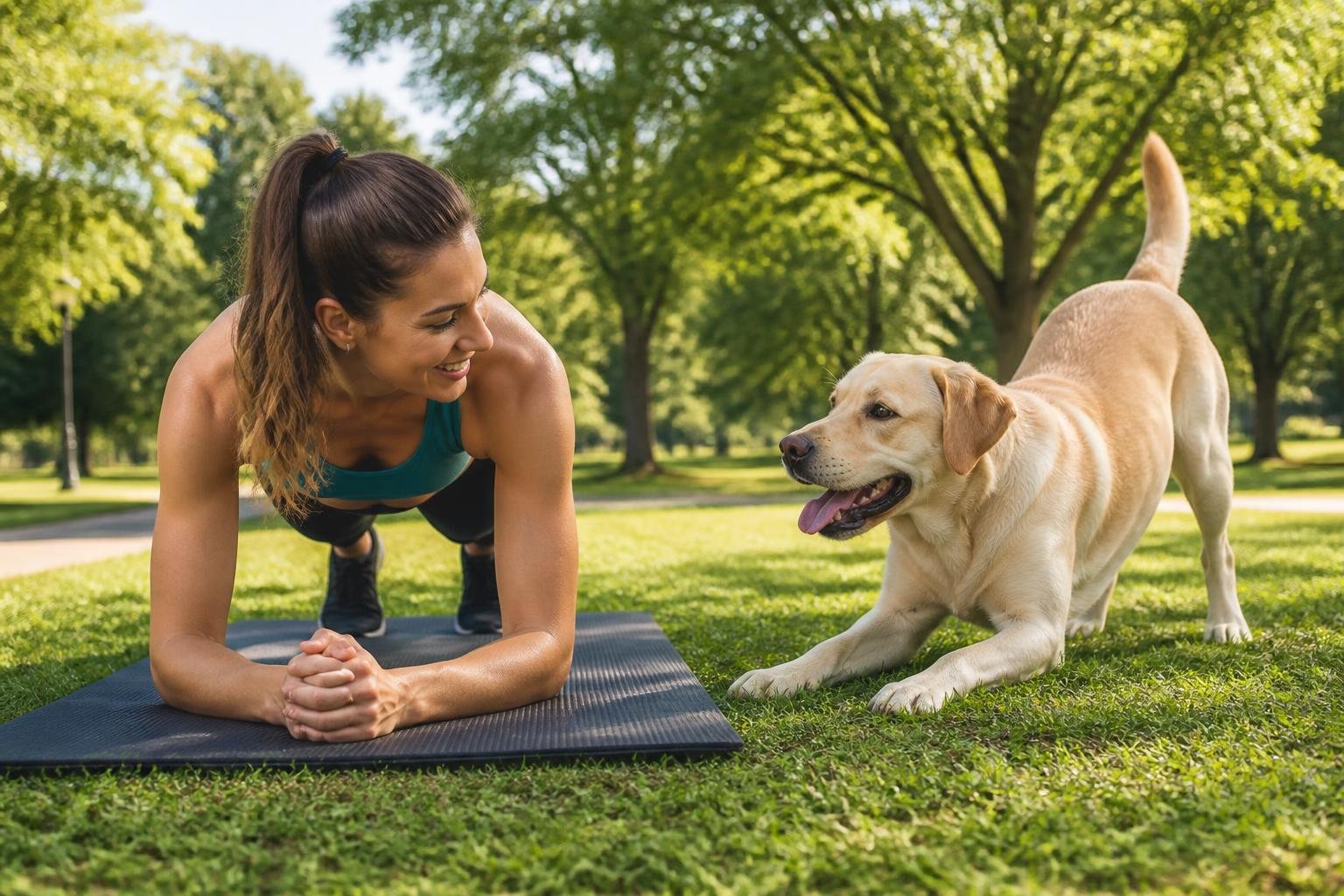
Working your core alongside your dog builds strength in your midsection while keeping your pet engaged and active. These exercises target your abs, obliques, and lower back muscles while giving your dog mental stimulation and physical activity.
Waggin’ Wall Sit
The wall sit challenges your quads and core while your dog learns patience and focus. Find a sturdy wall and slide down into a seated position with your back flat against it. Your thighs should be parallel to the ground, forming a 90-degree angle at your knees.
Hold this position for 30 to 60 seconds while your dog sits or stays in front of you. Place a treat on your knee to encourage your dog to maintain eye contact and remain still. This creates a bonding moment while your muscles work hard.
As you build strength, increase the hold time by 10-second intervals. Your core muscles engage to keep your torso upright and stable. The isometric hold burns calories and builds endurance in your legs and midsection.
Leapin’ Labrador Lateral Hops
Lateral hops work your obliques and improve balance while encouraging your dog to move side to side. Stand with your feet together and your dog beside you on a leash or in a controlled space. Jump sideways about two feet, landing softly on both feet.
Encourage your dog to hop or move with you in the same direction. Use verbal cues like “side” or “over” to help them understand the movement pattern. Complete 10 to 15 hops in each direction.
Benefits include:
- Strengthened oblique muscles
- Improved lateral movement for both you and your dog
- Enhanced coordination and agility
- Cardiovascular conditioning
This dog-friendly exercise keeps both parties moving and engaged.
Rover’s Reverse Lunge
Reverse lunges activate your core stabilizers while your dog practices heeling or circling commands. Step backward with your right foot, lowering your back knee toward the ground. Your front knee should stay above your ankle as you drop down.
Keep your torso upright to engage your core muscles throughout the movement. Have your dog walk around you in a circle or weave between your legs as you hold the bottom position. This adds an extra challenge to your balance.
Push through your front heel to return to standing. Complete 10 to 12 repetitions on each leg. Your abs and lower back work to keep you stable as your dog moves around you, creating a dynamic workout that challenges both of you.
Fun and Innovative Partner Exercises
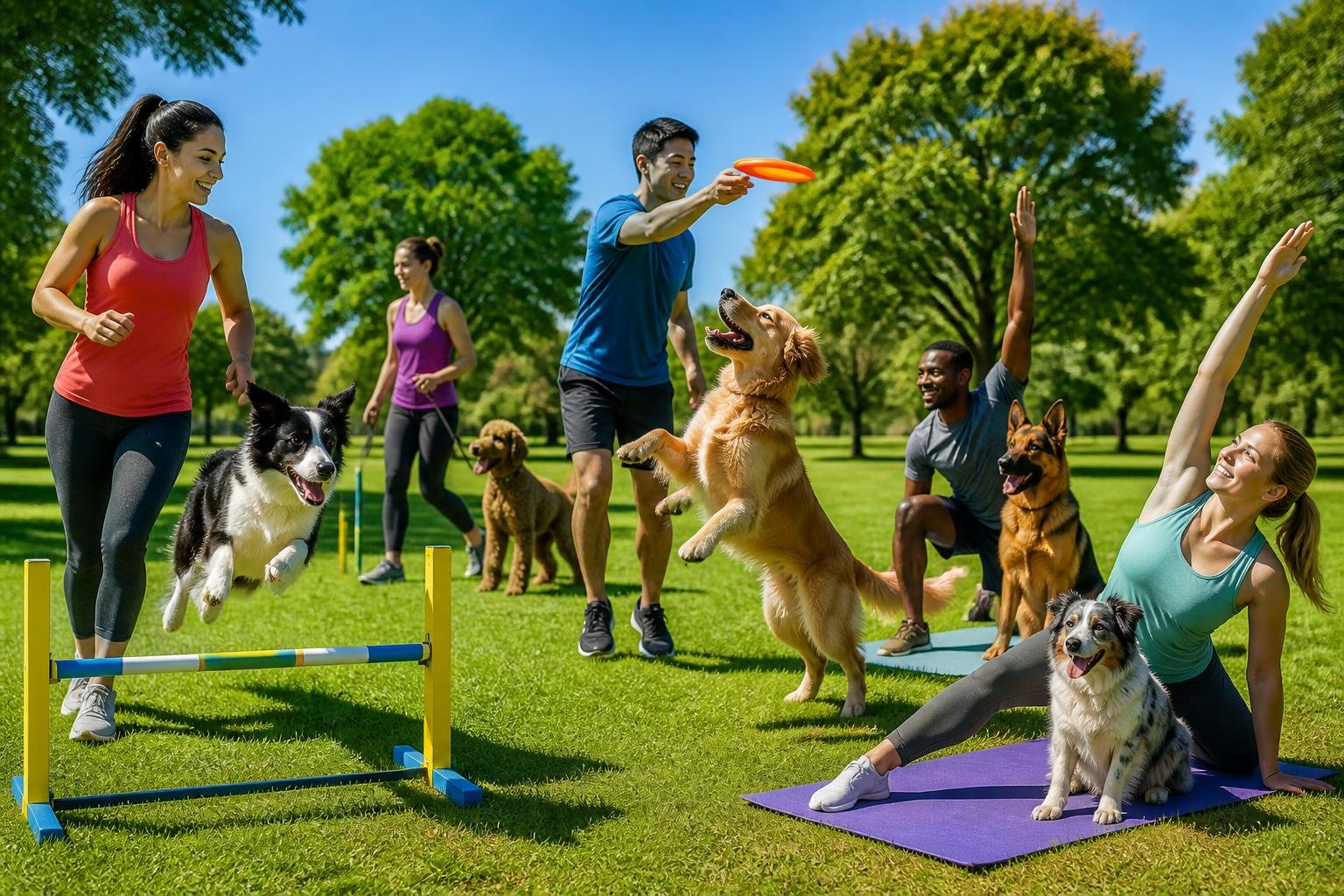
Partner exercises with dogs combine fitness moves for humans with active engagement for pets. These movements strengthen the human body while keeping dogs mentally stimulated and physically involved.
Butts With Your Mutts
Butts With Your Mutts is a popular exercise program designed for dogs and their owners to work out together. The workout focuses on squats and lower body movements while keeping the dog engaged through treats and commands.
During these exercises, the owner performs squats while holding treats at different heights to encourage the dog to move up and down. The dog learns to sit, stand, and jump on command while the owner builds leg and glute strength. This creates a bonding experience where both participants benefit from the activity.
Key benefits include:
- Strengthens owner’s glutes, quads, and hamstrings
- Improves dog’s obedience and focus
- Burns calories for both partners
- Requires no special equipment
The K9 Fit Club offers classes that teach these techniques in group settings. Owners can start with 10-15 repetitions and gradually increase as both they and their dogs build endurance.
Sheltie Step Up Variations
Sheltie step ups involve using stairs, benches, or platforms for cardio and strength training. The owner steps up and down on the elevated surface while the dog follows along or weaves between their legs. These movements improve balance and coordination for both participants.
Dogs can practice their agility by jumping onto lower platforms or walking up stairs alongside their owner. Smaller breeds work well with lower steps, while larger dogs can handle standard stair heights. The owner can add knee lifts or lateral movements to increase difficulty.
Equipment options:
- Outdoor stairs or bleachers
- Exercise step platforms
- Sturdy benches or boxes
Handlers should start with 2-3 sets of 10 steps and monitor their dog’s energy levels throughout the routine.
Sit-to-Stand Circuits
Sit-to-stand circuits combine chair exercises with dog training commands for mental and physical stimulation. The owner performs repeated sit-to-stand movements from a chair while asking the dog to mirror the motion with sit and stand commands.
This exercise strengthens the owner’s leg muscles and core while reinforcing basic obedience training. The dog responds to verbal cues and hand signals, creating a synchronized routine. Owners can hold a toy or treat to maintain the dog’s attention between repetitions.
The workout adapts easily to different fitness levels. Beginners start with 8-10 repetitions per set, while advanced exercisers can add weights or increase speed. Dogs benefit from the mental challenge of following commands while staying focused on their handler.
Active Play and Engaging Games
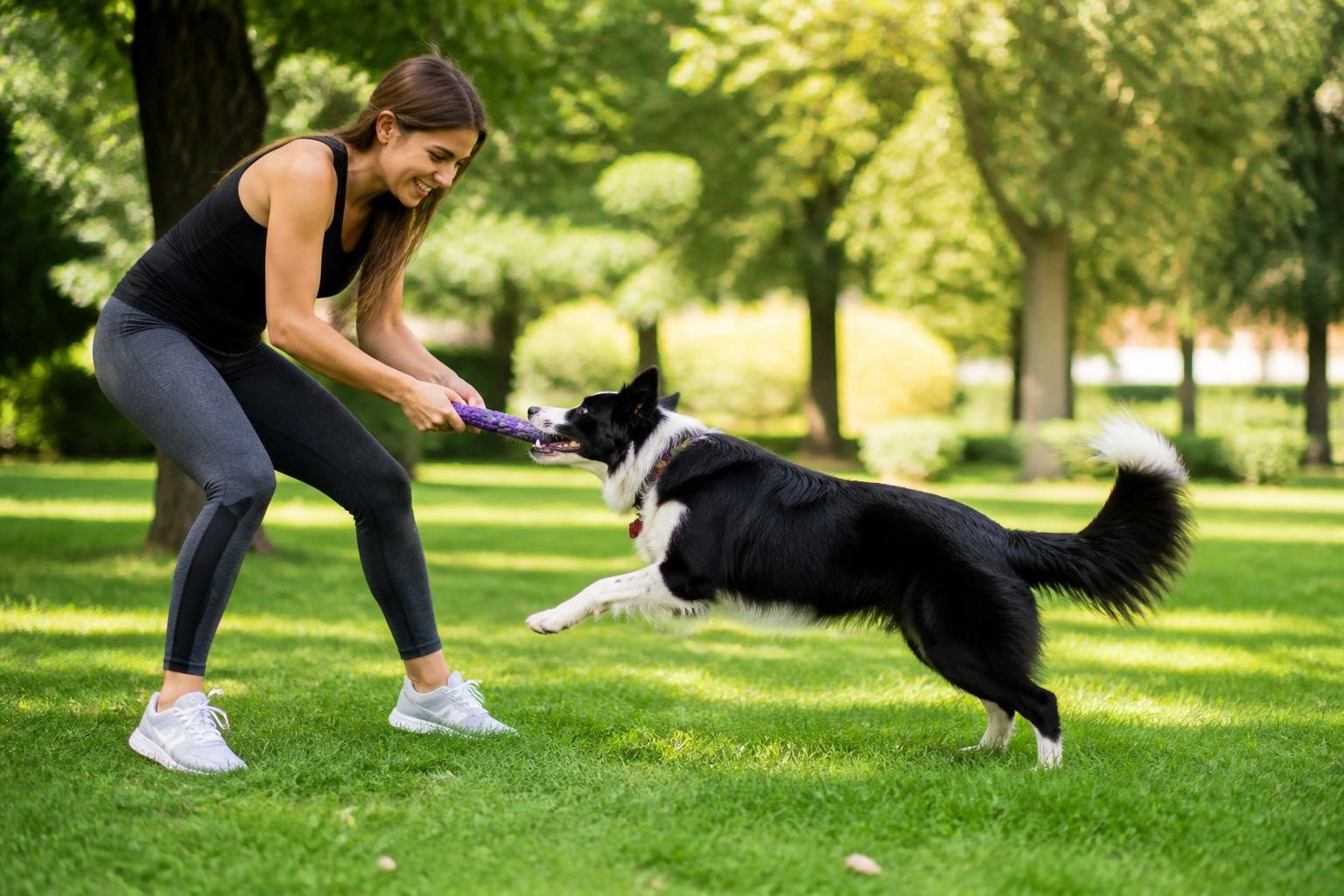
Playing active games with a dog builds physical strength and keeps their mind sharp. These activities turn regular exercise into fun bonding time that both owner and pet can enjoy together.
Fetch for Fitness
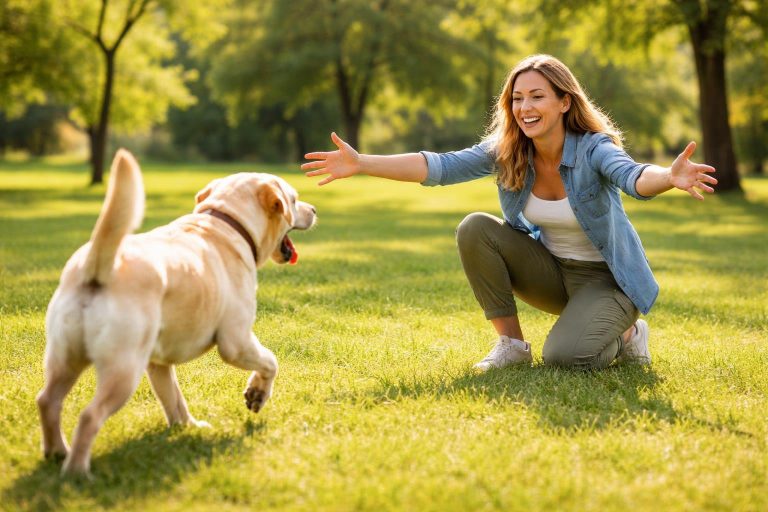
Fetch ranks among the most effective ways to exercise a dog while staying in one spot. The game involves throwing a ball, stick, or toy while the dog runs to retrieve it and brings it back. This simple activity provides intense cardio work for dogs of all sizes.
Most dogs naturally love chasing moving objects. Owners can increase the workout intensity by throwing the item farther or choosing uphill terrain. Adding variety helps too – switching between different toys or changing throwing patterns keeps dogs interested and engaged.
The exercise works well in backyards, parks, or any open space. Dogs typically need 30 to 60 minutes of physical activity each day, and fetch combined with other games helps meet this requirement. Owners benefit by getting their dogs running without having to run themselves.
Chase and Tag Games
Chase games let dogs use their natural hunting instincts in a safe way. The owner runs while the dog follows, then switches direction suddenly to keep the dog guessing. These games build speed and quick reaction skills.
Tag works similarly but adds more interaction. The owner gently touches the dog and runs away, encouraging them to chase back. Both games create excitement and strengthen the bond between owner and pet.
These activities work best in fenced areas where dogs can run freely. Short bursts of 5-10 minutes prevent overexertion while still providing good exercise. The games also teach impulse control when owners practice stop and start commands during play.
Paw Lifts and Balance Activities
Balance exercises build core strength and improve a dog’s coordination. Paw lifts involve asking the dog to lift one paw at a time while standing still. This simple movement engages their stabilizing muscles and increases body awareness.
Owners can make this harder by having dogs stand on slightly uneven surfaces like cushions or folded towels. The unstable surface forces dogs to engage more muscles to stay balanced. Each session should last just a few minutes to avoid tiring the dog too much.
These activities work especially well for older dogs or those recovering from injuries. The low-impact nature protects joints while still providing meaningful exercise. Regular practice helps dogs develop better posture and move more confidently.
Dog Fitness Classes and Community Support
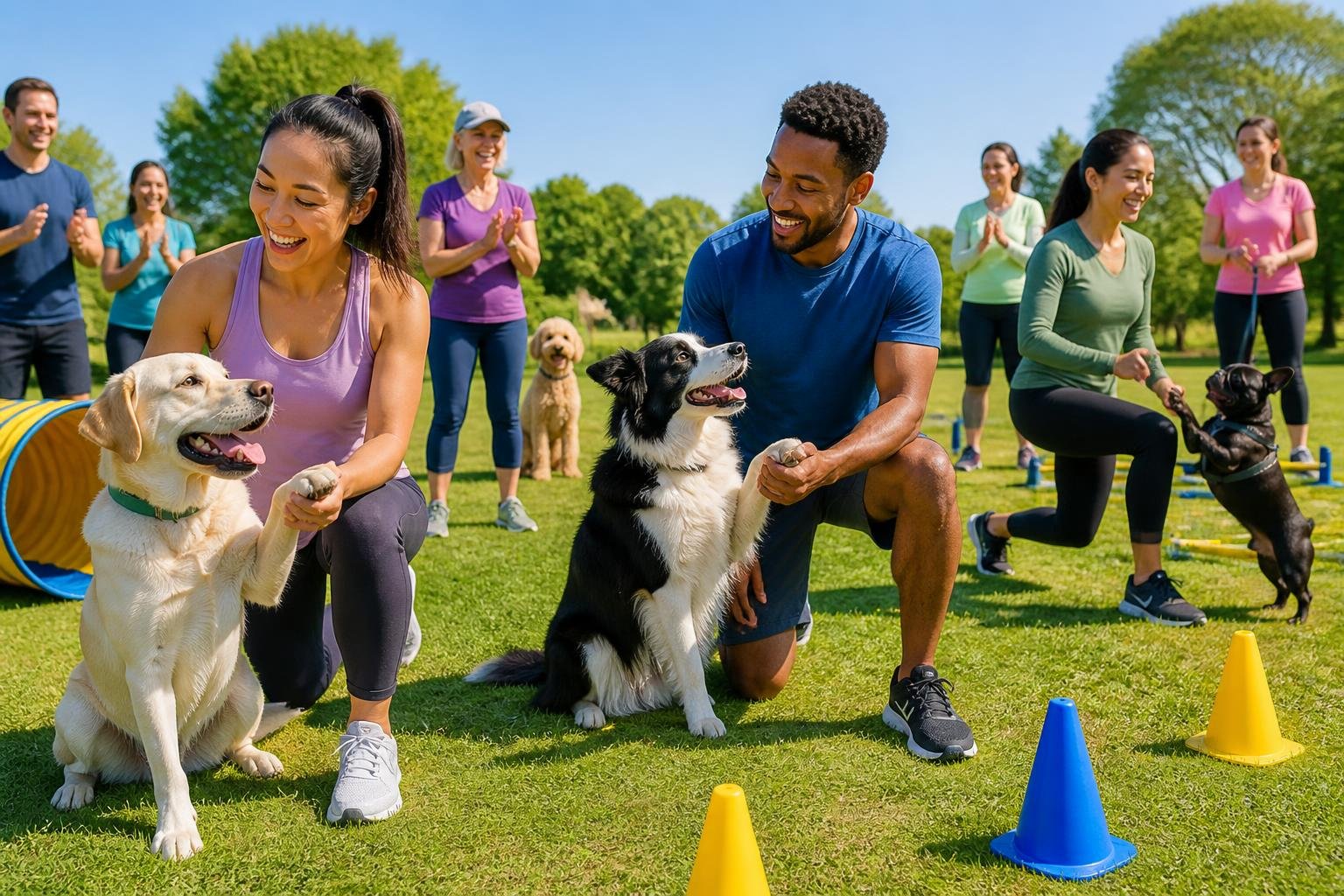
Group fitness classes and community programs offer structured workouts that benefit both dogs and their owners. These organized activities provide professional guidance, social opportunities, and motivation that can be hard to find when exercising alone.
K9 Fit Club Programs
K9 Fit Club offers specialized fitness classes designed for dogs and their owners to work out together. These programs combine human exercise routines with dog training and activity. Classes typically include activities like running, jumping, and strength training that engage both participants.
Many K9 Fit Club locations offer programs like “Butts with Your Mutts,” which focuses on lower body exercises for humans while dogs participate in complementary activities. Participants might do squats while their dogs practice sit-stay commands or lunges while dogs weave between their legs.
The structured environment helps keep both dogs and owners accountable to their fitness goals. Professional instructors ensure exercises are safe and appropriate for different fitness levels and dog breeds. Classes usually run for 45 to 60 minutes and meet once or twice weekly.
Joining Local Dog Exercise Groups
Organized exercise classes for humans and dogs have grown in popularity over the past decade. Local groups often meet at parks, beaches, or dedicated training facilities. These gatherings create opportunities for dogs to socialize while owners get their workouts in.
Many communities have running clubs that welcome dogs, hiking groups for dog owners, or beach exercise meetups. Pet stores and veterinary clinics often know about local groups and can provide contact information. Social media platforms and community boards are also good places to find these groups.
Group workouts provide motivation that solo exercise lacks. Members encourage each other and share tips about dog-friendly trails, equipment, and training techniques.
Online Dog Fitness Resources
Digital platforms offer video tutorials, workout plans, and virtual classes for people who prefer exercising with their dogs at home. Many websites provide free workout routines specifically designed for different dog sizes and energy levels.
Online resources include downloadable training guides, exercise calendars, and instructional videos. Some platforms offer live streaming classes where participants can interact with instructors in real time. Mobile apps track workout progress for both humans and dogs.
These resources work well for people with busy schedules or limited access to in-person classes. They allow flexibility in timing and location while still providing expert guidance and structured programs.
Tips for Staying Consistent and Making Exercise Enjoyable
Building a regular workout routine with a dog requires tracking improvements, adjusting activities based on weather conditions, and recognizing milestones together to maintain long-term commitment.
Tracking Progress and Setting Goals
Dog owners should establish clear, measurable targets for their exercise routines. Writing down specific goals like walking 30 minutes daily or running two miles three times per week helps create accountability.
Keeping a simple log helps owners monitor both their own fitness improvements and their dog’s energy levels. A basic tracking system can include:
- Distance covered during walks or runs
- Duration of each exercise session
- Dog’s behavior (energy level, engagement, fatigue signs)
- Weather conditions that affected the workout
Setting small weekly goals makes the process less overwhelming. For example, increasing walk distance by a quarter mile each week or adding one extra play session provides tangible achievements. Research shows that people who track their exercise progress are more likely to maintain consistent workout habits.
Pet owners should also observe their dog’s physical changes, such as improved stamina, healthier weight, or better behavior at home.
Adapting Routines for Seasonal Changes
Weather variations require modifications to keep both owner and dog safe and comfortable. During hot summer months, scheduling walks during early morning or evening hours prevents overheating and paw pad burns from hot pavement.
Winter conditions call for different adjustments. Shorter outdoor sessions work better in freezing temperatures, especially for small or short-haired breeds. Indoor alternatives like stair climbing, hallway fetch, or hide-and-seek games maintain activity levels when outdoor exercise isn’t practical.
Rainy days don’t have to stop workouts entirely. Waterproof gear for both human and dog allows for shorter walks, while indoor options keep everyone moving. Swimming pools or hydrotherapy centers offer year-round exercise opportunities regardless of outdoor conditions.
Spring and fall typically provide ideal weather, but seasonal allergies may affect some dogs. Owners should watch for excessive scratching or sneezing and adjust routes to avoid high-pollen areas when necessary.
Celebrating Achievements With Your Canine Companion
Recognizing progress strengthens the bond between owner and dog while reinforcing positive exercise habits. When reaching a milestone like completing the first full month of daily walks, making exercise more enjoyable helps maintain motivation during challenging periods.
Reward systems work for both species. Owners might treat themselves to new workout gear or a massage after consistent effort. Dogs appreciate extra playtime, a new toy, or special healthy treats after mastering a new activity.
Taking progress photos every few weeks documents visible changes in fitness levels and body composition. These visual records serve as powerful reminders of how far both exercise partners have come.
Some owners create social celebrations by inviting friends with dogs for group hikes or park meetups. Sharing achievements with others who understand the commitment adds an extra layer of satisfaction. Small celebrations maintain enthusiasm and prevent workout routines from feeling like chores rather than enjoyable activities with a beloved pet.
Frequently Asked Questions
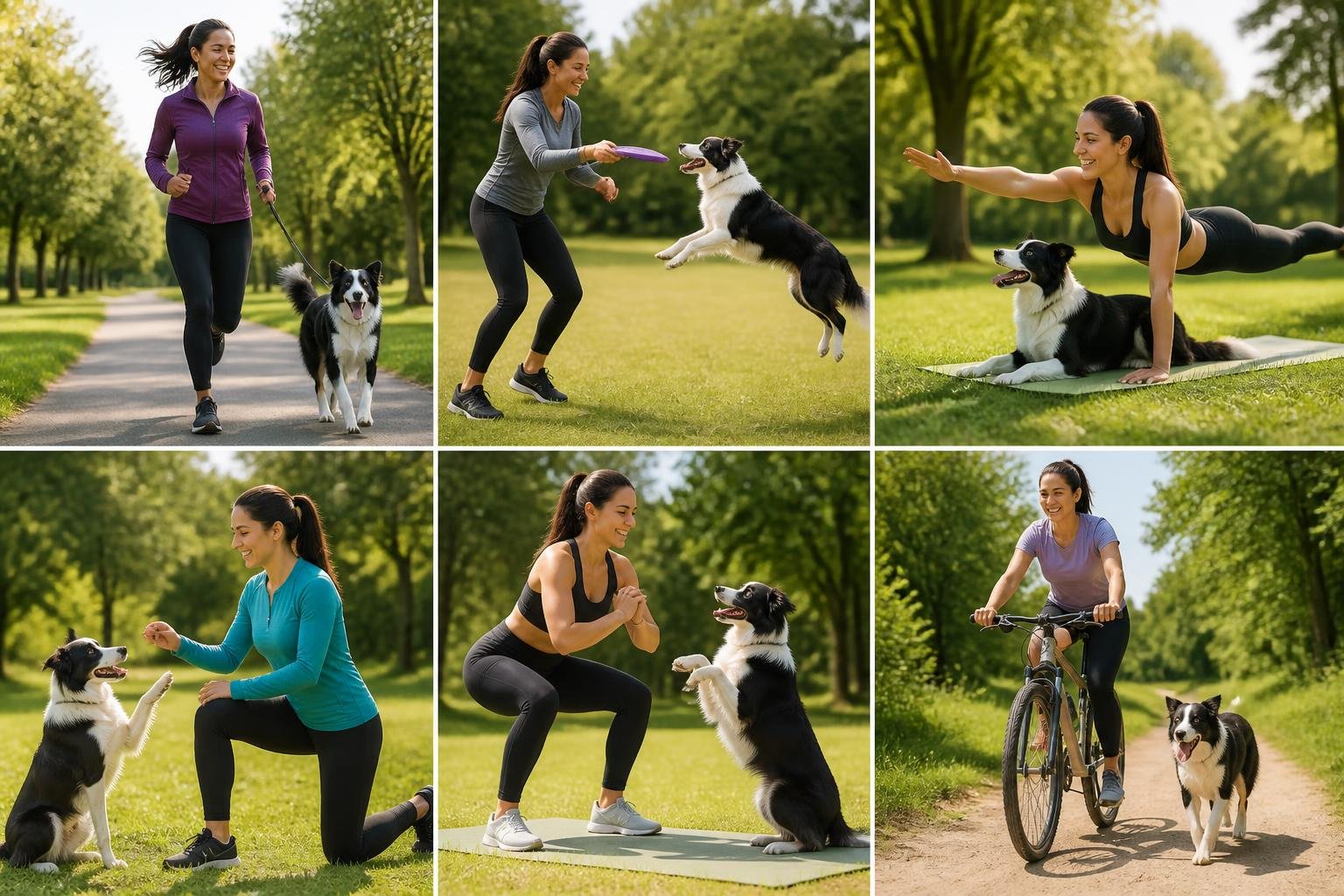
Proper preparation and understanding your dog’s limits helps prevent injuries and makes exercise more enjoyable for both of you. Different dogs need different approaches based on their age, health, and breed characteristics.
What are the safest warm-up steps to do before exercising with a dog?
Dogs need a gentle warm-up period just like humans do. A slow 5-10 minute walk at an easy pace gets blood flowing to the muscles and prepares joints for activity.
Light stretching can help once muscles are warm. Owners can encourage their dog to do gentle play bows or reach for treats in different positions to extend the spine and limbs.
Starting exercise routines gradually helps reduce the risk of strains and sprains. Dogs should never jump straight into intense running or jumping without this preparation period.
How can I tell if my dog is getting overexerted during a workout?
Heavy panting with the tongue hanging far out to the side indicates a dog needs a break. Dogs also show fatigue by slowing down, lagging behind, or lying down during activity.
Excessive drooling beyond normal panting can signal overheating. A dog that seems disoriented, stumbles, or has bright red gums needs immediate rest and water.
Pet owners should monitor for signs of exhaustion and always provide water and rest breaks during workouts. If a dog refuses to continue or acts unusually tired afterward, the intensity was likely too high.
What joint-friendly exercise options are best for senior dogs or dogs with arthritis?
Swimming provides excellent exercise without putting pressure on joints. The water supports the dog’s weight while still working the muscles.
Slow, controlled walks on flat surfaces help maintain mobility without causing pain. Shorter sessions multiple times per day work better than one long walk for dogs with joint issues.
Low-impact exercises help keep dogs moving without putting extra strain on their joints. Balance exercises and gentle stretching can strengthen supporting muscles around painful joints.
Which exercises help improve a dog’s focus and impulse control while staying active?
Obedience training provides mental stimulation while getting the dog moving in a controlled way. Commands like sit, stay, and come require the dog to concentrate and control their impulses.
Stop-and-go activities like fetch with a wait command before retrieving teach patience. The dog must stay calm and focused despite excitement.
Agility exercises that require following directions through tunnels or around cones combine physical activity with mental discipline. These activities tire out both the body and mind, which helps reduce unwanted behaviors.
How much daily exercise does a dog need based on breed, age, and health status?
Dogs require regular exercise tailored to their age, breed, and tolerance to maintain health. High-energy breeds like Border Collies and German Shepherds typically need 60-90 minutes of vigorous activity daily.
Adult dogs of medium energy breeds generally do well with 30-60 minutes of moderate exercise. Small or toy breeds often need only 20-30 minutes split into shorter sessions.
Puppies should not do intense exercise until their growth plates close, usually around 12-18 months depending on breed. Senior dogs may only manage 15-20 minutes of gentle activity but benefit from moving regularly. Dogs with health conditions need exercise plans approved by their veterinarian.
What equipment and space do I need to do effective indoor workouts with my dog?
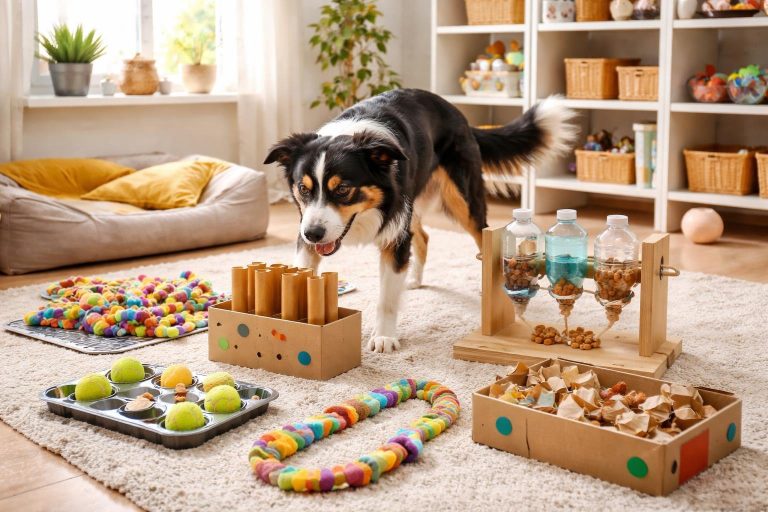
A few basic props and some motivating treats are enough to provide conditioning exercises at home. A hallway or small room with cleared floor space works for most indoor activities.
Stairs offer an excellent workout area for climbing exercises. Cushions or folded towels can create balance challenges for core strengthening.
A non-slip mat prevents injuries on smooth floors during active play. Toys like tug ropes, balls, and treat-dispensing puzzles add variety to indoor workouts without requiring much space.