
Why Do Dogs Howl at Sirens? The Instinctive Response Explained
Your dog’s sudden howling when an ambulance or fire truck passes by might seem random, but this behavior has clear roots in canine instincts and biology. Most experts believe dogs howl at sirens either because they mistake the high-pitched sound for another dog’s howl or because the noise triggers an instinctive response inherited from their wolf ancestors. While the exact reason remains uncertain, these two explanations are widely accepted among animal behaviorists.
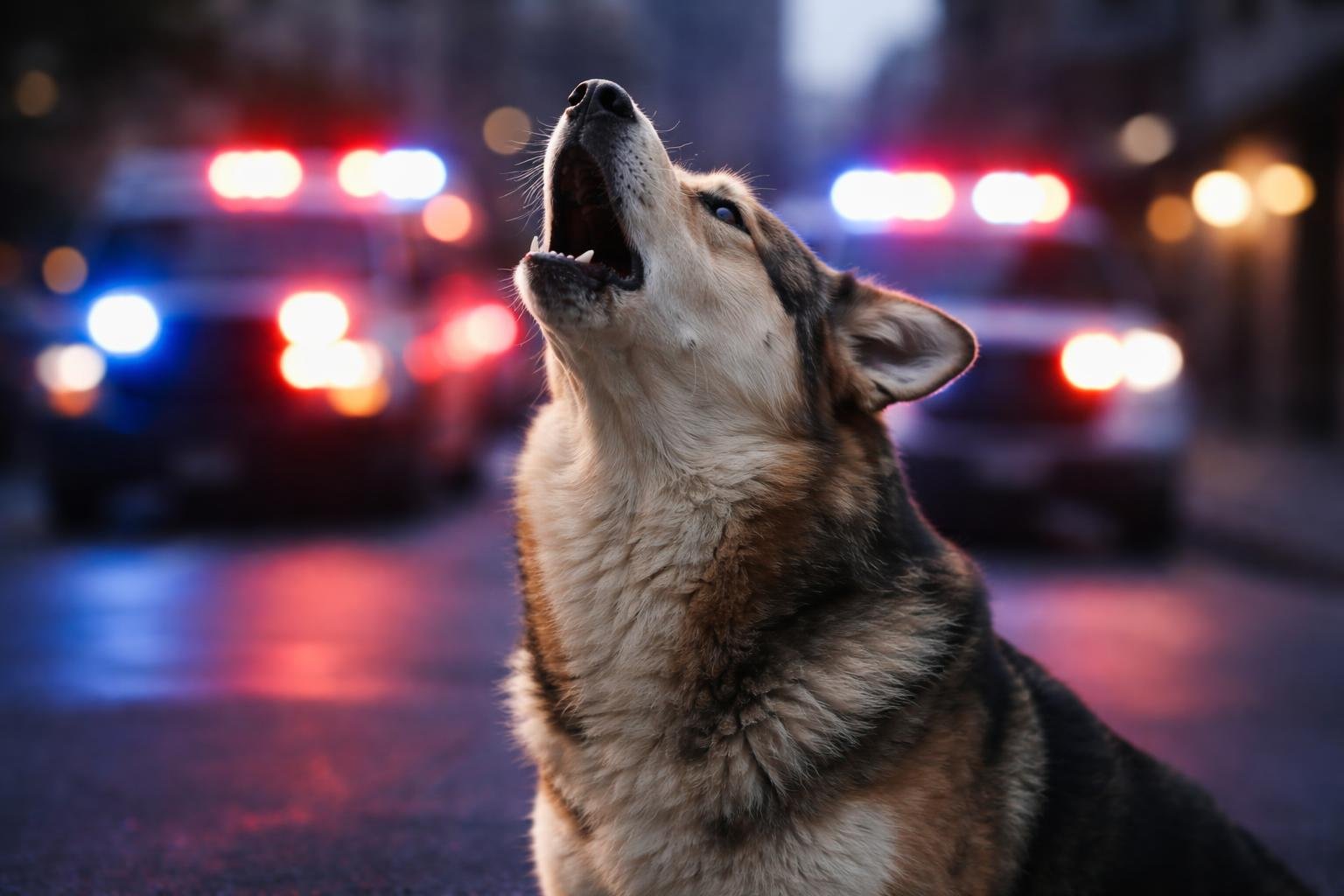
The behavior connects to how dogs communicate and process sounds in their environment. Sirens produce frequencies that may sound like howling to a dog’s sensitive ears. This can prompt them to respond as they would to another canine, creating what they perceive as a call-and-response situation.
Understanding why dogs react this way involves looking at their natural instincts, breed traits, and individual personalities. Some dogs never howl at sirens while others do it every time. The reasons behind this behavior reveal interesting facts about how dogs perceive the world around them.
Understanding Canine Howling

Howling serves as a fundamental form of communication for dogs, rooted in their genetic link to wolves. Dogs use howling alongside barking, whining, and growling to express different needs and respond to environmental triggers.
The Origins of Howling in Dogs
Howling is an ancient behavior that dogs inherited from their wolf ancestors. Wild wolves use howling to communicate across long distances, coordinate pack movements, and mark territory boundaries. Domestic dogs retain this instinct even though they no longer live in wild packs.
Scientists believe dogs kept this vocal behavior because it served important survival functions for thousands of years. The behavior is hardwired into their DNA, which explains why even puppies raised without other dogs will naturally howl. Different dog breeds show varying levels of howling behavior based on how closely they were bred to retain wolf-like traits.
Some breeds like huskies, malamutes, and beagles howl more frequently than others. These breeds were specifically developed for tasks that required vocal communication with handlers or other dogs.
Comparison to Wolf Behavior
Wolves howl primarily to maintain contact with pack members spread across large territories. A single wolf’s howl can travel up to 10 miles in open terrain. Pack members use these vocalizations to locate each other, warn of danger, and coordinate hunting activities.
Dogs show similar patterns when they howl in response to certain sounds. They may perceive high-pitched sirens as another dog or animal calling out. This triggers their instinct to respond and communicate back.
Unlike wolves, domestic dogs also howl for attention from their human families. They have adapted their communication methods to interact with people rather than just other canines.
Types of Dog Vocalizations
Dogs produce several distinct vocal sounds beyond howling:
- Barking – Used for alerts, warnings, and attention-seeking
- Whining – Indicates stress, anxiety, or desire
- Growling – Signals warning or discomfort
- Howling – Long-distance communication and response to sounds
Each vocalization serves a specific purpose in canine communication. Barking is the most common sound domestic dogs make, though wild wolves rarely bark. Whining typically happens when dogs feel anxious or want something specific from their owners.
Howling differs from other vocalizations in both pitch and duration. Dogs produce howls by holding a single note for several seconds, creating a sound that carries farther than sharp barks. The sustained tone makes howling ideal for responding to sirens and other long, high-pitched noises.
Why Dogs Howl at Sirens
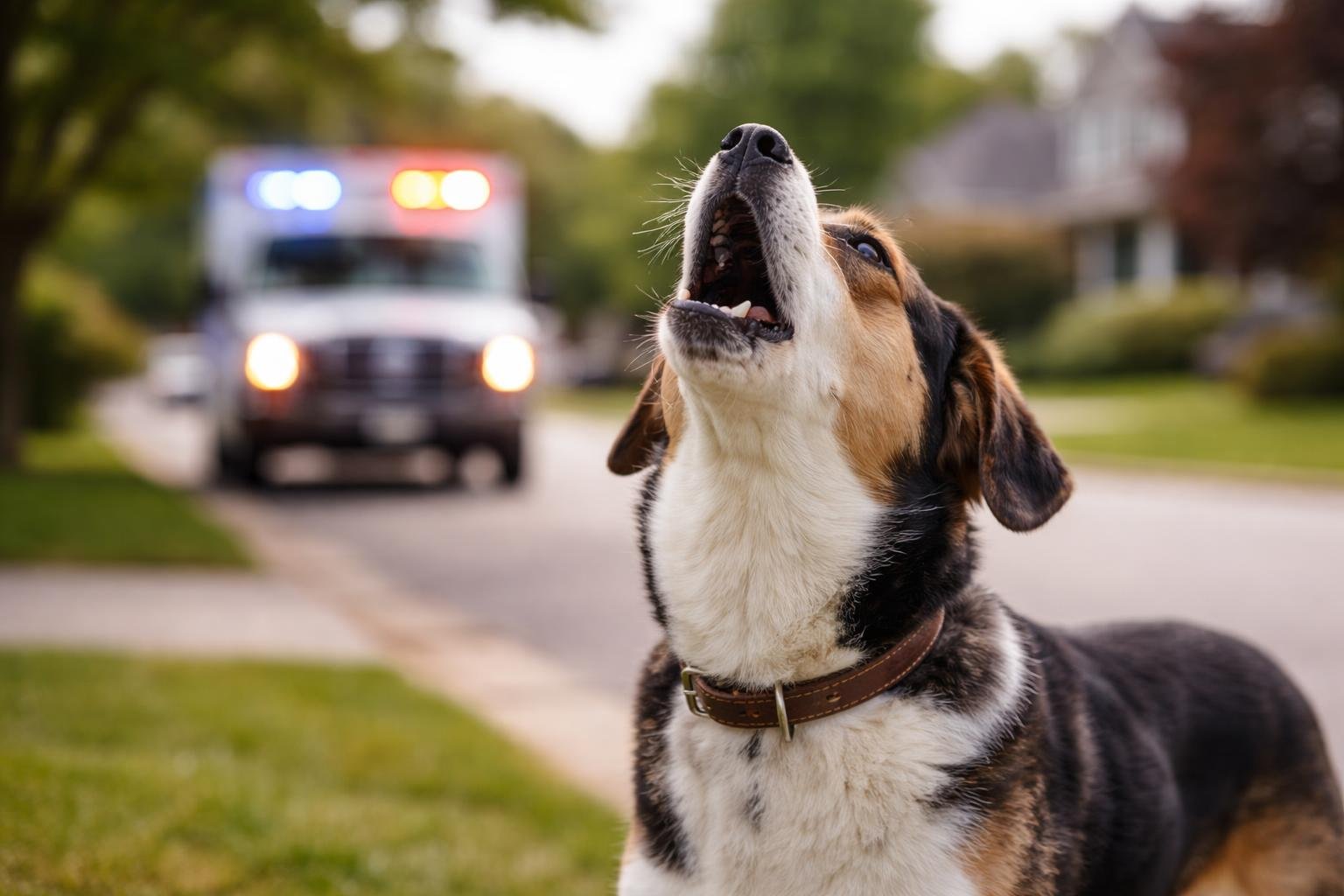
Dogs respond to sirens through a combination of their acute hearing abilities, ancestral instincts, and confusion about the sound’s origin. The behavior connects to how dogs process high-pitched sounds and their natural communication methods.
The Science Behind Sound Triggers
Dogs possess hearing capabilities far beyond human range. They can detect frequencies between 40 Hz and 60,000 Hz, while humans only hear up to about 20,000 Hz.
When a siren sounds, it activates specific areas in a dog’s brain that process auditory information. The brain interprets these sounds and triggers a vocal response. This reaction is automatic for many dogs and doesn’t require conscious thought.
Key factors that trigger howling:
- High-pitched frequencies that match natural howling ranges
- Sudden, loud noises that demand attention
- Sustained sounds that continue for several seconds
The neural pathways involved in this response connect to ancient communication systems. These pathways existed in dogs’ wolf ancestors and remain active in modern domesticated dogs.
Siren Frequencies and Dog Hearing
Sirens typically emit sounds between 1,000 and 3,000 Hz. This range falls directly within a dog’s optimal hearing sensitivity. The frequency resembles the pitch of a dog’s howl, which usually ranges from 150 to 780 Hz for the fundamental frequency.
Emergency vehicle sirens use wavering tones that rise and fall. These fluctuating pitches can be particularly stimulating to dogs. The varying frequencies may sound similar to another dog howling in the distance.
Dogs perceive sirens much louder than humans do. What sounds moderately loud to a person can be overwhelming to a dog’s sensitive ears. This intensity often compels dogs to respond vocally.
Confusion With Pack Communication
Dogs may mistake sirens for howls from other dogs or distant pack members. In wolf packs, howling serves as a long-distance communication tool. Wolves howl to locate pack members, mark territory, and coordinate group activities.
When dogs hear a siren, their instinct tells them to answer back. This response functions as an attempt to communicate location or acknowledge the “call.” Some dogs howl to join what they perceive as a group vocalization.
The behavior also serves as a form of social bonding. Dogs that howl together often feel connected to their pack, even if that pack is just their human family. Not all dogs howl at sirens, which suggests individual personality and breed characteristics play a role in this behavior.
Emotional and Behavioral Triggers
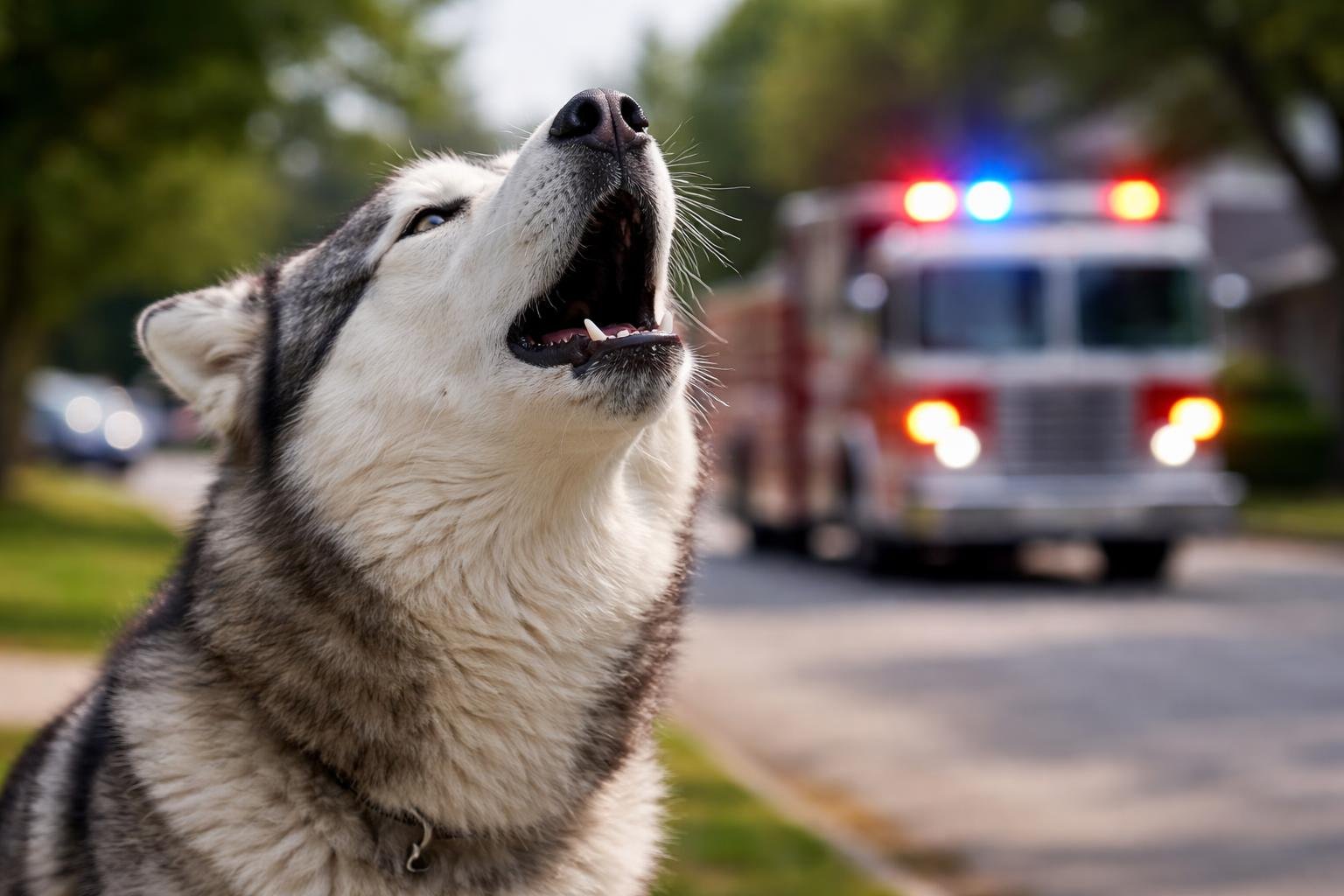
Dogs howl at sirens for reasons that go beyond simple instinct, as their emotional state and social needs play major roles in this behavior. Stress, the desire for attention, and pack-related instincts can all cause a dog to respond vocally to sirens.
Stress and Anxiety Responses
Sirens create loud, unpredictable sounds that can trigger stress responses in dogs. The high-pitched wail often causes discomfort because dogs have sensitive hearing that picks up frequencies humans cannot detect. When a dog feels anxious or uncertain about a sound, howling serves as a coping mechanism.
Dogs experiencing separation anxiety are more likely to howl at sirens when left alone. The sudden noise adds to their existing stress, and they vocalize to express their discomfort. Some dogs may pace, pant, or show other signs of distress along with howling.
Common stress indicators include:
- Raised hackles or tense body posture
- Ears pinned back or constantly moving
- Excessive panting or drooling
- Attempts to hide or escape
Dogs with noise phobias react more intensely to sirens than other dogs. This heightened response means they may continue howling long after the siren has passed.
Attention-Seeking Behavior
Some dogs learn that howling at sirens gets them immediate attention from their owners. Even negative attention, such as being told to stop, reinforces the behavior because the dog receives a response. This creates a pattern where the dog repeats the action to gain interaction.
Dogs who feel bored or understimulated are more prone to attention-seeking howls. They use the siren as an excuse to engage with their family members. If an owner rushes to comfort or quiet their dog every time a siren passes, the dog associates howling with getting what it wants.
Social Bonding and Territory
Howling at sirens connects to a dog’s pack mentality and territorial instincts. Dogs may interpret the siren as another animal’s call and respond to establish their presence in the area. This behavior mirrors how wild canines communicate across distances to mark territory boundaries.
Dogs living in multi-dog households often howl together at sirens. One dog starts, and others join in what appears to be a group activity. This collective howling strengthens social bonds between the dogs, similar to how wolf packs vocalize together.
Territory protection also drives this response. A dog may howl to warn the perceived intruder (the siren) that this space is occupied. The behavior typically stops once the siren moves out of range, which the dog interprets as successfully defending its territory.
Do All Dogs Howl at Sirens?
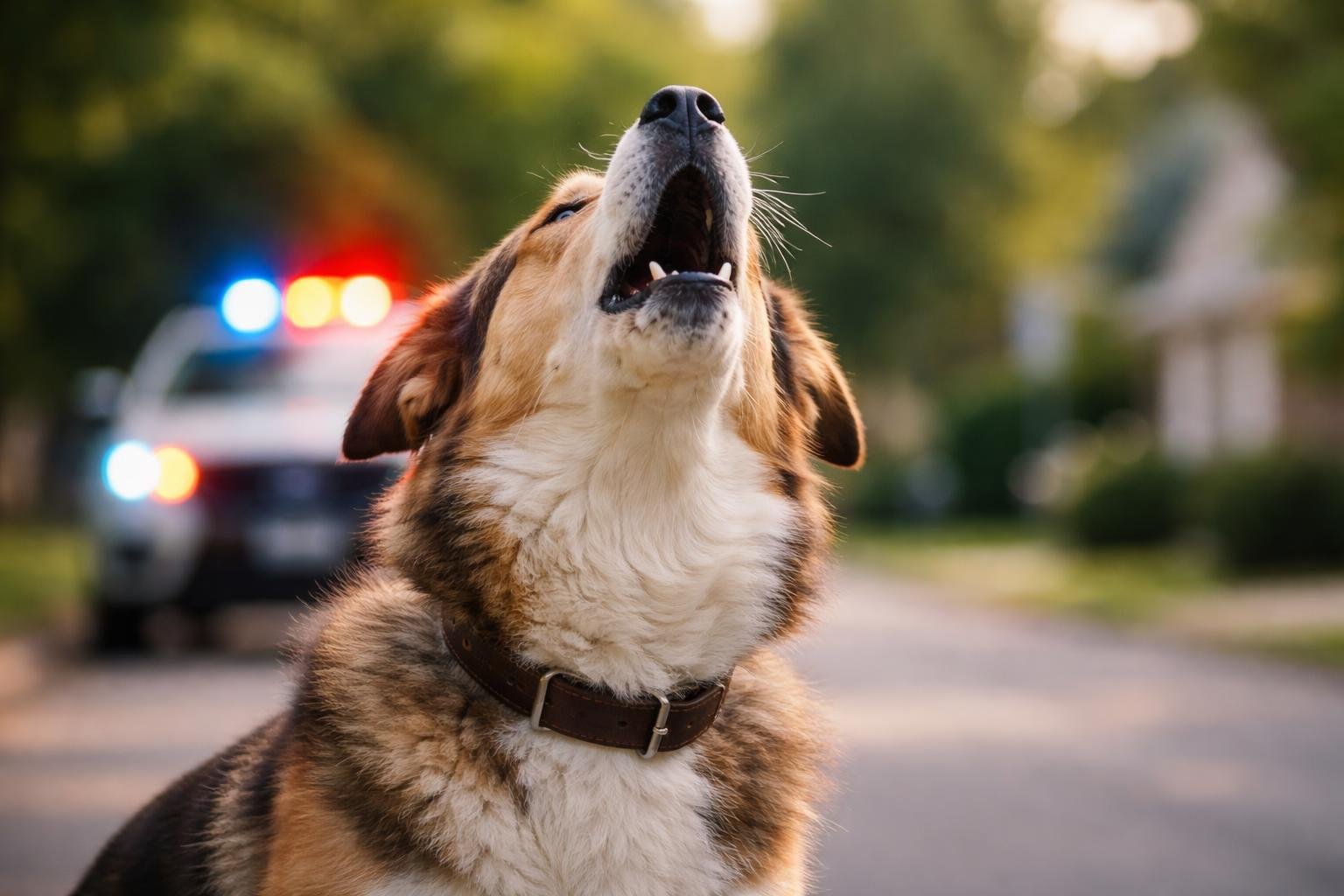
Not every dog howls at sirens, and the tendency to howl varies based on breed heritage and individual personality traits. Some dogs never respond to sirens at all, while others howl every single time they hear one.
Breed Differences in Howling
Certain breeds howl at sirens more often than others due to their genetic background. Breeds closely related to wolves, such as Huskies, Malamutes, and German Shepherds, tend to howl more frequently. These breeds retain strong pack communication instincts from their ancestors.
Hound breeds like Beagles, Bloodhounds, and Basset Hounds also howl more often because they were bred to use their voices during hunts. These dogs naturally vocalize to communicate over long distances. Breeds developed for quiet work, such as many herding or sporting dogs, may rarely howl at sirens.
Small companion breeds and breeds developed primarily for human companionship typically show less interest in howling at sirens. However, any individual dog from any breed can develop this behavior regardless of their breed’s typical tendencies.
Age and Individual Temperament
Puppies and young dogs may not howl at sirens initially but can learn the behavior as they mature or by copying other dogs. Some dogs develop the habit later in life after hearing other dogs howl in response to sirens.
Individual personality plays a significant role in whether a dog howls at sirens. Bold, vocal dogs who frequently bark or make other sounds are more likely to howl. Quiet, reserved dogs may never show any interest in responding to sirens, even if their breed typically does.
Some dogs only howl at specific siren types or volumes, while others ignore sirens completely but howl at other triggers like musical instruments or singing.
Responding to Howling at Sirens
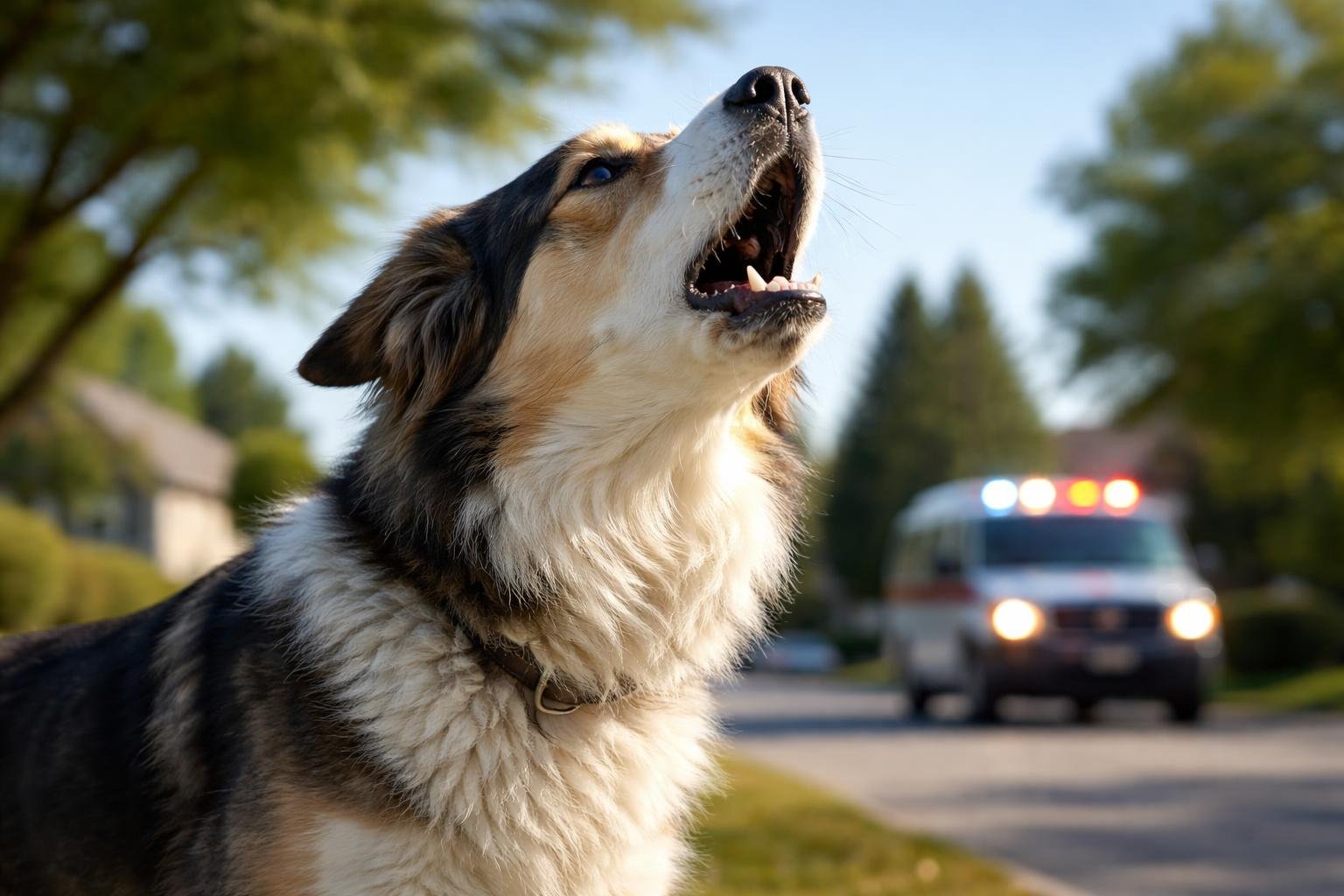
Most dogs can learn to stay calm during siren exposure through consistent training methods. Professional help becomes necessary when howling indicates deeper anxiety issues or disrupts daily life.
Training and Conditioning Techniques
Desensitization works by gradually exposing dogs to siren sounds at low volumes. Owners can play recordings of sirens during calm moments, starting at barely audible levels. They should reward quiet behavior with treats or praise. Over several weeks, the volume increases slowly as the dog remains relaxed.
Counterconditioning changes the dog’s emotional response to sirens. When a siren sounds, owners immediately engage their dog in a positive activity. This might include:
- Offering high-value treats
- Starting a favorite game
- Practicing known commands with rewards
- Providing a special toy
Redirection helps in the moment when sirens occur. Owners should calmly ask their dog to perform simple commands like “sit” or “look at me.” This shifts focus away from the trigger sound. The key is staying calm and matter-of-fact rather than showing concern.
Punishment never helps with siren howling. It can increase anxiety and damage the bond between dog and owner. Consistency matters more than any single technique.
When to Seek Professional Help
A certified dog trainer or veterinary behaviorist should evaluate dogs whose howling goes beyond normal responses. Signs that indicate professional help is needed include howling that lasts more than a few minutes after sirens pass, destructive behavior during or after siren exposure, or signs of panic like drooling and pacing.
Dogs showing these symptoms may have noise phobias rather than simple instinctive responses. Some dogs develop such severe anxiety that they anticipate sirens and remain constantly on edge. Others may shake, hide, or refuse to eat after hearing emergency vehicles.
Veterinarians can prescribe anti-anxiety medication for severe cases. This medication works best when combined with behavior modification training. Professional trainers create customized plans based on each dog’s specific triggers and stress levels.
Potential Health Implications
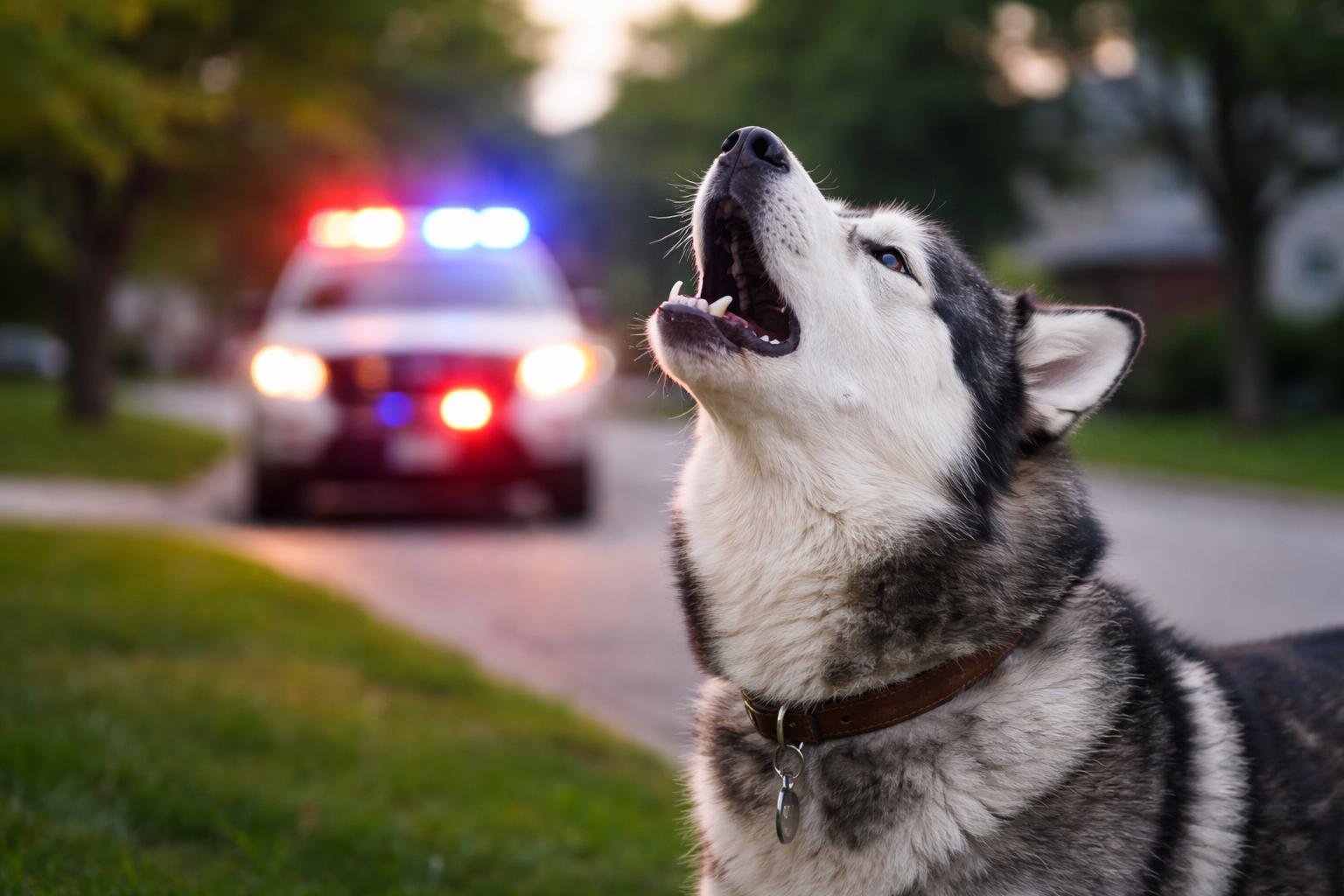
While howling at sirens is typically normal behavior, persistent or excessive howling can sometimes point to health problems that need attention. Dogs with unusually sensitive hearing may also experience discomfort from loud emergency vehicle sounds.
Excessive Howling and Underlying Issues
Dogs that howl constantly at sirens or other triggers may be dealing with underlying anxiety disorders or stress-related conditions. This type of repetitive behavior often indicates the dog feels distressed rather than simply communicating. Senior dogs that suddenly start howling more frequently might be experiencing cognitive decline or age-related confusion.
Common signs that howling may indicate a health problem:
- Howling that continues long after the siren has passed
- Pacing, panting, or destructive behavior alongside howling
- Loss of appetite or changes in sleep patterns
- Howling at random times without clear triggers
Dogs with separation anxiety often howl excessively when left alone, and sirens can intensify this response. A veterinarian can help determine if the howling stems from a medical issue or behavioral problem that requires treatment.
Hearing Sensitivity Concerns
Dogs hear frequencies between 40 Hz to 60,000 Hz, which is much broader than the human range of 20 Hz to 20,000 Hz. Sirens typically range from 1,000 to 3,000 Hz, which falls well within what dogs can hear but is not loud enough to cause physical ear damage in most cases.
Some dogs have more sensitive hearing than others and may find sirens genuinely uncomfortable or startling. Breeds with upright ears often pick up sounds more easily than floppy-eared breeds. Dogs that flatten their ears, hide, or show signs of pain when hearing sirens may be experiencing discomfort rather than just responding instinctively.
Cultural and Historical Perspectives
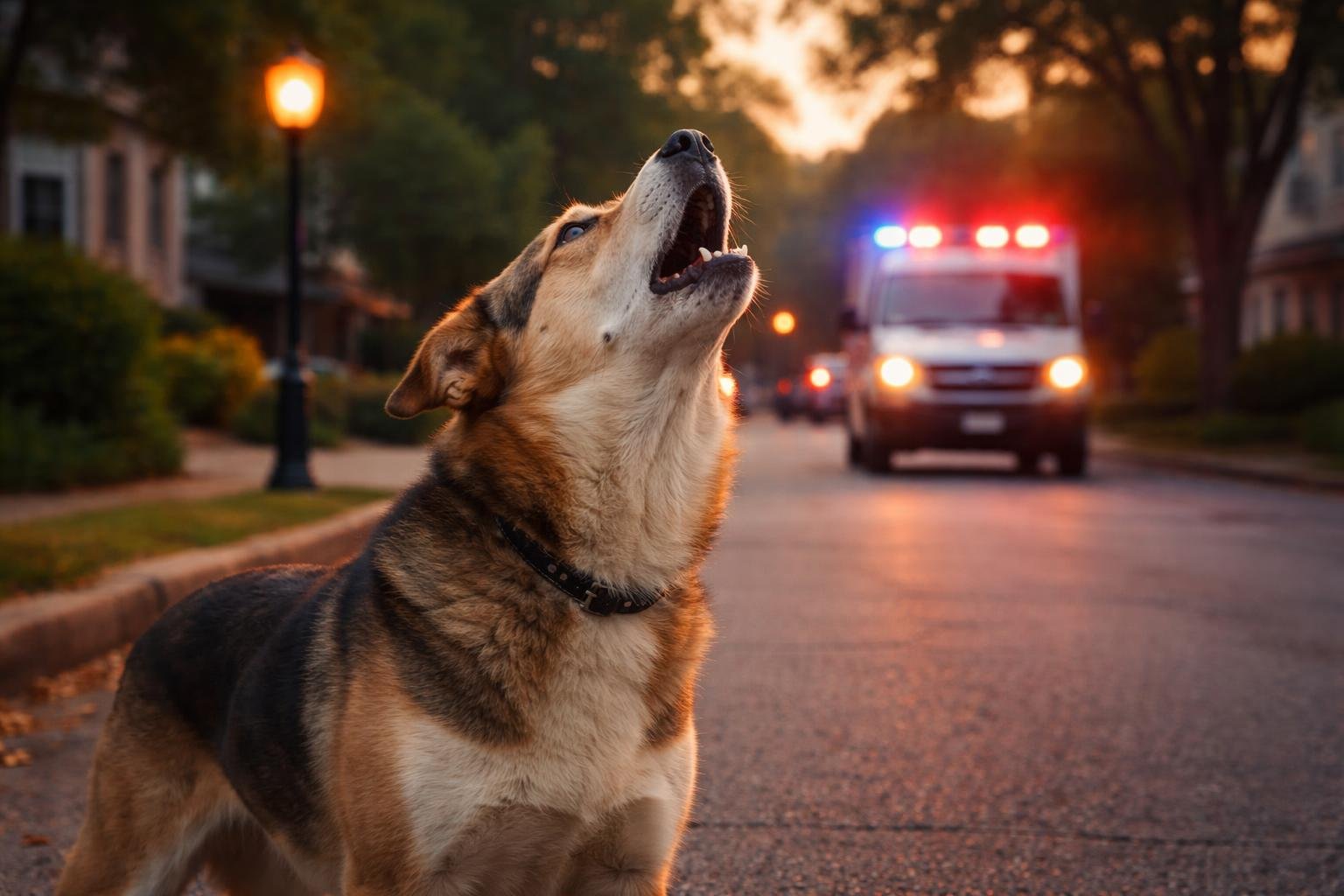
Throughout history, different cultures have interpreted dog howling in unique ways, while modern media has shaped how people view this behavior today. These perspectives range from ancient superstitions to contemporary entertainment portrayals.
Folklore and Beliefs About Howling
Many cultures developed beliefs about dog howling that reflected their views on death and the supernatural. In European folklore, a howling dog was often seen as an omen of death or disaster. Some communities believed dogs could sense spirits or approaching danger that humans could not detect.
Ancient Egyptian culture viewed howling differently. They associated it with Anubis, the jackal-headed god of the afterlife. This connection made howling a more neutral or even sacred act rather than something to fear.
Native American tribes often saw howling as a form of communication with nature and spiritual forces. They recognized the connection between dogs and wolves, viewing the behavior as a natural link to the wild. Some tribes believed howling dogs were responding to messages from wolf spirits or other animals.
In Asian cultures, interpretations varied widely. Some regions considered howling a warning sign, while others simply viewed it as normal dog behavior with no special meaning.
Howling in Popular Media
Movies and television shows frequently use dog howling to create specific moods or effects. Horror films often include howling dogs to build suspense or signal danger. This reinforces old folklore connections between howling and threatening situations.
Animated films present howling in a lighter way. Dogs and wolves howl at the moon in cartoons, creating a playful image that differs from folklore traditions. This portrayal has become so common that many people associate howling primarily with moonlight, though dogs actually howl at sirens regardless of the moon phase.
Popular dog movies like “Lady and the Tramp” and “101 Dalmatians” show howling as a way dogs express emotion or communicate with each other. These depictions help normalize the behavior for audiences. Social media has also changed how people view howling, with countless videos showing dogs responding to sirens in humorous or endearing ways.
Summary and Key Takeaways
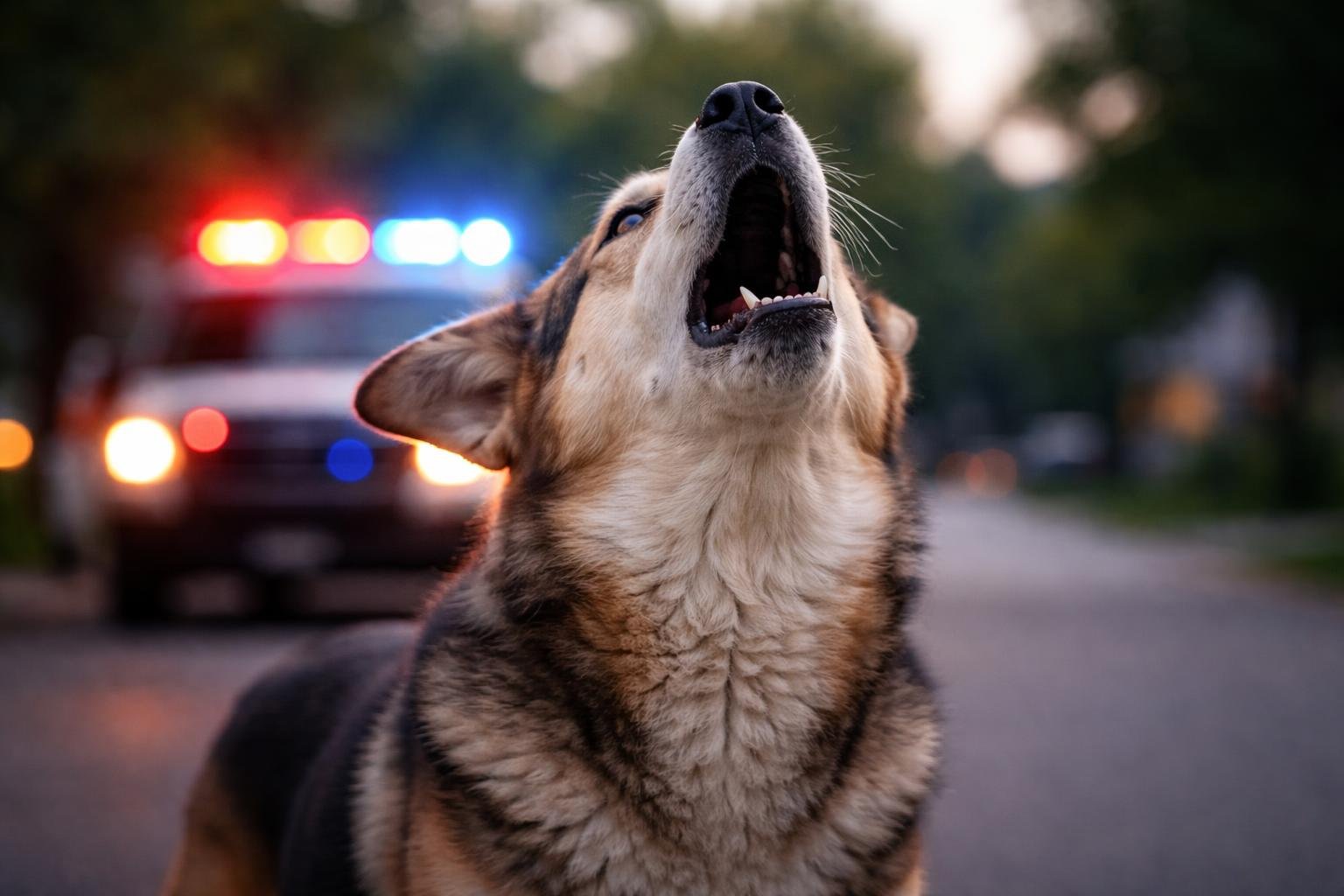
Dogs howl at sirens primarily as an instinctual form of communication inherited from their wolf ancestors. The high-pitched frequency of sirens mimics the sound of another dog or wolf howling, which triggers a natural response.
Main Reasons Dogs Howl at Sirens:
- Communication response – Dogs believe they are answering another dog’s call
- Pack behavior – The instinct to connect with other members of their group
- Warning signal – Some dogs perceive sirens as potential threats and alert their family
- Sound sensitivity – Dogs have sensitive hearing and react to certain frequencies
Certain breeds are more likely to howl than others. Spitz breeds and hounds have stronger howling instincts due to their ancestry and breeding history.
The behavior is usually harmless and represents normal canine communication. Dogs do not typically howl at sirens because the sound hurts their ears. Instead, their brains interpret the acoustic properties as distant howling from other dogs.
Important Points to Remember:
- Howling at sirens is a natural behavior, not a problem that needs correction in most cases
- The response connects to ancient wolf communication patterns that still exist in domestic dogs
- Signs of stress accompanying the howling may indicate the dog needs help calming down
- Not all dogs howl at sirens, and this variation is normal
This behavior reflects the fascinating connection between modern domestic dogs and their evolutionary history with wolves.
Frequently Asked Questions
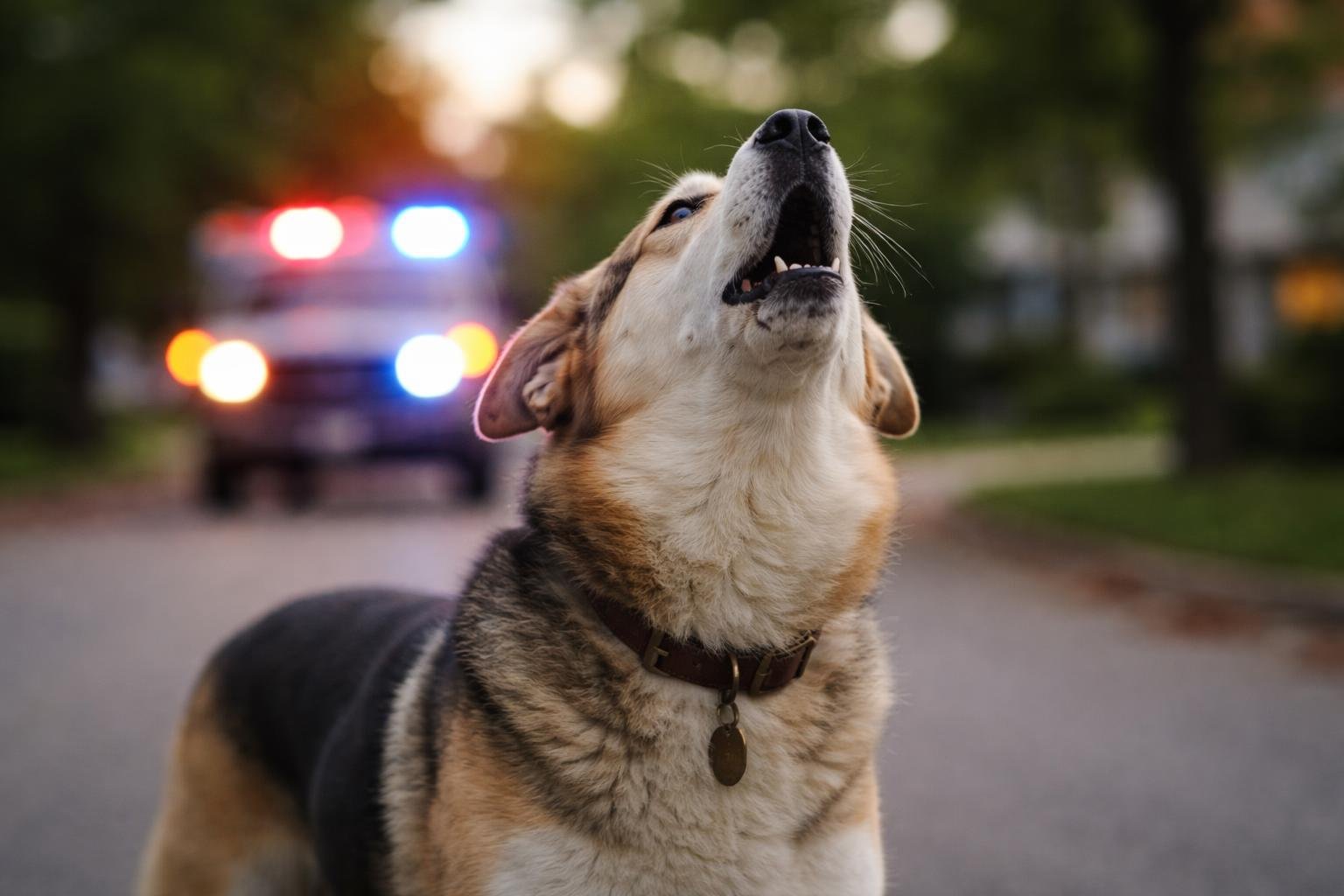
Dogs howl at sirens and other sounds for reasons tied to their wolf ancestry, communication instincts, and how their ears process certain frequencies. Some breeds are more vocal than others, and dogs may also respond to human-made noises that trigger similar reactions.
Is howling at loud noises like sirens an instinct inherited from wolves?
Yes, howling at loud noises is an instinct dogs inherited from their wolf ancestors. Wolves howl to communicate with pack members over long distances and to mark territory.
When a dog hears a siren, the high-pitched sound may trigger this ancient communication behavior. The dog’s brain interprets the siren as another canine calling out. This response is hardwired into their DNA from thousands of years of evolution.
Do sirens or other high-pitched sounds hurt a dog’s ears and trigger howling?
Sirens generally do not hurt a dog’s ears. Dogs can hear frequencies between 40 Hz and 60,000 Hz, while humans only hear up to 20,000 Hz.
A siren’s pitch falls within a dog’s normal hearing range. The howling is not a pain response but rather a reaction to a sound that resembles another dog’s howl. Dogs are simply responding to what they perceive as communication from another animal.
Why do some dogs howl at night when they hear emergency vehicles in the distance?
Dogs howl at night for the same reasons they howl during the day. The difference is that nighttime is quieter, which makes distant sirens more noticeable to both dogs and their owners.
A dog may also be more alert at night due to their natural instincts. In the wild, wolves are more active during evening hours. This heightened awareness can make dogs more likely to respond to sounds they hear after dark.
Why do certain breeds, such as German Shepherds, seem more likely to howl at loud sounds?
Certain breeds howl more because they were bred for specific purposes that required vocal communication. German Shepherds, Huskies, and Beagles were developed to work in packs or alert humans to danger.
These breeds maintain stronger connections to their wolf ancestry in terms of vocalization. Their genetics make them more likely to use howling as a form of communication. Breeds developed primarily as companion animals tend to howl less frequently.
What does it mean when a dog starts howling after a person howls or imitates a siren?
When a dog howls after a person imitates a howl or siren, they are responding to what sounds like pack communication. The dog believes they are joining in a group activity.
This behavior shows the dog’s social nature and desire to participate with their family members. The dog is not distressed or confused. They are simply doing what comes naturally when they hear sounds that trigger their communication instincts.
Why might a dog howl at beeping sounds like smoke alarms, timers, or electronic devices?
Dogs may howl at beeping sounds because these devices produce high-pitched tones similar to howls or sirens. The frequency and pattern of beeps can trigger the same instinctual response.
Smoke alarms and timers often emit sounds between 3,000 and 4,000 Hz. These frequencies overlap with the range that resembles canine vocalizations. The dog’s brain processes these beeps as potential communication from another animal, prompting a howl in response.