
Kibble Toppers to Enhance Your Dogs Meal Times: Expert Guide to Nutritious Additions That Boost Flavor and Health
Does your dog sniff their bowl and walk away at mealtime? Many dog owners face this challenge when their pets grow bored with the same dry food day after day. Kibble toppers are flavorful additions that transform plain dry food into an appealing meal while adding extra nutrients to your dog’s diet.

These meal enhancers come in many forms, from freeze-dried meat to fresh vegetables. They can solve problems with picky eaters and boost the nutritional value of regular kibble. The right topper makes mealtime exciting again without requiring a complete diet change.
This guide covers everything needed to choose and use kibble toppers effectively. Pet owners will learn about different types of additions, how to pick safe ingredients, and ways to introduce new foods properly. The article also explores both homemade and store-bought options to fit any budget or lifestyle.
Understanding the Benefits of Meal Enhancers
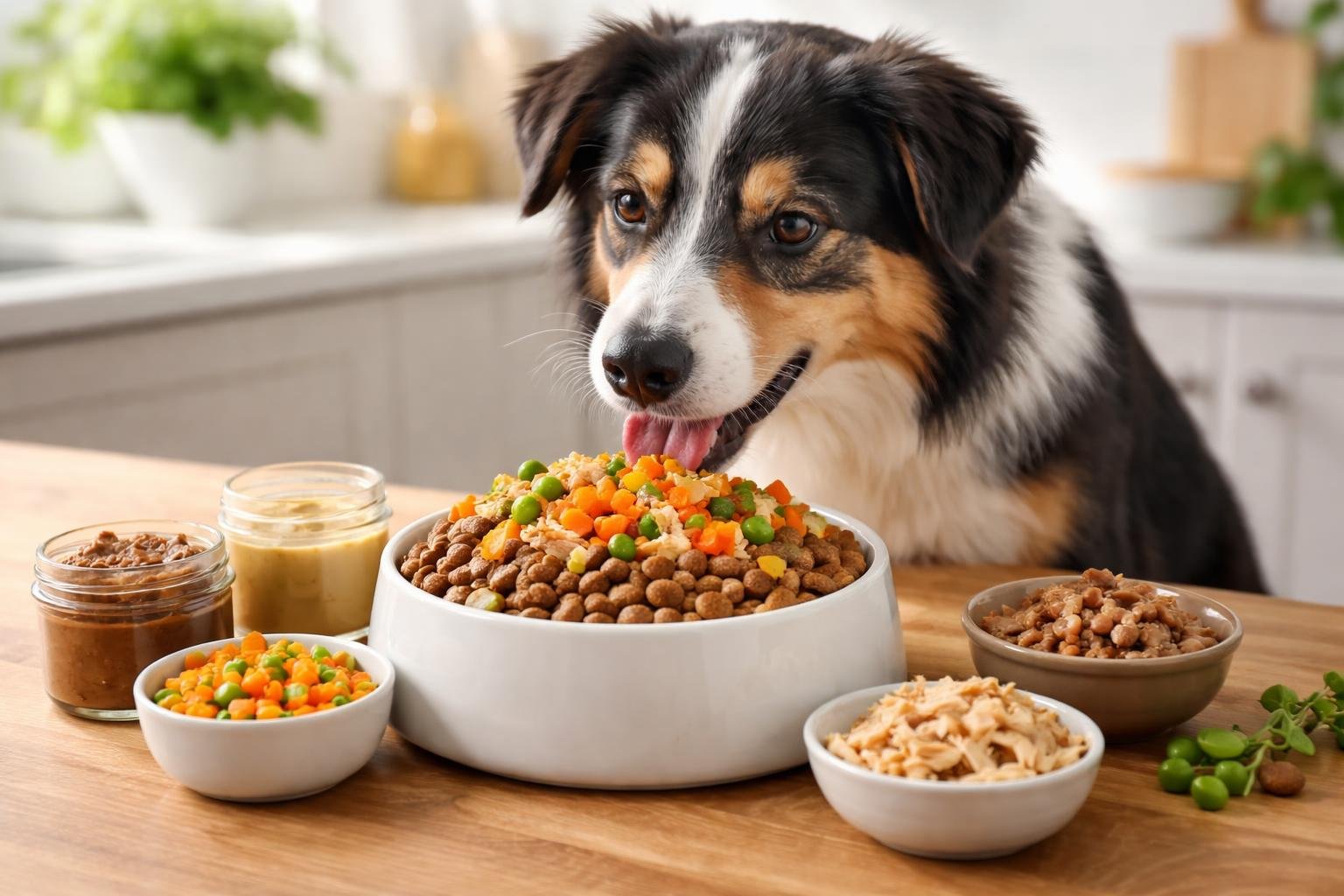
Meal enhancers offer several practical advantages for dogs beyond simply making food taste better. These products can add missing nutrients to a dog’s diet, help solve feeding challenges, and contribute to better health outcomes.
Improving Nutritional Value
Kibble toppers can fill nutritional gaps that may exist in a dog’s regular diet. Many enhancers contain high-quality proteins, healthy fats, vitamins, and minerals that complement what’s already in the food bowl.
Freeze-dried meat toppers add concentrated protein without fillers or artificial ingredients. Bone broth-based enhancers provide collagen and amino acids that support joint health and digestion. Some toppers include probiotics that promote a healthy gut microbiome.
Common nutrients found in quality meal enhancers:
- Omega-3 fatty acids for skin and coat health
- Digestive enzymes for better nutrient absorption
- Antioxidants to support immune function
- Natural fiber for digestive regularity
The added nutrition works best when the base diet is already complete and balanced. Toppers should make up no more than 10-15% of a dog’s total daily calories to maintain proper nutritional balance.
Encouraging Picky Eaters
Some dogs refuse to eat their regular kibble or lose interest in the same food day after day. Meal enhancers can make plain kibble more appealing to reluctant eaters.
The strong aroma and flavor of toppers stimulate a dog’s appetite and food drive. Freeze-dried raw meat or fish creates an irresistible smell that draws even the pickiest dogs to their bowl. Wet toppers add moisture and texture variety that many dogs find more palatable than dry food alone.
Adding enhancers helps prevent mealtime stress for both dogs and their owners. Dogs are more likely to finish their meals when the food tastes better. This approach works better than constantly switching entire food brands, which can upset a dog’s digestive system.
Supporting Overall Wellness
Quality meal enhancers can address specific health needs beyond basic nutrition. Different formulas target various aspects of canine health and wellbeing.
Joint-support toppers contain glucosamine and chondroitin to help maintain mobility in aging dogs. Digestive-focused enhancers include prebiotics and probiotics that balance gut bacteria and improve stool quality. Some toppers add extra hydration through bone broth or wet formulas, which benefits dogs who don’t drink enough water.
The palatability boost from enhancers helps ensure dogs with decreased appetites get the calories and nutrients they need. Senior dogs or those recovering from illness may eat more consistently when their regular food includes a tasty topper.
Types of Popular Kibble Additions
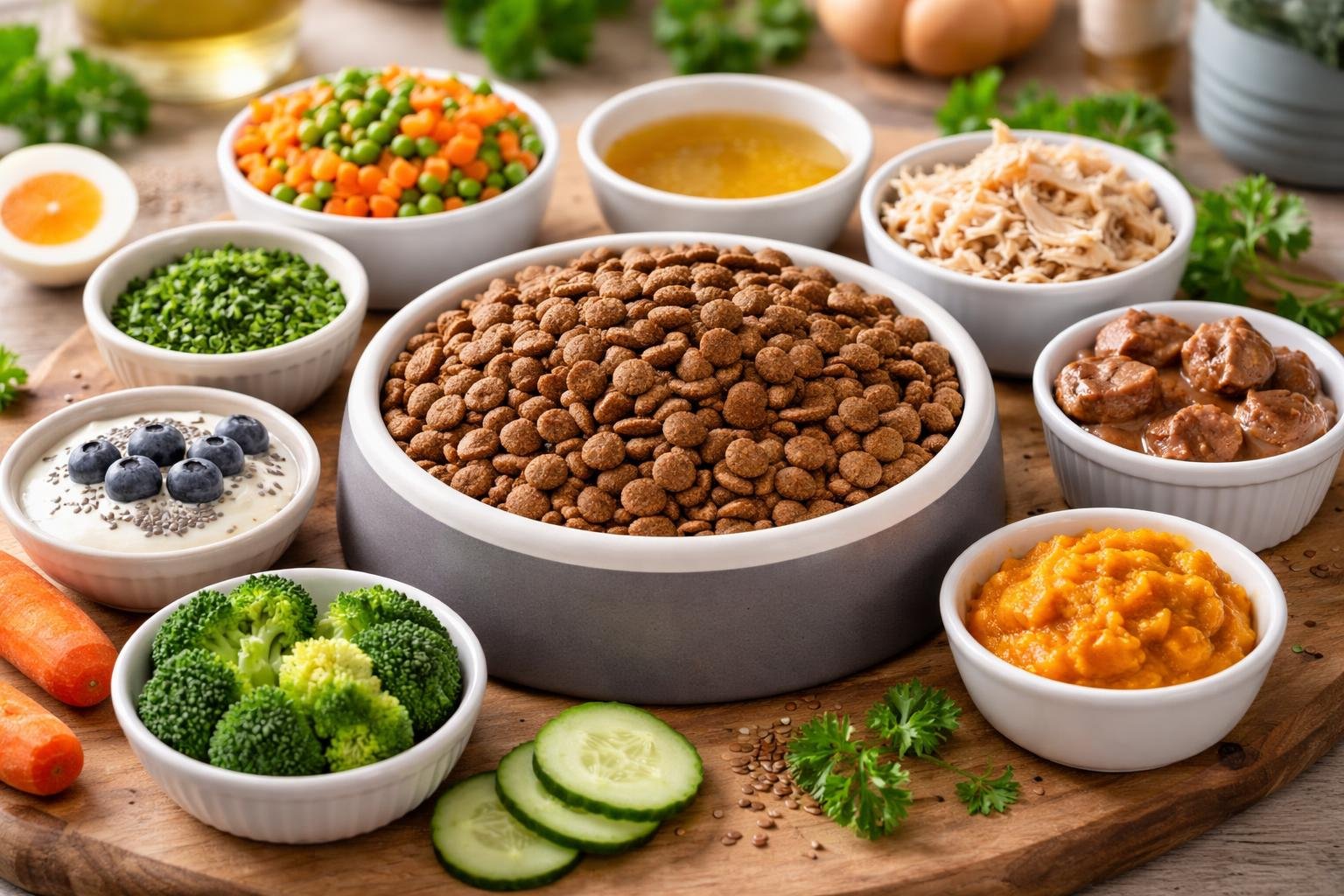
Dog owners can choose from three main categories of kibble toppers, each offering distinct benefits. Wet food mix-ins add moisture and flavor, freeze-dried and dehydrated options provide concentrated nutrition, and bone broths deliver hydration along with taste enhancement.
Wet Food Mix-Ins
Wet food toppers include canned dog food, fresh refrigerated options, and packaged stews. These toppers contain high moisture content, which helps dogs stay hydrated throughout the day. The soft texture makes them easy for older dogs or those with dental issues to eat.
Many wet toppers feature real meat as the first ingredient. They typically contain fewer fillers than dry kibble alone. Pet owners can use a full serving or just a spoonful depending on their dog’s needs.
Common wet topper varieties:
- Canned chunks in gravy
- Pate-style spreads
- Fresh refrigerated rolls
- Packaged meat stews
These options work well for picky eaters because the strong aroma stimulates appetite. The added moisture also supports better digestion in some dogs.
Freeze-Dried and Dehydrated Toppers
Freeze-dried toppers preserve nutrients through a process that removes water while keeping the food structure intact. These products are lightweight and shelf-stable without refrigeration. Pet owners simply sprinkle them over kibble in their dry form or rehydrate them with water.
Raw freeze-dried meat toppers maintain more natural enzymes than cooked options. They come in various proteins including chicken, beef, salmon, and lamb. The concentrated flavor makes even small amounts effective for enhancing meals.
Dehydrated toppers go through a different process using heat to remove moisture. They often include vegetables and fruits along with meat. Both types offer convenience for travel or storage in small living spaces.
Bone Broths
Bone broth toppers are liquid additions made by simmering animal bones and connective tissue. They provide natural collagen and minerals that support joint health. The warm liquid can be poured directly over kibble to create a gravy-like consistency.
Most commercial bone broths designed for dogs contain low sodium levels. They come in shelf-stable cartons or as powders that mix with water. Some versions include added vegetables like carrots or sweet potatoes for extra nutrients.
Dogs typically find bone broth highly palatable due to its rich taste. The liquid format helps dogs who need increased water intake. Pet owners can serve it warm during cold weather or at room temperature year-round.
Key Ingredients to Look For
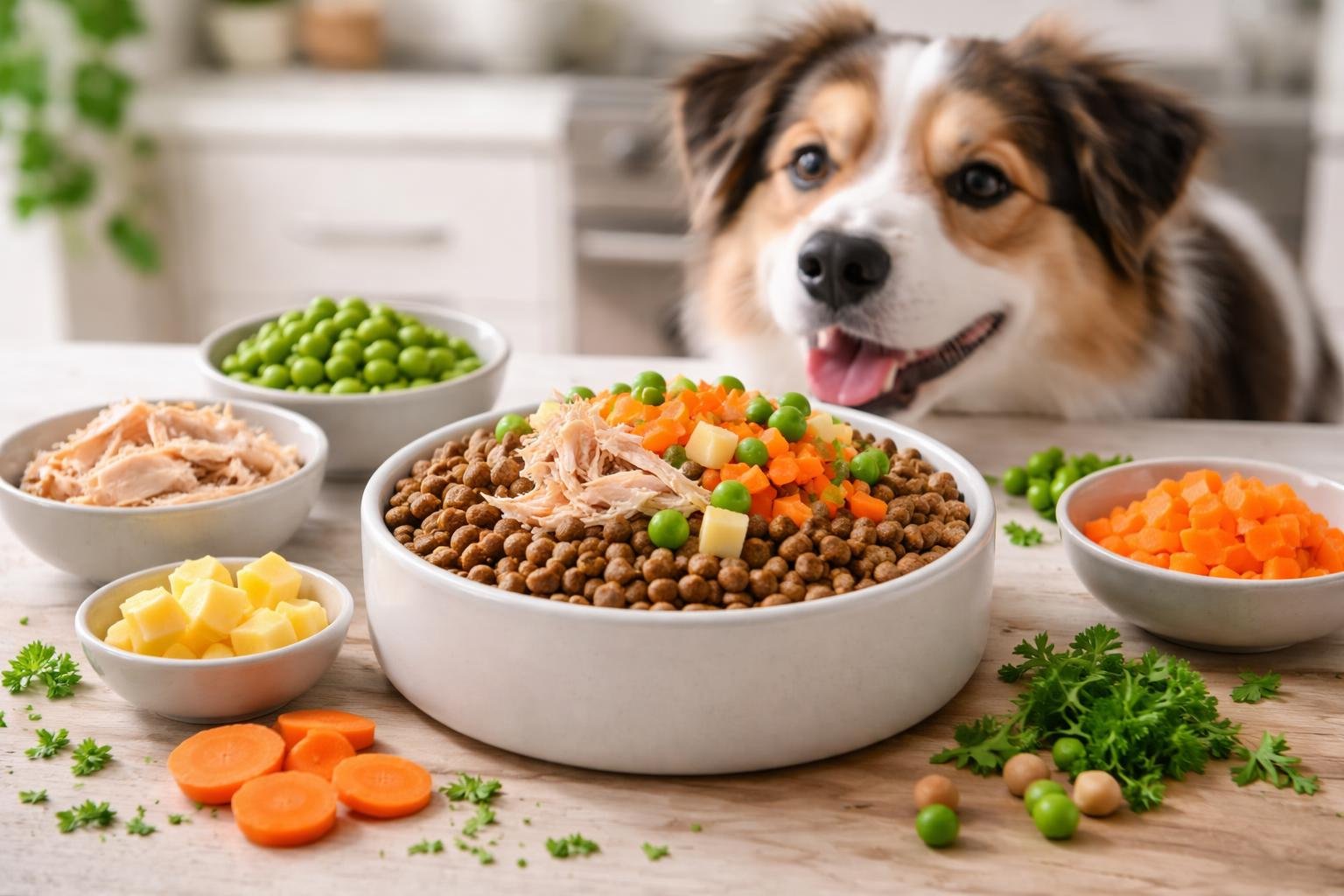
The best kibble toppers contain ingredients that add both nutrition and flavor to a dog’s regular meals. Focus on whole foods and natural additions that provide real health benefits rather than empty calories or artificial additives.
High-Quality Proteins
Protein-rich toppers give dogs essential amino acids and make meals more satisfying. Lean meats like chicken, turkey, and beef work well when cooked plain without seasonings or oils. These proteins should be fully cooked and cut into small pieces.
Fish options like sardines and salmon provide protein along with omega-3 fatty acids for coat health. Eggs are another excellent choice, offering complete protein in an affordable package. They can be scrambled, hard-boiled, or served raw if the dog tolerates them well.
Bone broth stands out as a liquid protein option that adds moisture to dry kibble. It contains collagen and minerals from simmered bones. Low-sodium versions prevent excess salt intake while still delivering flavor and joint-supporting nutrients.
Functional Superfoods
Certain nutrient-dense foods deliver concentrated health benefits in small amounts. Pumpkin provides fiber for digestive support and helps regulate bowel movements. Just a tablespoon or two mixed into kibble can make a difference.
Sweet potato offers vitamins A and C along with fiber. It should be cooked plain and mashed or cut into small pieces. Blueberries contain antioxidants that support cellular health and can be added fresh or frozen.
Spinach and kale provide iron and vitamins when chopped finely. Green beans add crunch and volume without many calories. Carrots deliver beta-carotene and satisfy dogs who enjoy crunchy textures. These vegetables work best when lightly steamed or served raw in small, manageable pieces.
Natural Flavor Boosters
Plain yogurt adds creamy texture and beneficial probiotics for gut health. Choose unsweetened, unflavored varieties without artificial sweeteners like xylitol. A spoonful mixed into kibble creates an appealing consistency.
Nutritional yeast offers a cheese-like flavor along with B vitamins. Dogs often find this ingredient highly palatable. Sprinkle it directly over food in small amounts.
Apple pieces (without seeds or core) provide natural sweetness and crunch. A small drizzle of olive oil adds healthy fats and helps kibble stick together. These simple additions transform plain meals without requiring complicated preparation or expensive ingredients.
Choosing the Right Topper for Your Dog
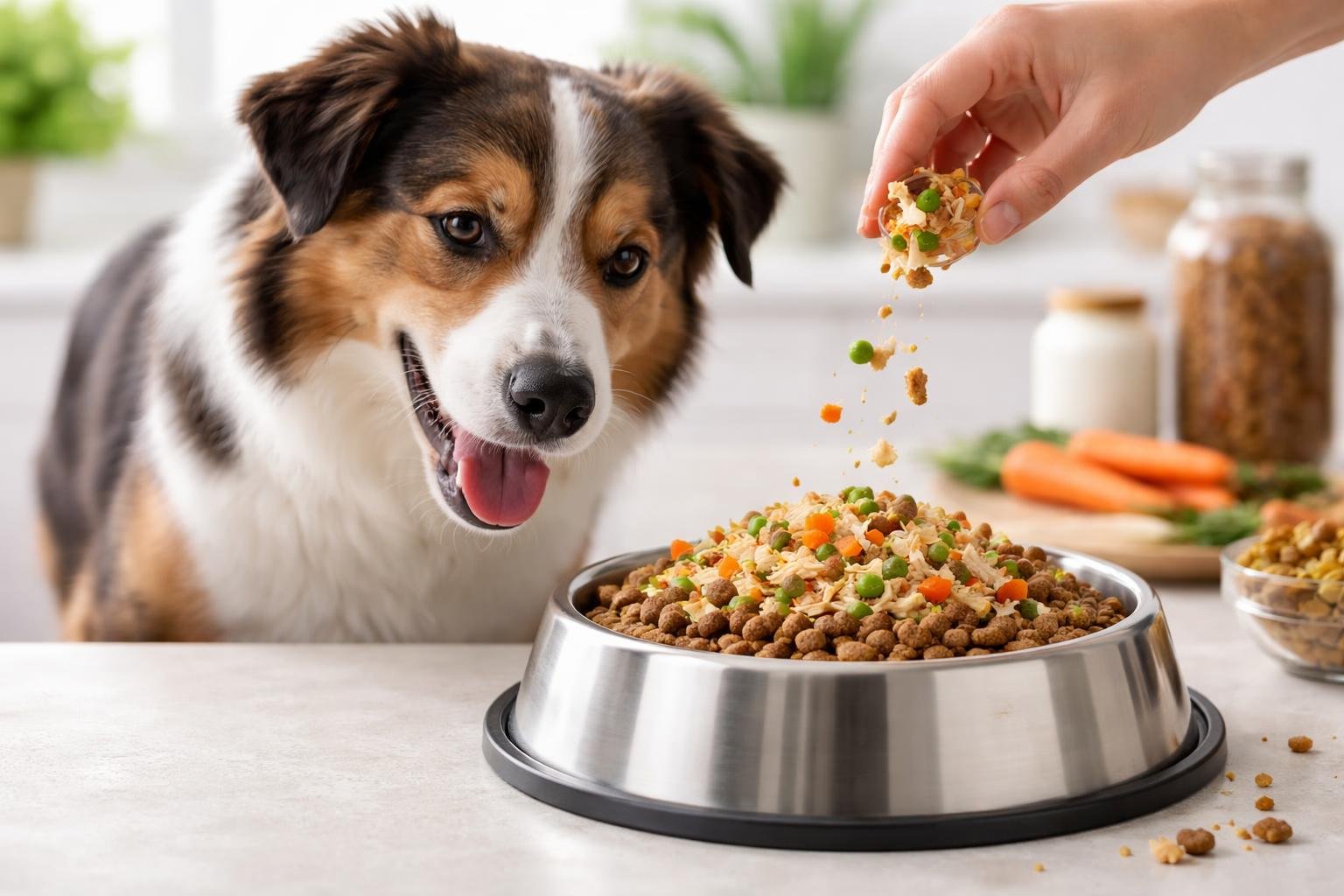
The best kibble topper depends on your dog’s specific health needs, age, and any food sensitivities they might have. A topper that works well for a puppy may not suit a senior dog with joint issues.
Considering Dietary Restrictions
Dogs with health conditions need toppers that support their treatment plans rather than work against them. A dog with kidney disease requires low-protein, low-phosphorus options. Dogs with pancreatitis need low-fat toppers to avoid triggering flare-ups.
Weight management matters when adding toppers to meals. The extra calories from toppers should be factored into the dog’s daily caloric intake. Owners can reduce the base kibble portion slightly to accommodate the topper calories.
Common dietary restrictions to consider:
- Low sodium for heart conditions
- Limited protein for kidney disease
- Low fat for digestive issues
- Grain-free for certain sensitivities
- Single-protein sources for elimination diets
Reading ingredient labels helps identify potential problems before purchase. The first three to five ingredients reveal what makes up most of the product.
Matching Life Stage Needs
Puppies need toppers rich in protein and healthy fats to support rapid growth and development. Their toppers should contain DHA for brain development and calcium for bone growth. Younger dogs burn more calories and can handle richer formulations.
Adult dogs in their prime years benefit from balanced toppers that maintain their current health. These toppers focus on sustained energy and general wellness rather than growth or age-related support.
Senior dogs require specialized nutrition as their bodies change. Toppers with glucosamine and chondroitin support aging joints. Softer textures work better for dogs with dental issues. Lower calorie options help prevent weight gain as metabolism slows.
Active and working dogs need protein-heavy toppers to repair muscle tissue. These dogs burn significantly more calories than average pets.
Allergen-Free Options
Food allergies affect many dogs and cause symptoms like itching, ear infections, and digestive upset. Common allergens include beef, dairy, wheat, chicken, eggs, and soy. Novel protein toppers use less common proteins like venison, duck, or rabbit.
Limited ingredient toppers contain fewer components, making it easier to identify problem foods. These products typically list three to five total ingredients. This simplicity helps owners conduct elimination diets under veterinary guidance.
Hydrolyzed protein toppers break proteins into tiny pieces that the immune system doesn’t recognize as allergens. These work well for dogs with multiple protein sensitivities. They cost more but provide a solution when other options fail.
Plant-based toppers offer an alternative for dogs allergic to animal proteins. Options include sweet potato, pumpkin, blueberries, and green vegetables. These provide nutrients without common meat-based allergens.
How to Safely Introduce New Ingredients
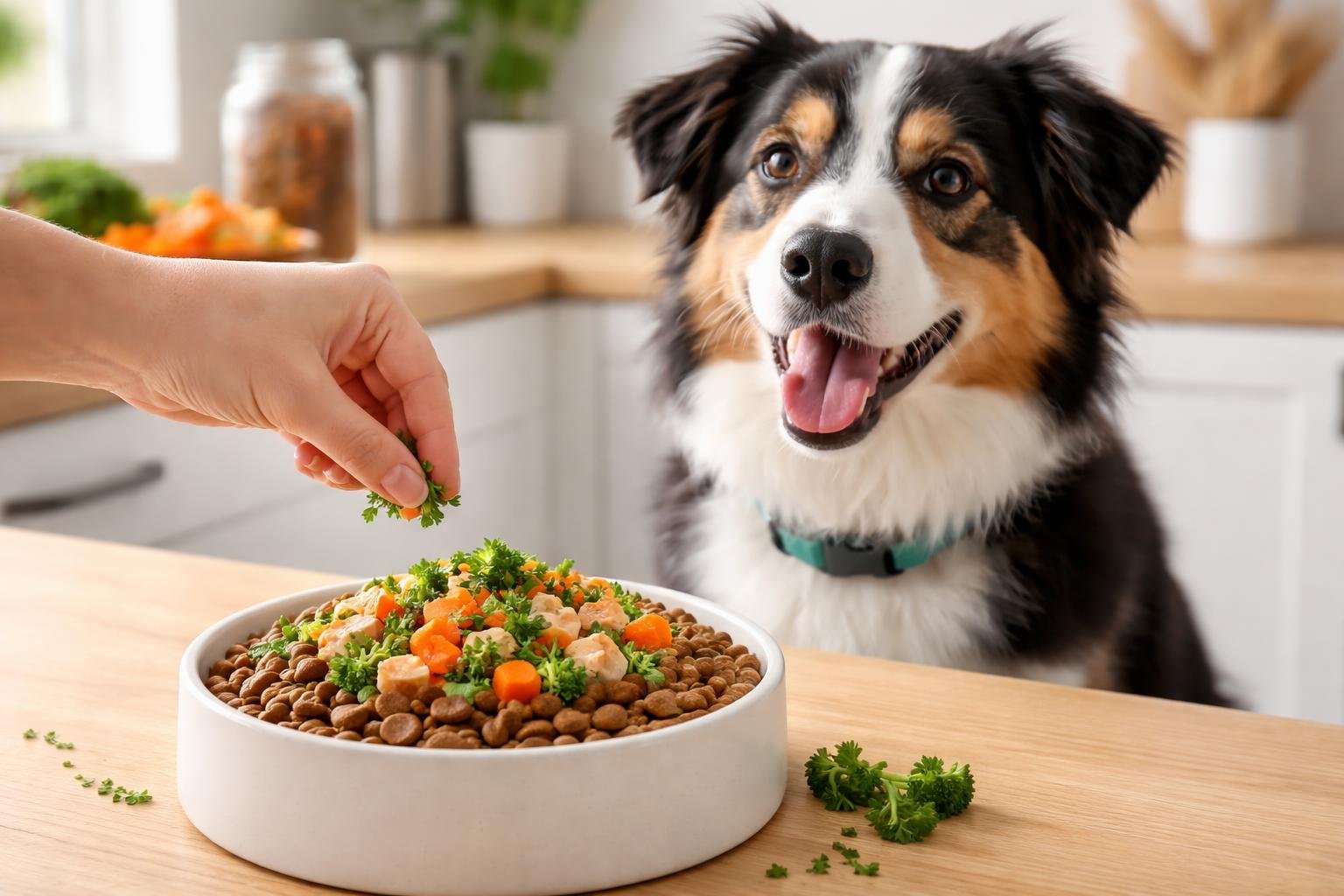
Adding new toppers to a dog’s kibble requires a careful approach to prevent digestive upset and identify potential food sensitivities. The key is making changes slowly and watching how the dog responds to each new ingredient.
Gradual Transition Tips
Start with very small amounts when introducing any new topper. A teaspoon for small dogs or a tablespoon for larger breeds is enough for the first serving.
Add only one new ingredient at a time. This makes it easier to identify which food caused a problem if the dog has a bad reaction. Wait 3-5 days before introducing another new topper.
Mix the new ingredient thoroughly with the regular kibble. Some dogs will pick around unfamiliar foods if they can separate them easily. Gradually increase the portion size over several days if the dog tolerates it well.
Safe Starting Portions:
- Small dogs (under 20 lbs): 1 teaspoon
- Medium dogs (20-50 lbs): 1-2 tablespoons
- Large dogs (over 50 lbs): 2-3 tablespoons
Keep toppers to no more than 10% of the dog’s total daily food intake. Too much can unbalance their regular diet or cause weight gain.
Monitoring for Adverse Reactions
Watch for changes in the dog’s stool during the first few days after adding a new topper. Loose stools, diarrhea, or constipation signal that the ingredient doesn’t agree with their system.
Check for signs of allergic reactions or food sensitivities. These include excessive scratching, skin redness, ear infections, or excessive licking of paws. Vomiting shortly after meals is another warning sign.
Pay attention to behavioral changes. A lack of interest in food, lethargy, or restlessness after eating may indicate discomfort. Some dogs may also show increased gas or stomach gurgling.
Stop feeding the new ingredient immediately if any negative symptoms appear. Return to the regular diet until symptoms clear. Contact a veterinarian if reactions are severe or don’t improve within 24 hours.
Homemade vs. Store-Bought Options
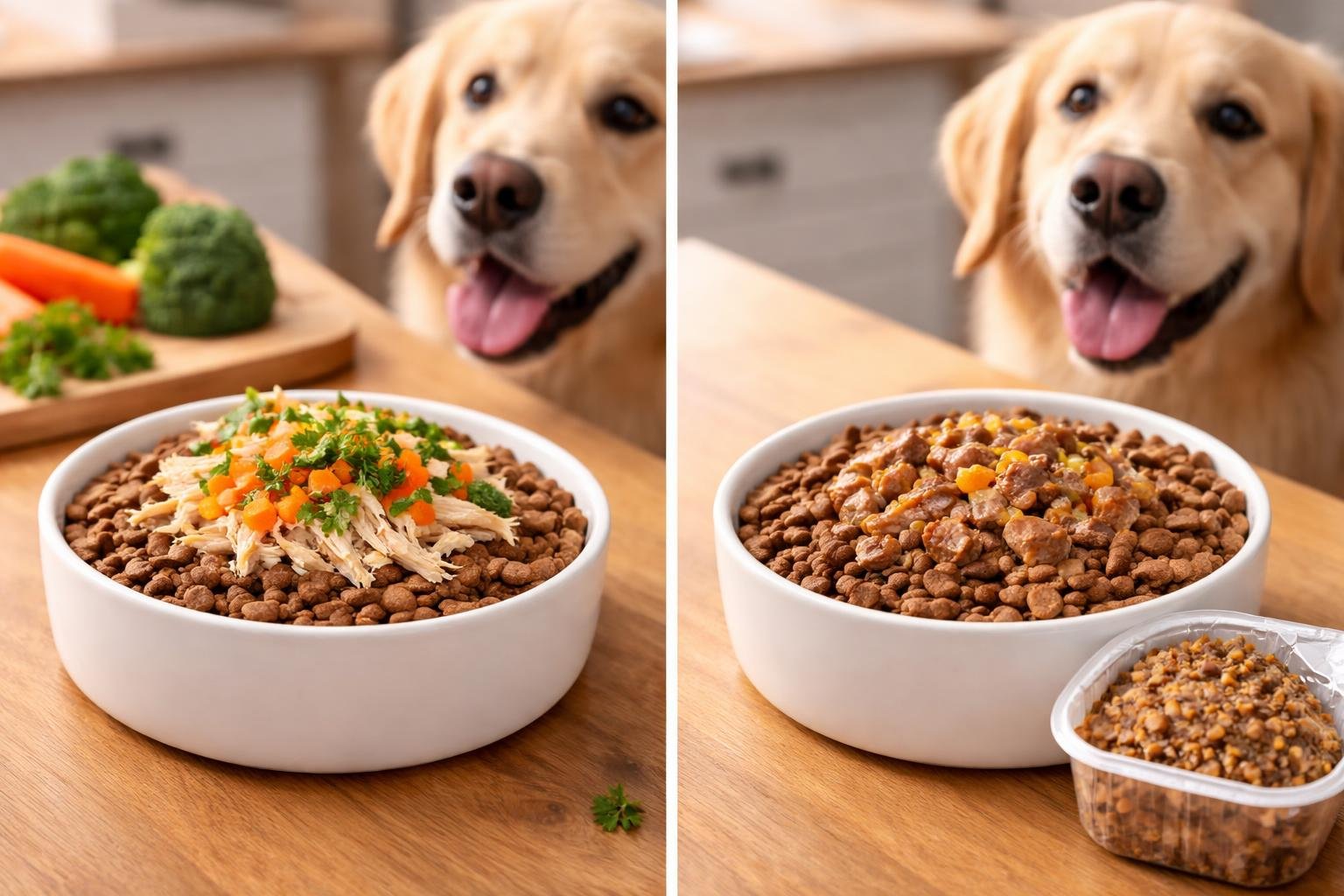
Dog owners can prepare toppers in their own kitchen or purchase ready-made products from pet stores and online retailers. Each approach offers distinct advantages in cost, convenience, and ingredient control.
Pros and Cons of Homemade Toppers
Homemade toppers give owners complete control over ingredients. They can avoid preservatives, artificial colors, and fillers that appear in some commercial products. This control helps dogs with food allergies or sensitivities.
Cost remains a major advantage of homemade options. Fresh vegetables, plain meats, and grains purchased in bulk cost less per serving than premium store-bought toppers.
Benefits of Homemade Toppers:
- Customizable for specific dietary needs
- Fresh ingredients without preservatives
- Lower cost per serving
- Control over portion sizes
Drawbacks to Consider:
- Requires time for preparation
- Needs proper storage and quick use
- Must research safe ingredients for dogs
- No guaranteed nutritional analysis
Preparation time poses the biggest challenge. Owners must cook, cool, and store toppers properly to prevent spoilage. They also need knowledge about which human foods are safe for dogs.
Evaluating Commercial Brands
Store-bought toppers offer convenience and consistent nutrition. Reputable brands provide nutritional information and guaranteed analysis on their labels. They come in freeze-dried, canned, and fresh formats.
Price varies widely between brands. Premium options cost more per serving but often contain higher-quality proteins and no fillers. Budget brands may include more grains and by-products.
Owners should read ingredient lists carefully. The first few ingredients matter most since they make up the largest portion of the product. Avoid toppers with artificial colors, excessive sodium, or vague terms like “meat meal.”
Key Factors When Choosing Brands:
- Ingredient quality: Named proteins (chicken, beef) rather than by-products
- Nutritional content: Protein and fat percentages match dog’s needs
- Shelf life: Freeze-dried lasts longer than fresh options
- Price per serving: Calculate actual cost based on feeding amounts
Storage requirements differ by product type. Freeze-dried toppers store at room temperature, while fresh versions need refrigeration and quick use after opening.
Creative Serving Ideas
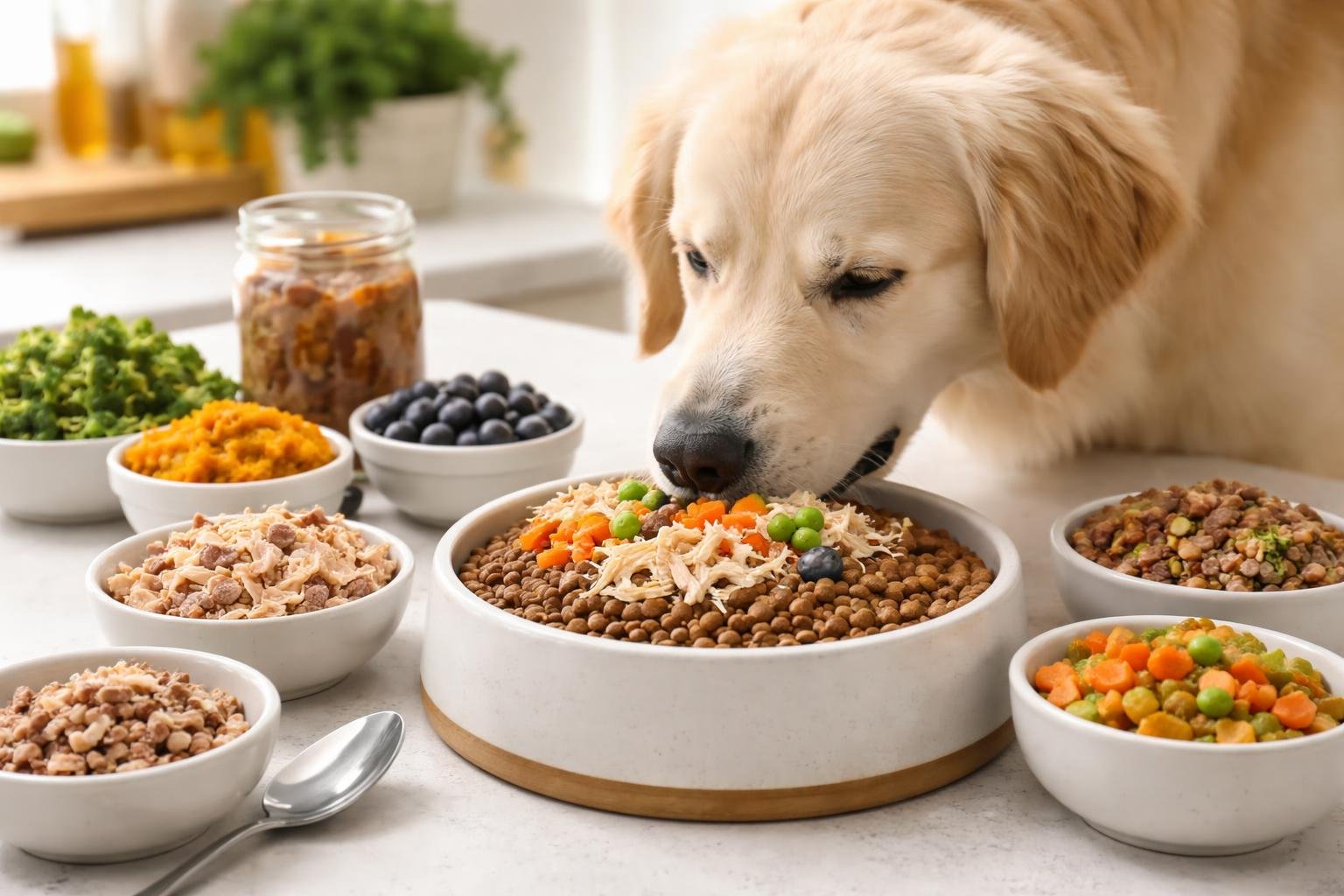
Smart presentation keeps dogs interested in their meals and makes kibble more appealing. Simple techniques like layering ingredients and changing up flavors prevent boredom at mealtime.
Layering Techniques
Dogs experience food through smell first, so placing toppers strategically matters. The best approach puts wet or aromatic toppers in the middle of the kibble rather than just on top. This creates pockets of flavor that dogs discover as they eat, keeping them engaged throughout the meal.
A handful of kibble goes in the bowl first, followed by the topper, then more kibble on top. This method works particularly well with broths, yogurt, or canned fish. The moisture soaks into the surrounding kibble and creates different textures.
Effective layering options include:
- Bottom layer of kibble, middle layer of pumpkin puree, top layer of kibble
- Kibble base with bone broth center and freeze-dried meat sprinkled on top
- Alternating thin layers of kibble and mashed sweet potato
Some dogs eat too fast when excited about toppers. Layering slows them down because they need to work through the bowl to find each flavorful section.
Rotating Flavors
Using the same topper every day defeats the purpose. A rotation schedule keeps meals interesting and provides varied nutrients. Most dogs benefit from switching toppers every few days rather than using one type continuously.
A simple rotation includes three to four different toppers used throughout the week. Monday might feature sardines, Wednesday could include scrambled eggs, and Friday might bring cottage cheese. This variety prevents dogs from getting bored or becoming too picky about one specific flavor.
Sample weekly rotation:
| Day | Topper |
|---|---|
| Monday/Tuesday | Canned pumpkin with cinnamon |
| Wednesday/Thursday | Shredded chicken with green beans |
| Friday/Saturday | Plain yogurt with blueberries |
| Sunday | Bone broth with sweet potato |
Keeping notes about which toppers a dog prefers helps refine future rotations. Some dogs have clear favorites that can appear more frequently in the schedule.
Common Mistakes to Avoid
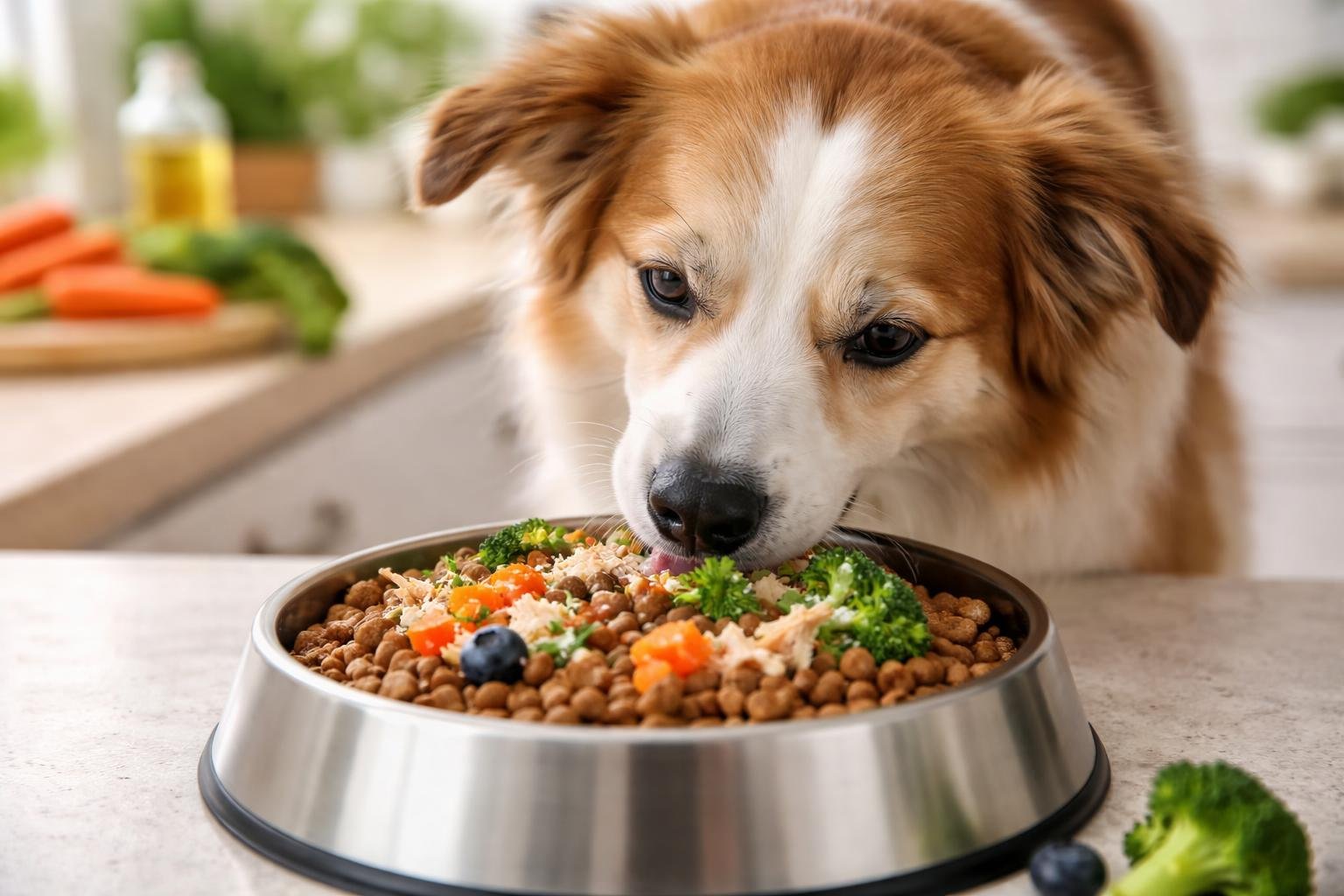
Many dog owners accidentally sabotage their pet’s nutrition when adding toppers to kibble. The two biggest errors involve portion control and not accounting for the extra calories these additions bring to the bowl.
Overfeeding Treat Toppers
Treat-based toppers taste great to dogs, but they pack more calories than many owners realize. Adding too much can lead to weight gain and create picky eating habits where dogs refuse their regular food.
A general rule is that toppers should make up no more than 10% of a dog’s daily food intake. The remaining 90% should come from their balanced kibble. For a 50-pound dog eating 3 cups of kibble daily, this means only about 2-3 tablespoons of topper is appropriate.
Dogs can also become dependent on toppers when served too frequently. Some pets start holding out for the tasty additions and skip their regular meals. Rotating topper use to a few times per week instead of every meal helps prevent this behavior while still providing variety.
Ignoring Calorie Count
Each topper adds calories to a dog’s meal, yet many owners don’t reduce the kibble amount to compensate. This oversight leads to excessive calorie consumption and gradual weight gain over time.
Different toppers vary widely in their caloric density. A tablespoon of bone broth contains about 5-10 calories, while the same amount of peanut butter has roughly 90-100 calories. Wet food toppers typically fall somewhere in between at 20-40 calories per tablespoon.
Owners should reduce their dog’s kibble portion when adding toppers. If a topper provides 50 calories, remove enough kibble to account for those 50 calories. Most kibble bags list calories per cup, making this calculation straightforward. Dogs on weight management plans or those prone to obesity need especially careful monitoring of total daily calories.
Long-Term Impact on Health and Behavior
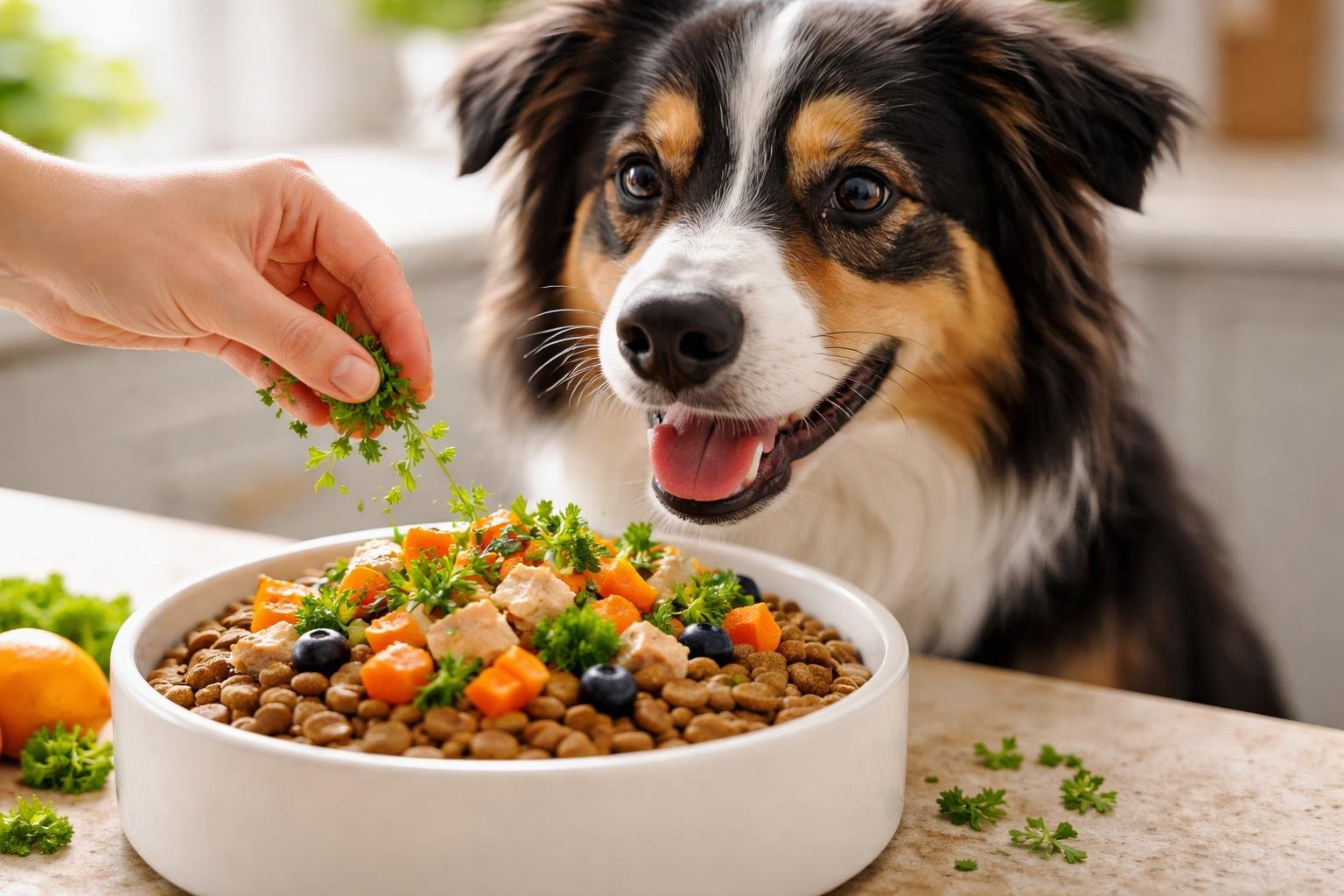
Adding toppers to a dog’s kibble can lead to meaningful changes in their overall health when done consistently. Dogs that receive fresh, nutrient-rich additions to their meals often show improved coat quality and better digestion over time. Their energy levels may become more stable throughout the day.
Regular use of quality toppers can support immune function and help maintain a healthy weight. The extra moisture from many toppers aids hydration, which benefits kidney function and urinary tract health. This is particularly important for dogs that don’t drink enough water on their own.
Common long-term health benefits include:
- Improved skin and coat condition
- Better digestive health and regular bowel movements
- Enhanced joint mobility when using protein-rich toppers
- Stronger immune response
- Better weight management
Behavior changes often accompany improved nutrition. Dogs that previously showed little interest in meals may develop healthier eating habits. They become more enthusiastic about mealtimes without the anxiety that comes with refusing food.
Some dogs display increased mental alertness and better focus during training sessions. This happens when their bodies receive proper nutrients that support brain function. However, pet owners should consult their veterinarian before making permanent dietary changes.
The key to seeing positive long-term results is consistency and balance. Toppers should complement a complete diet rather than replace essential nutrition. When used properly, they become a simple tool for supporting a dog’s health throughout their life.
Frequently Asked Questions
Dog owners often have questions about how to safely and effectively use kibble toppers. Understanding the types of toppers available, proper usage guidelines, and what ingredients to avoid helps pet parents make informed choices for their dogs’ nutrition.
What are the best vet-recommended food toppers for dogs?
Veterinarians typically recommend toppers that add nutritional value without excessive calories or sodium. Bone broth formulated specifically for dogs, plain lean proteins like cooked chicken or turkey, and unsweetened pureed pumpkin are common suggestions. These options provide moisture and flavor while supporting digestive health.
Many vets also approve freeze-dried raw meat toppers and probiotic supplements designed for dogs. The key is choosing products made specifically for canine consumption rather than human foods that may contain harmful additives.
Which food toppers work best for picky eater dogs?
Picky eaters often respond well to toppers with strong aromas and distinct textures. Wet food, bone broth, and freeze-dried meat toppers can transform plain kibble into an appealing meal. The smell and moisture from these additions typically motivate reluctant dogs to eat.
Small changes in texture also help encourage eating. Adding a spoonful of plain yogurt, scrambled eggs, or shredded chicken can make kibble more interesting. Some dogs prefer warm toppers, as heating releases more aroma.
Are homemade dog food toppers safe, and what ingredients should be avoided?
Homemade toppers can be safe when made with dog-friendly ingredients. Cooked lean meats, plain vegetables like carrots and green beans, and cooked sweet potato work well. Pet owners should avoid adding seasonings, oils, or butter.
Certain ingredients are toxic to dogs and must never be used. Onions, garlic, grapes, raisins, chocolate, xylitol, and macadamia nuts can cause serious health problems. Avocado, cooked bones, and anything containing caffeine should also be avoided.
High sodium foods and overly fatty meats can cause digestive upset. Pet owners should introduce new toppers gradually and in small amounts.
Can dog food toppers replace a full meal, or should they only be used as an add-on?
Most toppers are designed as add-ons, not complete meals. Kibble provides balanced nutrition that toppers alone cannot match. Toppers should make up no more than 10% of a dog’s daily caloric intake to maintain proper nutritional balance.
Using toppers as meal replacements can lead to nutritional deficiencies over time. Dogs need the vitamins, minerals, and balanced protein found in complete dog foods. Toppers enhance meals but should not become the primary food source.
Some freeze-dried raw toppers or wet foods are formulated as complete meals. Pet owners should check product labels to determine if the topper provides complete and balanced nutrition.
What are the pros and cons of liquid versus powder dog food toppers?
Liquid toppers like bone broth add moisture and help with hydration. They mix easily into kibble and are ideal for dogs who don’t drink enough water. The warmth and aroma can be especially appealing to picky eaters.
However, liquid toppers can make kibble soggy quickly. Some dogs prefer crunchy food and may reject overly wet meals. Liquid toppers also require refrigeration after opening and have shorter shelf lives.
Powder toppers offer convenience and longer storage times. Products like probiotic powders and digestive enzyme supplements sprinkle easily over food. They don’t change kibble texture as dramatically as liquids.
The downside is that powder toppers don’t add moisture. Some dogs may not notice the subtle flavor changes powders provide.
Are freeze-dried dog food toppers a healthy option for daily feeding?
Freeze-dried toppers retain most nutrients from raw ingredients while removing moisture. They provide concentrated protein and can be used safely for daily feeding when portioned correctly. These toppers are shelf-stable and don’t require refrigeration before opening.
Quality freeze-dried toppers made from single-ingredient proteins offer good nutritional value. They contain minimal processing and no artificial additives. Dogs typically find them highly palatable due to their strong meat flavors.
Pet owners should account for the calories freeze-dried toppers add to their dog’s diet. These toppers are calorie-dense despite their light weight. Following package feeding guidelines prevents overfeeding and maintains proper nutrition balance.