Puppy Training Guide: How and When To Start for First-Time Dog Owners
Getting a new puppy is exciting, but it also comes with important responsibilities. Training should start as soon as a puppy arrives home, typically around 8 weeks old, because early training shapes a dog’s behavior for life. Puppies learn quickly during their first few months, making this the best time to teach good habits and prevent problems before they start.
This puppy training guide covers everything new owners need to know about raising a well-behaved dog. From the first day home through advanced skills, proper training builds a strong bond between owner and pet. The process includes teaching basic commands, establishing house rules, and helping puppies learn how to interact with people and other animals.
Training a puppy takes patience and consistency, but the results are worth the effort. A well-trained dog is safer, happier, and easier to live with. This guide breaks down puppy training into clear steps that work for first-time owners and experienced handlers alike.
When to Begin Training and Setting Expectations
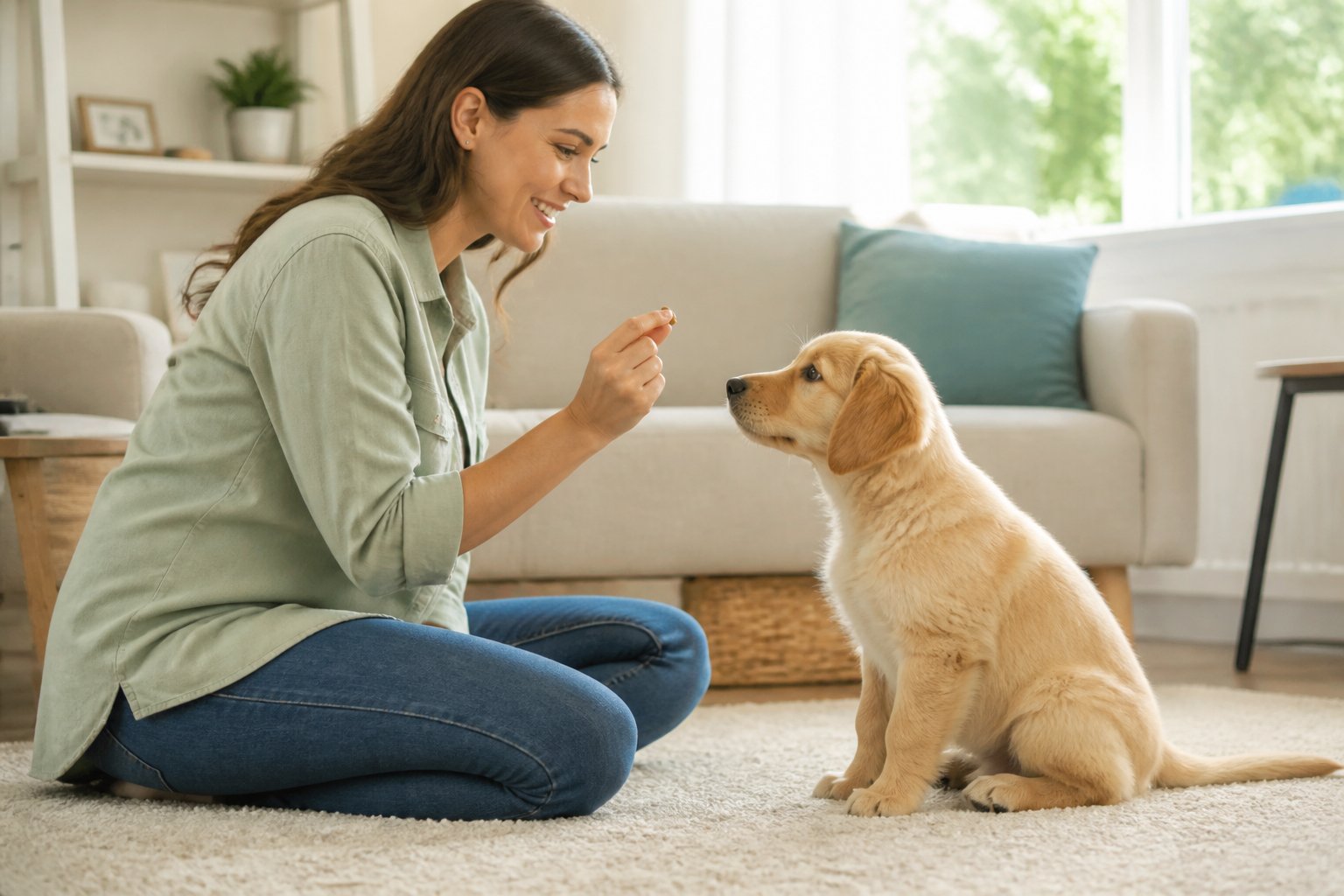
The first 90 days with a puppy represent a critical window for learning and development. Training can start on day one, but the approach and expectations should align with the puppy’s age and developmental stage.
Understanding Puppy Development Stages
Puppies go through distinct developmental stages that affect their ability to learn. The neonatal period (0-2 weeks) and transitional period (2-4 weeks) focus mainly on physical development and sensory awareness.
The socialization period begins at 3 weeks and extends to about 12-14 weeks. During this time, puppies are most receptive to new experiences and form lasting associations. This stage is crucial for introducing basic concepts and building positive experiences.
The juvenile period starts around 12 weeks and continues until sexual maturity. Puppies in this stage can handle more structured training and retain commands better. Their attention span increases, making it easier to teach obedience skills.
Each stage builds on the previous one. What a puppy learns during early weeks shapes their behavior for life.
Ideal Age to Start Training
Training should begin the day a puppy arrives home, regardless of age. Most puppies join their new families between 8-12 weeks old.
Basic training during weeks 8-12 focuses on:
- Name recognition
- House training basics
- Gentle handling and touch
- Simple routines
Formal group classes typically start around 16 weeks after full vaccination. However, individual training sessions can begin much earlier with proper precautions.
The first vaccination usually happens at 6-8 weeks. One-on-one training or controlled home training can start immediately after this first round of shots.
Building Trust and Bonding First
A strong bond forms the foundation for all future training. New puppies need time to adjust to their environment before expecting perfect obedience.
The first few days should prioritize comfort and security. Owners can introduce basic routines without formal commands. Simple activities like hand-feeding, gentle play, and quiet time together build trust naturally.
Training works best when a puppy feels safe. Rushing into strict training before establishing trust can create anxiety and resistance. A puppy training guide should emphasize relationship-building as the first step in any training schedule.
Short, positive interactions throughout the day prove more effective than long training sessions. Five-minute sessions repeated 3-4 times daily work well for young puppies.
Core Foundations: Socialization and Basic Commands
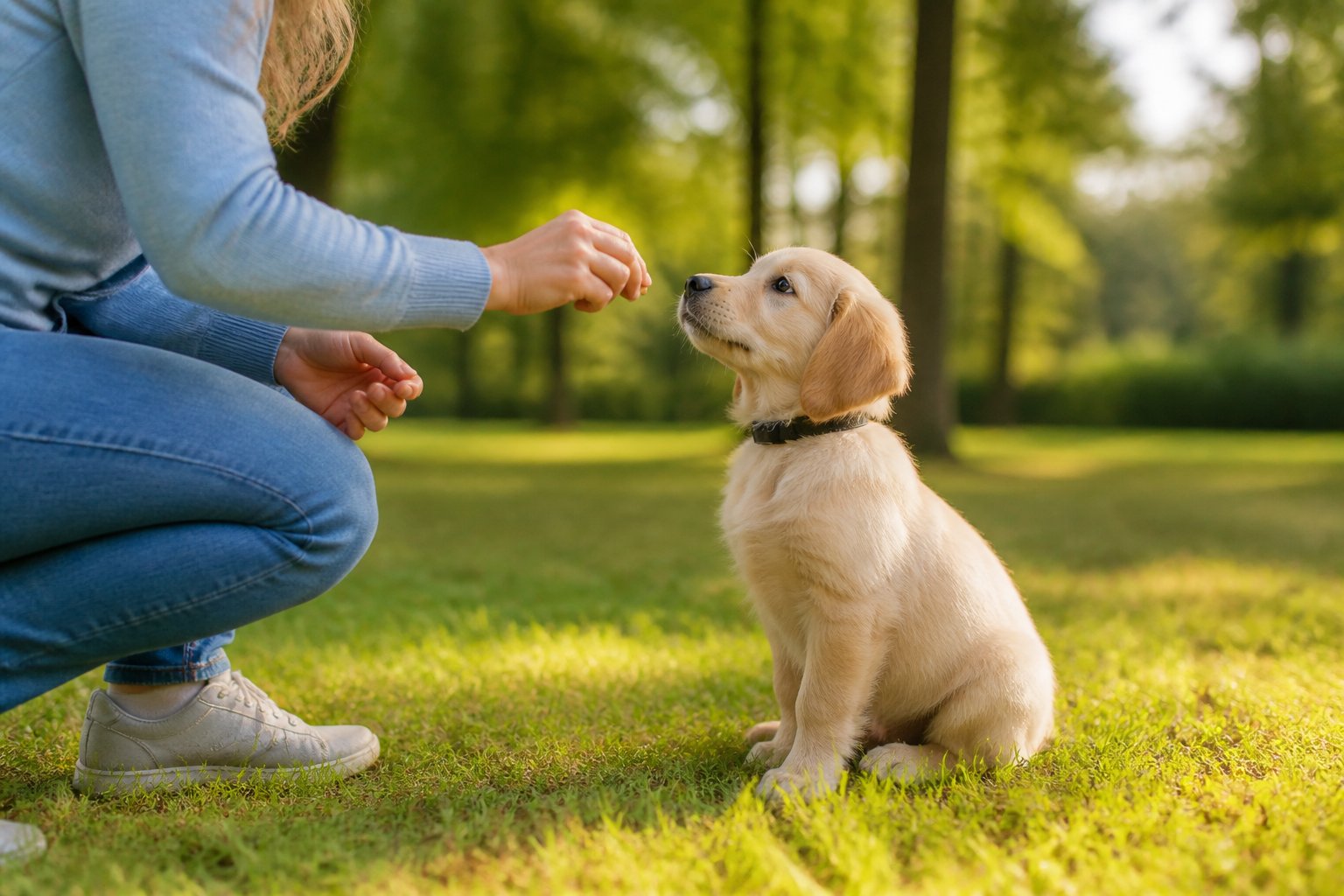
Puppies learn fastest between 8 and 16 weeks of age, making this the ideal window to introduce them to new experiences and teach basic behaviors. Proper socialization shapes how a dog views the world, while early command training establishes communication patterns that last a lifetime.
Socializing Puppies Effectively
Puppy socialization involves exposing young dogs to different people, animals, environments, and situations in a positive way. The critical socialization period runs from approximately 3 to 16 weeks of age. During this time, puppies form lasting impressions about what is safe and normal.
Owners should introduce their puppy to at least 100 different people during the first few months. This includes people of different ages, sizes, ethnicities, and those wearing hats, uniforms, or using mobility aids.
Safe socialization requires careful planning. Puppies should meet fully vaccinated, friendly dogs in controlled settings. Puppy classes provide structured environments where young dogs can interact under supervision while learning basic skills.
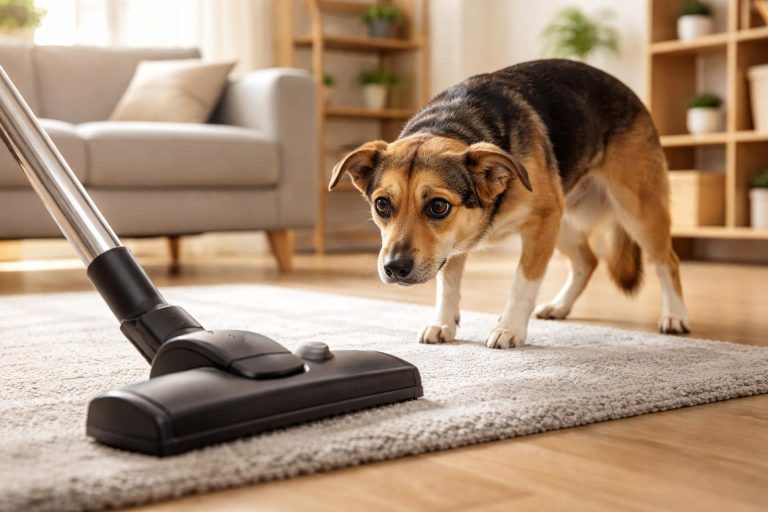
New environments matter just as much as new faces. A puppy should experience various surfaces like grass, concrete, tile, and carpet. They should hear different sounds such as traffic, appliances, and construction noise at gradually increasing volumes.
Each new experience should be brief and positive. Treats and praise help puppies form good associations. Owners should never force a scared puppy into situations. Instead, they should maintain distance and reward calm behavior.
Teaching Name Recognition and Attention
Name recognition forms the foundation for all other training. A puppy must learn that their name means “look at me and pay attention” before they can follow more complex instructions.
Training starts by saying the puppy’s name once in a happy tone. When the puppy looks at the owner, they receive immediate praise and a small treat. This process repeats 10-15 times per day in short sessions.
Owners should avoid repeating the name multiple times. Saying “Max, Max, Max” teaches the puppy to ignore the first two times they hear it. One clear use of the name followed by reward builds better habits.
The “watch me” or “look” cue extends basic attention training. After the puppy reliably responds to their name, owners can add this cue while holding a treat near their eyes. The puppy learns to make direct eye contact on command.
Practice sessions should happen in different rooms and gradually add mild distractions. A puppy training schedule that includes 3-5 brief name recognition sessions daily produces the fastest results.
Introducing Essential Cues: Sit, Stay, Come
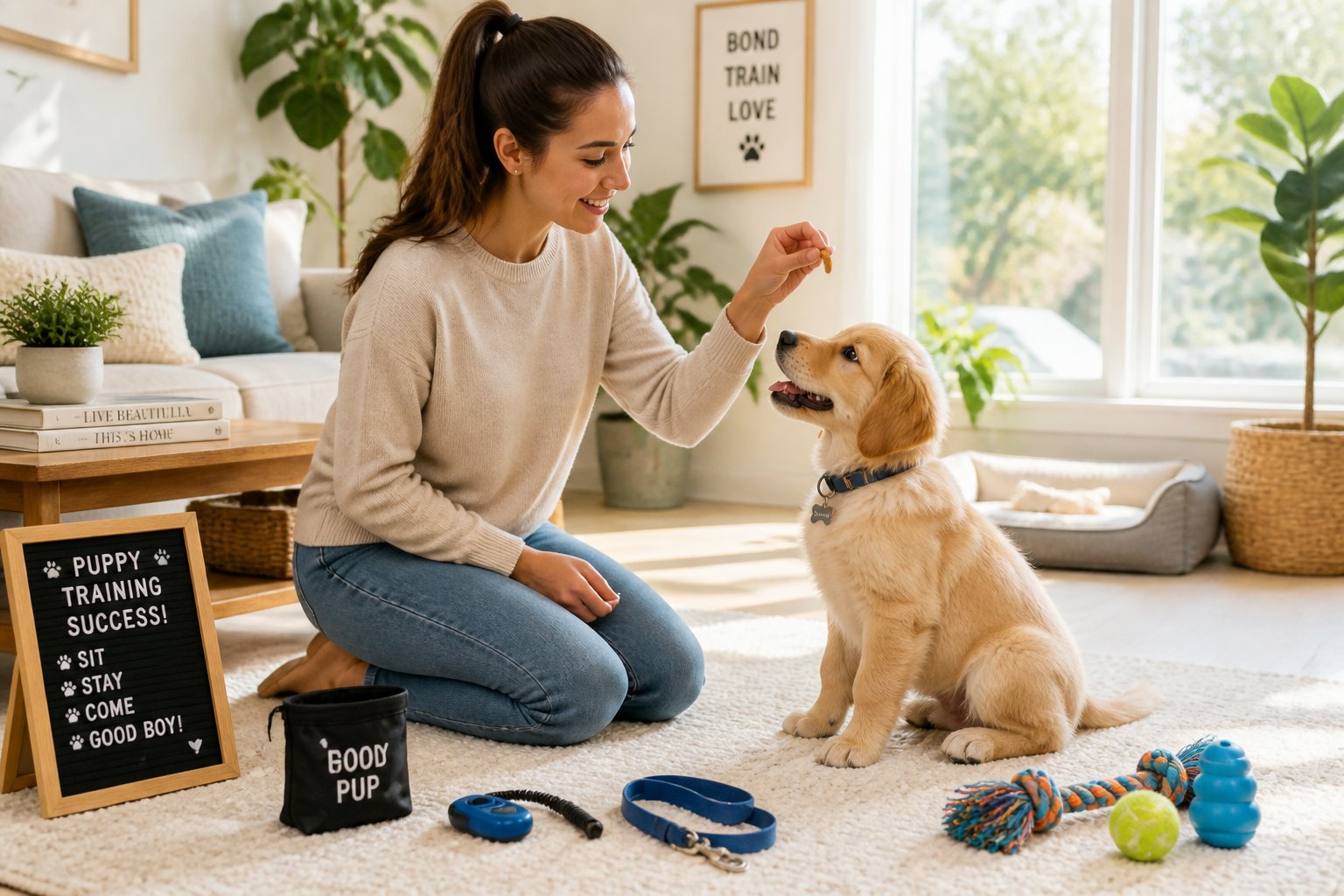
Sit is usually the first command puppies learn because dogs naturally sit frequently. Owners hold a treat above the puppy’s nose and slowly move it back over their head. As the puppy’s nose goes up, their bottom goes down. The moment they sit, they hear “sit” and get the treat.
Come when called (recall training) keeps dogs safe throughout their lives. Early recall training happens in distraction-free indoor spaces. The owner says the puppy’s name followed by “come” in an enthusiastic voice while backing away. When the puppy reaches them, they receive high-value treats and excited praise.
Recall practice should never follow negative experiences. Owners should avoid calling their puppy to do something unpleasant like nail trimming or ending playtime. This creates negative associations with the cue.
Stay requires more impulse control than other basic commands. Puppies under 12 weeks often struggle with this concept. Training begins by asking for a sit, then waiting just one second before rewarding. The duration increases gradually over weeks, not days.
A puppy training guide should emphasize that these three commands require daily practice in various locations. Short sessions of 3-5 minutes prevent puppies from becoming bored or frustrated.
House Manners and Introduction to Structure
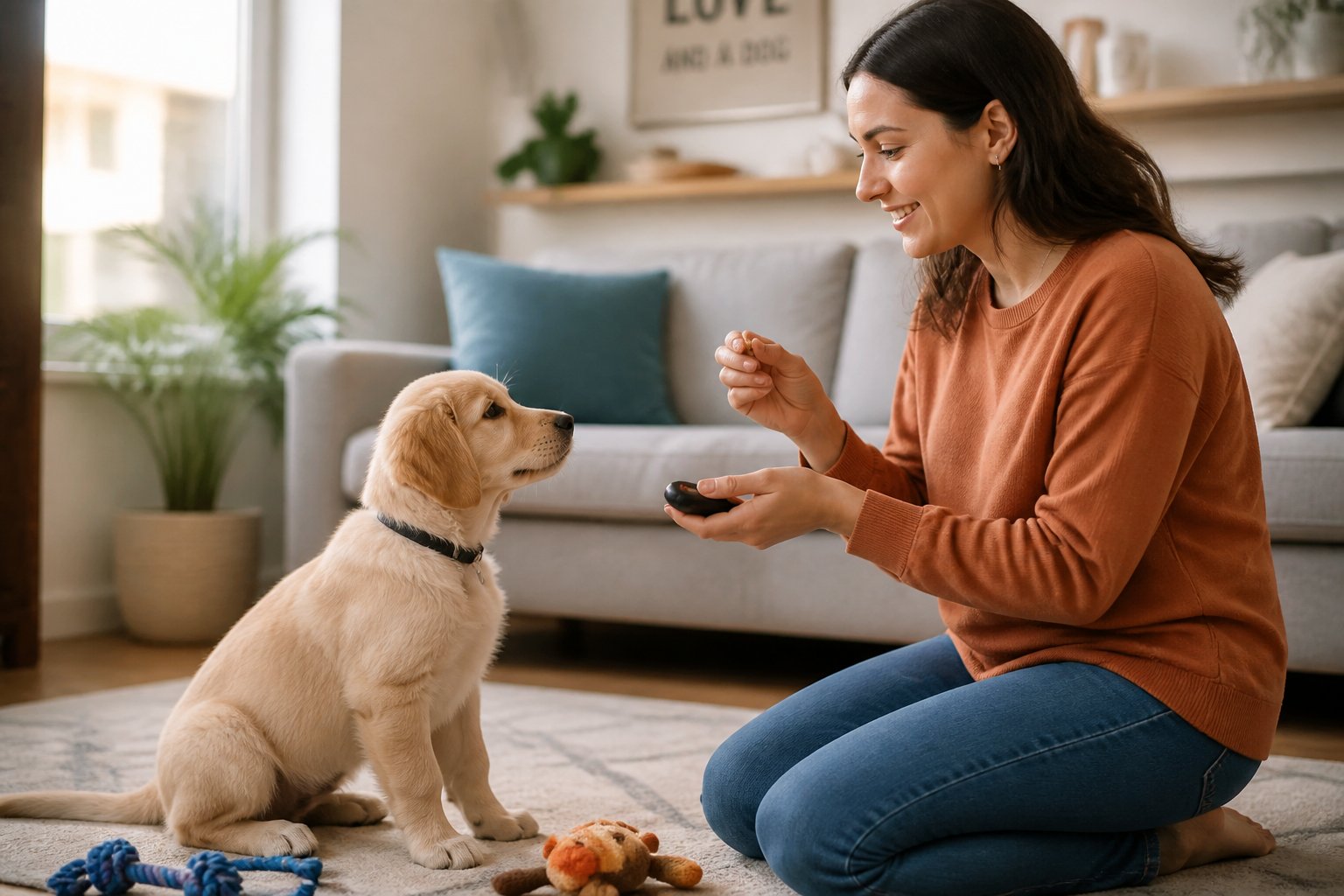
Puppies thrive when they understand the rules of their new home. A structured approach to house manners covers three main areas: where to go potty, how to maintain consistent daily routines, and creating a safe space through crate training.
Potty Training Fundamentals
House training starts the moment a puppy arrives home. Puppies need to go outside immediately after waking up, after eating, after playing, and every 1-2 hours during the day. Young puppies cannot hold their bladder for long periods.
Taking the puppy to the same spot each time helps them understand where to go. Owners should use a simple command like “go potty” while the puppy eliminates. Immediate praise when the puppy goes in the right spot teaches them what behavior to repeat.
Most puppies take several weeks to a few months to become fully house-trained. Accidents will happen during this learning period. Clean up accidents without punishment, as puppies do not understand scolding after the fact.
Utilizing Pee Pads and Consistent Routines
Pee pads offer an indoor option for puppies who cannot go outside frequently. They work well for apartment living or during bad weather. Place pads in a designated area away from where the puppy eats and sleeps.
A training schedule helps puppies learn faster. Feed meals at the same times each day, as this makes bathroom breaks predictable. Take the puppy out at regular intervals throughout the day.
Basic Daily Routine:
- Morning: Potty break, breakfast, potty break
- Midday: Potty break, playtime, potty break
- Evening: Dinner, potty break, quiet time
- Before bed: Final potty break
Consistency matters more than perfection. Stick to the same schedule and use the same commands daily.
Crate Training for Security and Behavior
A crate serves as a puppy’s personal space and aids in house training. Dogs naturally avoid soiling their sleeping area, which makes crates effective training tools. The crate should be large enough for the puppy to stand, turn around, and lie down comfortably.
Introduction to the crate should be gradual and positive. Place treats and toys inside to make it inviting. Start with short periods of 5-10 minutes while the owner is home. Puppies should not spend more than a few hours at a time in a crate during the day.
Never use the crate as punishment. The puppy should view it as a safe, comfortable space. Feed meals inside the crate or give special treats only available there. This builds positive associations with crate time.
Leash Skills and Walking Etiquette
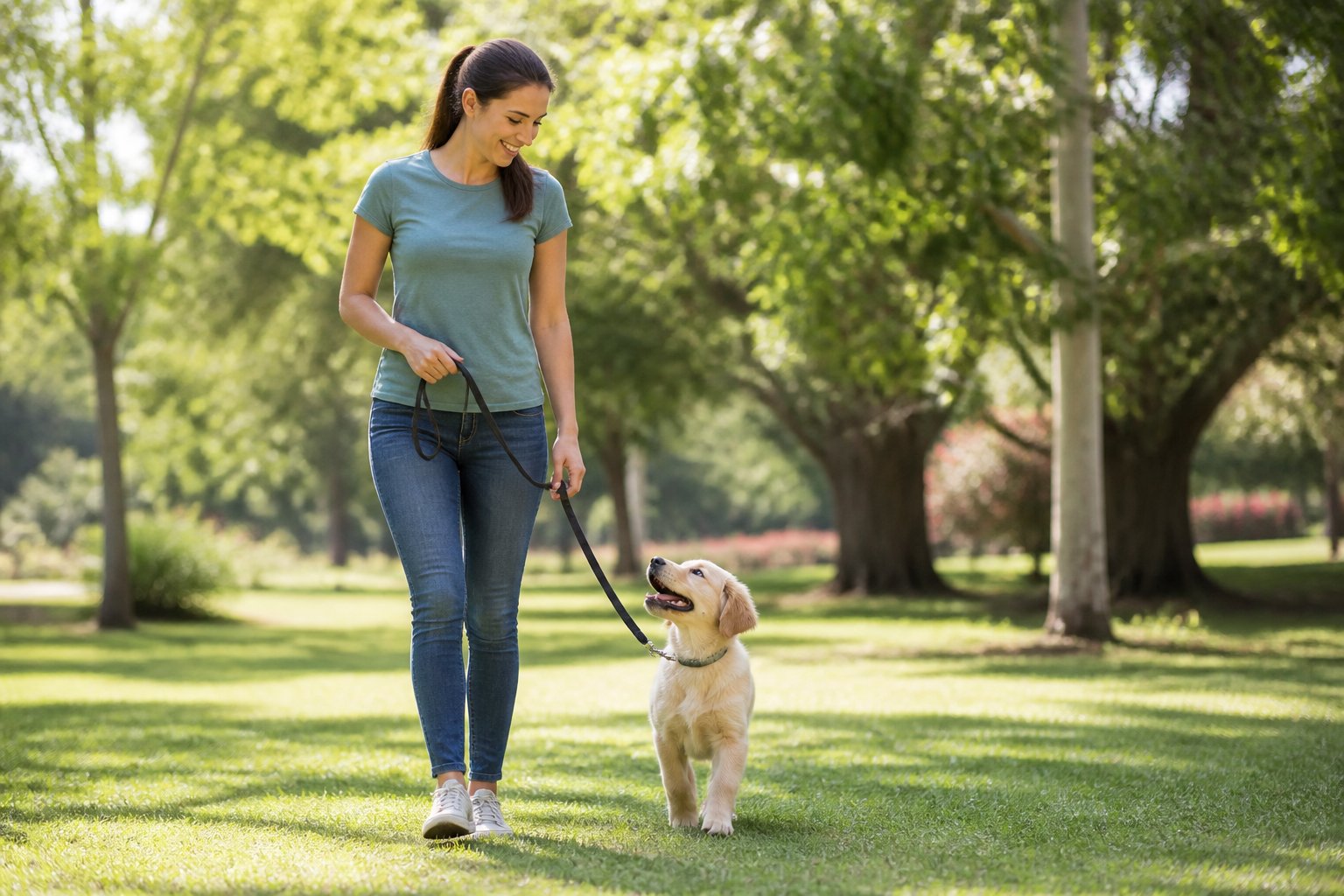
Teaching a puppy to walk properly on a leash prevents pulling, builds confidence, and makes outdoor time safer and more enjoyable for both dog and owner. Start with basic collar and leash introduction, then move on to loose leash walking techniques before considering any off-leash work.
Getting Started with Leash Training
Puppies can begin leash training as early as 8 weeks old. The first step is getting the puppy comfortable wearing a collar or harness indoors for short periods.
Once the puppy accepts the collar, attach a lightweight leash and let them drag it around under supervision. This helps them get used to the feeling without any pressure. Keep these sessions brief and positive.
Initial Training Steps:
- Let the puppy sniff and investigate the leash
- Reward calm behavior around the equipment
- Practice indoors in a familiar space first
- Use treats to create positive associations
After a few days of indoor practice, try short walks in a quiet outdoor area. The puppy should learn that staying near their owner brings rewards. Hold treats at waist level and reward the puppy for walking alongside without tension on the leash.
Puppy training classes can provide structured guidance and socialization opportunities during this learning phase.
Preventing Pulling with Loose Leash Walking
Loose leash walking means the leash stays slack while the puppy walks calmly beside their handler. This skill prevents shoulder injuries in owners and teaches dogs self-control.
Stop moving immediately when the puppy pulls. Stand still and wait for them to return or look back. The moment the leash goes slack, mark the behavior with “yes” and continue walking. This teaches that pulling stops all forward progress.
Key Techniques:
- Change direction when the puppy starts to pull
- Reward the puppy every few steps for staying close
- Practice the “heel” command for structured walking
- Keep training sessions short (10-15 minutes)
Consistency is critical. Every family member must use the same rules. If one person allows pulling, the puppy will not learn reliable leash manners.
Start in low-distraction areas and gradually add challenges like other dogs, people, or interesting smells. Use a standard 4-6 foot leash rather than retractable ones during training.
Progressing to Off-Leash Training
Off-leash training should only begin after a puppy has mastered loose leash walking and basic obedience commands. The dog must reliably respond to “come,” “stay,” and “leave it” in various environments.
Start off-leash work in a safely enclosed area like a fenced yard or dog park. Practice recall by calling the puppy from short distances and rewarding them generously when they return.
Gradually increase the distance and add distractions. Use a long training lead (15-30 feet) as a safety backup before removing the leash entirely. This gives the puppy freedom while maintaining control if needed.
Never attempt off-leash training near roads or unfamiliar areas until the dog demonstrates perfect recall. Some dogs may never be safe off-leash due to high prey drive or anxiety. That’s normal and not a training failure.
Preventing and Addressing Common Behavioral Issues
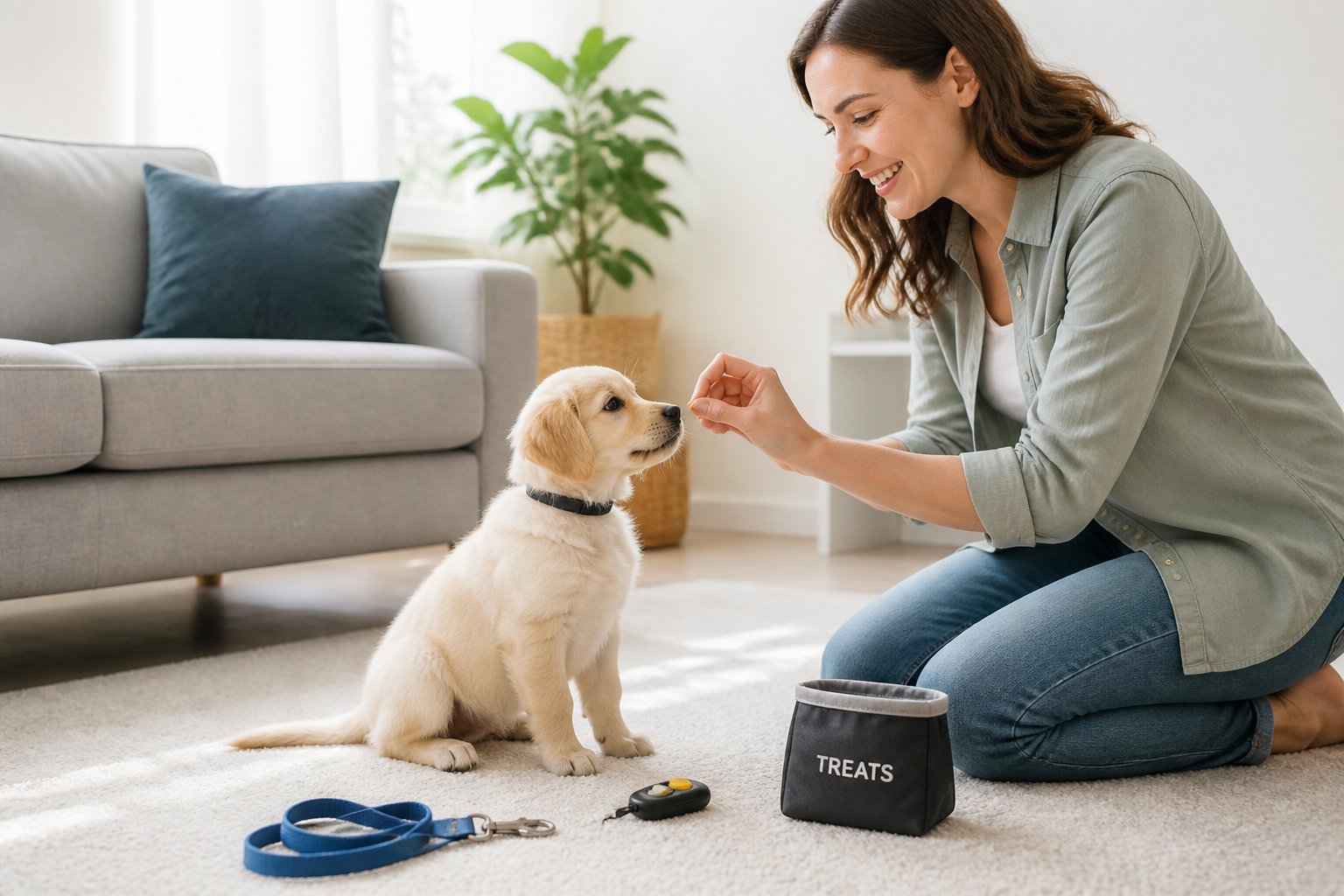
Young puppies naturally develop habits that can become problems without proper guidance. Teaching good behavior early prevents these issues from becoming permanent patterns that are harder to fix later.
Curbing Nipping and Jumping
Puppies explore the world with their mouths and jump to greet people at eye level. These behaviors are normal but need to be redirected early.
When a puppy nips during play, the owner should immediately stop all interaction and turn away. This teaches the puppy that biting ends the fun. After a few seconds of ignoring the behavior, play can resume with a toy instead of hands.
Effective strategies include:
- Keeping chew toys nearby during play sessions
- Redirecting the puppy’s mouth to appropriate items
- Using a calm, firm “no” or “ouch” when nipping occurs
- Rewarding gentle mouth behavior with treats
For jumping, the owner should avoid giving attention when paws leave the ground. Standing still with arms crossed and looking away removes the reward the puppy seeks. Once all four paws are on the floor, immediate praise and attention reinforce the correct behavior.
Teaching “sit” as a greeting behavior gives the puppy an alternative action that earns attention.
Managing Separation Anxiety
Separation anxiety develops when puppies become distressed being alone. This issue requires gradual training to build confidence and independence.
Crate training helps create a safe space where the puppy feels secure. The crate should be introduced slowly with positive associations like treats and toys. Short absences of just a few minutes teach the puppy that the owner always returns.
The owner should avoid making departures and arrivals emotional events. Leaving quietly without long goodbyes and staying calm when returning home keeps the routine low-key. This prevents the puppy from viewing these moments as stressful.
Steps to reduce anxiety:
- Practice leaving for 30 seconds, then gradually increase time
- Give a special toy or treat only during alone time
- Maintain a consistent daily routine
- Exercise the puppy before departures to reduce excess energy
Developing Impulse Control
Impulse control teaches puppies to wait patiently instead of acting on every urge. This skill forms the foundation for reliable obedience.
The “wait” command works well at doorways, before meals, and during walks. The puppy learns to pause until given permission to proceed. Start with the food bowl held above the puppy’s head, asking for a sit and wait before lowering it to eat.
Leave-it training prevents puppies from grabbing forbidden items. Place a treat on the floor covered by the owner’s hand. When the puppy stops trying to get it and looks up, they receive a different treat as a reward.
These exercises build patience through repetition. Sessions should last 3-5 minutes several times daily rather than one long training period.
Advanced Support and Maintaining Progress
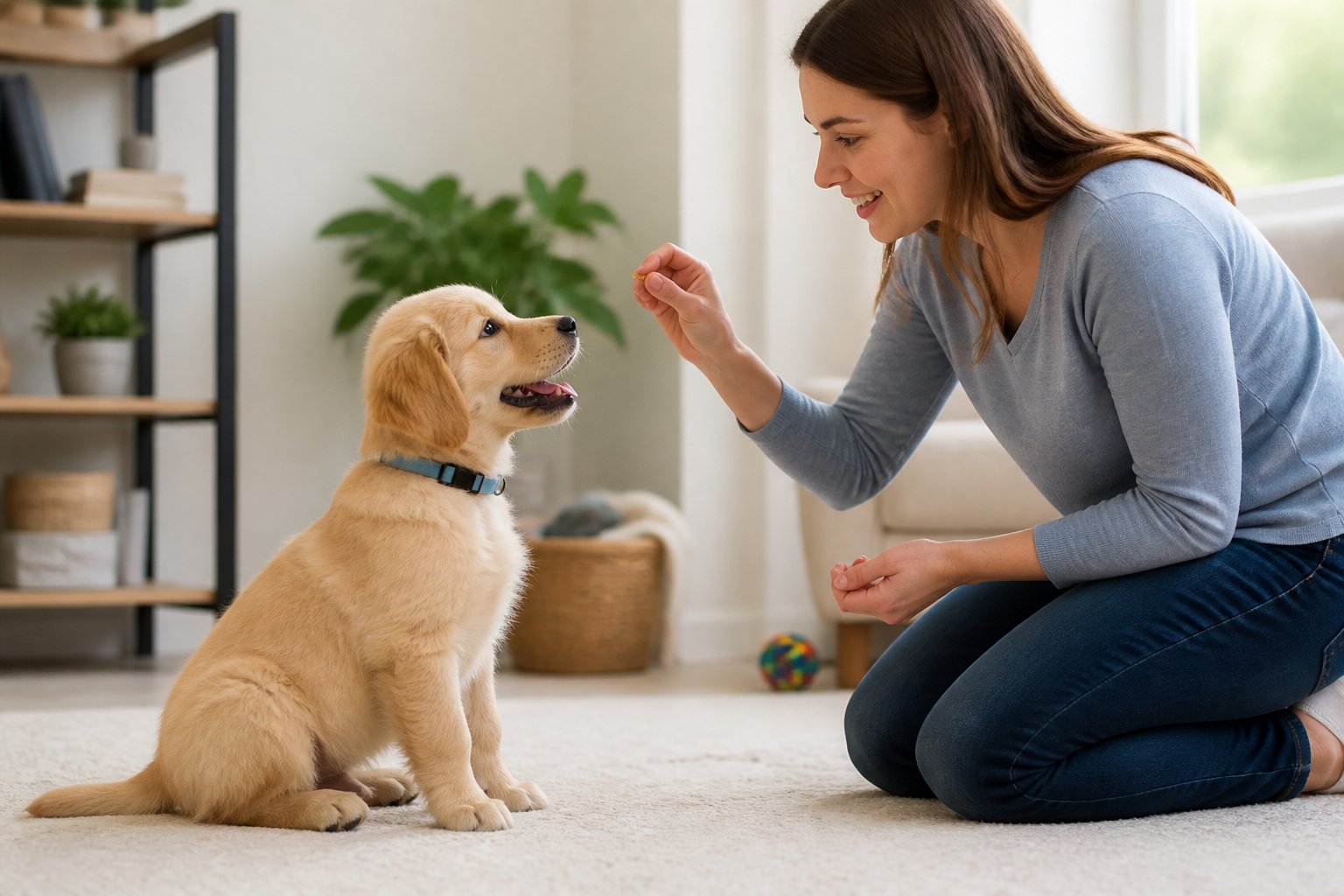
Professional guidance and consistent practice help puppies develop into well-behaved adult dogs. Training classes and expert trainers provide structure, while long-term commitment ensures skills last beyond the puppy stage.
Benefits of Puppy Training Classes
Puppy training classes offer structured learning environments where young dogs develop essential skills alongside their peers. These classes teach basic commands like sit, stay, and come while providing controlled socialization opportunities with other puppies.
The group setting helps puppies learn to focus despite distractions. They practice good manners around other dogs and unfamiliar people. Most classes run for 4-8 weeks with weekly sessions lasting 45-60 minutes.
Classes also educate owners on proper training techniques and common behavior problems. Instructors demonstrate correct timing for rewards and show how to address issues like jumping or mouthing. Many facilities offer different levels, from basic puppy classes for dogs 8-16 weeks old to intermediate courses for older puppies.
Working with a Certified Dog Trainer
A certified dog trainer brings professional expertise to address specific challenges or accelerate learning. These trainers have completed formal education and testing through organizations that verify their knowledge and skills.
Private sessions allow trainers to customize lessons for individual puppies and their specific needs. They can tackle behavior issues like fear, aggression, or excessive barking that require personalized attention. Trainers observe the dog’s body language and adjust methods accordingly.
One-on-one training works well for puppies who feel overwhelmed in group settings or families with unique goals. Sessions typically cost more than group classes but provide focused attention. Some trainers also offer in-home visits to address problems in the dog’s actual environment.
Sustaining Good Habits Through Adulthood
Training doesn’t end when a puppy reaches one year old. Adult dogs need continued practice to maintain their skills and prevent backsliding into unwanted behaviors.
Daily reinforcement keeps commands sharp:
- Practice basic obedience during regular activities like walks or meals
- Reward good behavior consistently, even after initial training ends
- Review learned commands for 5-10 minutes several times per week
Dogs benefit from ongoing mental stimulation throughout their lives. Advanced training, new tricks, or dog sports provide challenges that keep their minds active. Regular practice sessions strengthen the bond between dog and owner while preventing boredom-related behavior problems.
Consistency remains critical as puppies mature into adults. All family members must use the same commands and rules to avoid confusing the dog.
Frequently Asked Questions
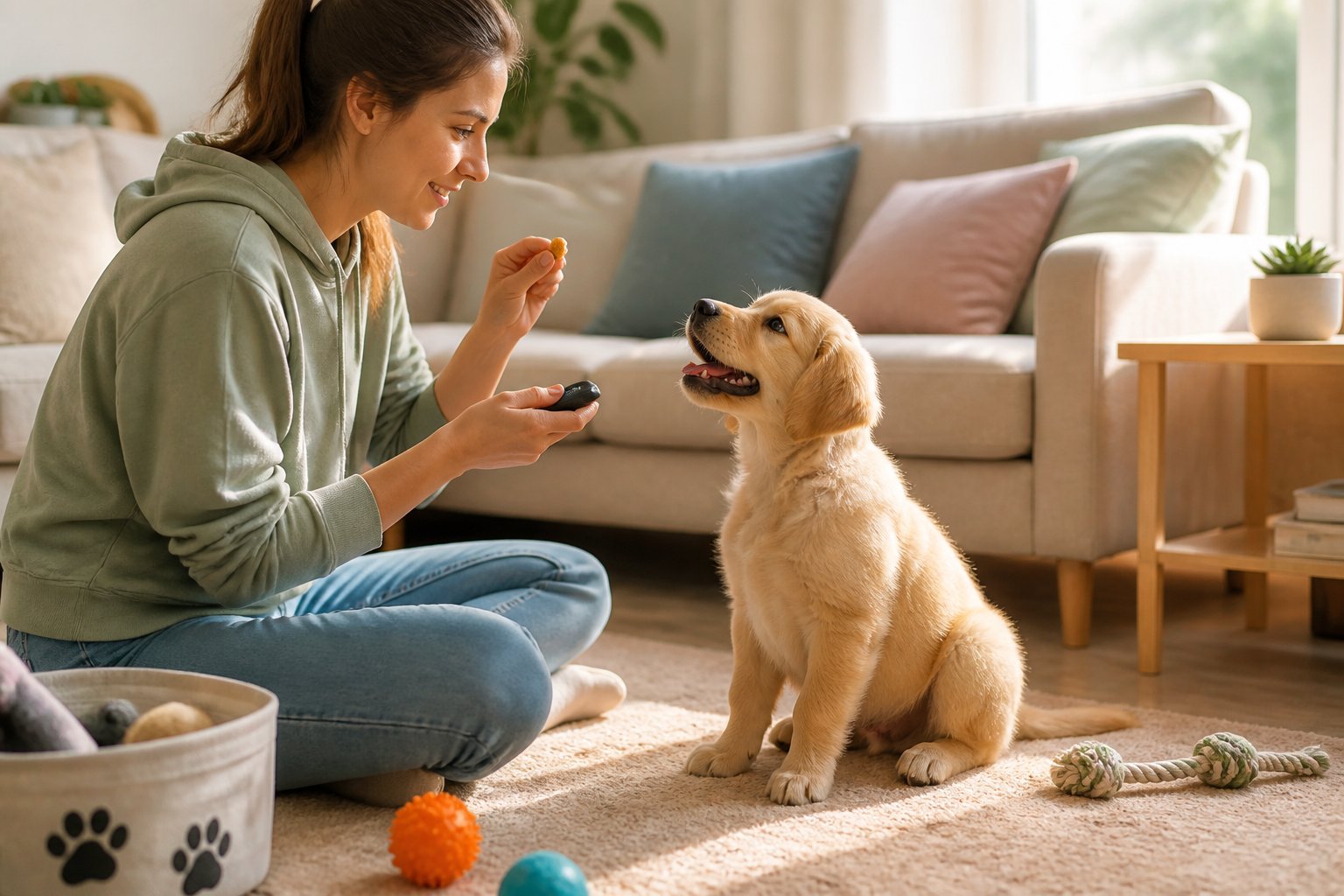
Puppy training raises many questions for new owners, from the ideal start time between 7-8 weeks to managing realistic 5-10 minute sessions multiple times per day.
When should I start training my puppy, and what skills should come first?
Training should begin as soon as a puppy arrives home, typically around 7-8 weeks of age. This early period is critical for development, as puppies are most receptive to learning between 5-18 weeks old.
The first skills to focus on include potty training, crate training, and basic socialization. Name recognition should be taught immediately, followed by simple commands like “sit” and “come.” These foundational behaviors make all future training easier.
Socialization is equally important during this early window. Exposing puppies to different people, animals, sounds, and environments helps them develop into confident adult dogs.
What does a realistic puppy training schedule look like by age?
At 7-8 weeks, puppies should focus on basic house training, crate introduction, and gentle socialization within the home. Training sessions should be very brief, around 5 minutes, several times per day.
Between 9-12 weeks, puppies can start learning basic commands like “sit,” “stay,” and “down.” They should also begin meeting vaccinated dogs and experiencing new environments safely. Sessions can extend to 5-10 minutes, three to five times daily.
From 12-16 weeks, puppies can handle slightly longer sessions and more complex training. This is an ideal time to enroll in puppy classes for structured socialization. Basic leash training and impulse control exercises become appropriate.
By 4-6 months, training sessions can reach 10-15 minutes. Puppies can learn more advanced commands and practice skills in different environments with more distractions.
How can I train an 8-week-old puppy at home without overwhelming them?
Keep training sessions extremely short, no more than 5 minutes at a time. An 8-week-old puppy has a very limited attention span and tires quickly.
Focus on one skill at a time rather than multiple commands in one session. Start with simple concepts like name recognition or sitting for treats.
Use positive reinforcement exclusively at this age. Treats, praise, and play work best for young puppies who are just learning what humans expect from them.
Create a consistent routine for feeding, potty breaks, and sleep. Predictability helps puppies feel secure and makes house training more successful. End each session on a positive note before the puppy loses interest.
What is the best age to enroll a puppy in training classes?
Most puppies can start group training classes between 8-16 weeks of age. Many training facilities offer puppy socialization classes specifically designed for dogs as young as 8-10 weeks.
The puppy should have received at least their first round of vaccinations before attending group classes. Owners should verify vaccination requirements with the training facility beforehand.
Enrolling between 10-14 weeks is ideal because this falls within the critical socialization window. Puppies learn important social skills from interacting with other dogs in a controlled environment.
Classes provide structure and professional guidance that complements home training. They also help prevent common behavior problems by addressing them early.
How long should each puppy training session be, and how often should I train each day?
Training sessions should last 5 minutes or less for puppies under 12 weeks old. Young puppies cannot maintain focus for extended periods and become frustrated easily.
Puppies between 12-16 weeks can handle sessions of 5-10 minutes. By 4-6 months, sessions can extend to 10-15 minutes without overwhelming the puppy.
Training should occur three to five times per day, spread throughout the day. Short, frequent sessions are far more effective than one long session.
Informal training opportunities happen throughout the day during meals, play, and potty breaks. Asking for a “sit” before meals or practicing “come” during play counts as valuable training time.
Where can I find a free, printable puppy training schedule or guide in PDF format?
Many veterinary clinics provide free puppy training guides and schedules to new owners. Calling a local vet office or checking their website often yields downloadable resources.
Animal welfare organizations like the American Humane Society offer free pet parent guides with training schedules. These guides typically include science-based training advice from veterinary and animal behavior experts.
Dog training websites and pet care companies frequently offer free downloadable puppy training schedules in exchange for an email subscription. These PDFs often include week-by-week training goals and checklists.
Some pet food manufacturers provide comprehensive puppy care guides that include training schedules. These are usually available on their websites as free downloads without requiring registration.