How to care a bulldog
Bulldogs need steady care, daily cleaning, proper food, and close attention to their health. Their flat faces, loose skin, and stocky build make them lovable, but they also need special support to stay well. You cannot treat them like every other dog.
To care for a bulldog, you must provide balanced nutrition, clean and dry skin folds, moderate exercise, regular vet care, and a cool, safe home environment. When you meet these needs, you lower the risk of breathing problems, skin infections, and weight gain.
You will learn how to manage feeding, grooming, exercise, and common health concerns. You will also see how to set up your home and adjust care as your bulldog grows from puppy to adult.
Understanding Bulldogs and Their Unique Needs
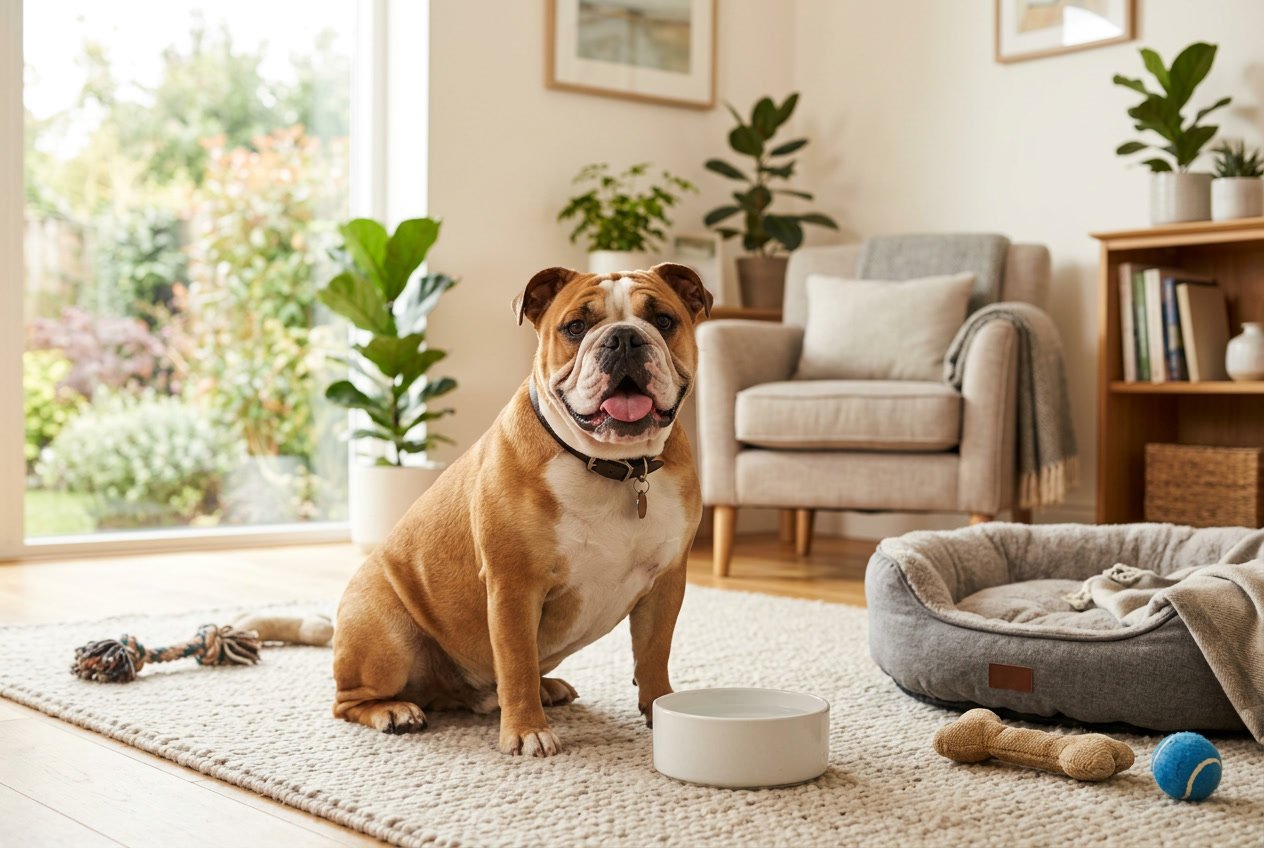
You care for a bulldog best when you understand its body shape, personality, and breathing limits. The English bulldog has traits that require daily attention, not occasional care.
Physical Characteristics of Bulldogs
The bulldog has a low, wide body with a large head and short legs. The English bulldog also has loose, wrinkled skin and deep facial folds. You must clean these folds often to prevent moisture buildup and skin infection.
Their short coat sheds year round. Brush your bulldog several times a week to reduce loose hair and support healthy skin.
Bulldogs tend to gain weight easily. Because they are often inactive, you need to control food portions and avoid too many treats. Obesity adds stress to their joints and worsens breathing problems.
Their compact build limits endurance. According to this Complete Care Guide for Bulldogs, most bulldogs do not need intense exercise. Short, supervised walks work better than long runs.
Bulldog Temperament and Personality
You can expect a calm and affectionate dog. The bulldog forms strong bonds with family members and often seeks close contact.
Many owners value the breed’s steady and gentle nature. This guide to bulldog temperament explains that bulldogs often act loyal and patient, especially with children.
Bulldogs can also show stubborn behavior. You need consistent training with clear commands and short sessions. Harsh methods do not work well and may cause fear or resistance.
Early socialization matters. Introduce your puppy to people, sounds, and other pets in a controlled way. This helps prevent fear-based reactions later in life.
Brachycephalic Breed Concerns
The English bulldog is a brachycephalic breed. This means it has a flat face and shortened airways.
Because of this structure, your bulldog may struggle with heat and heavy exercise. The Bulldog breed health and care overview notes that their face shape increases the risk of breathing issues.
You should avoid hot weather and high humidity. Walk your dog during cooler hours and always provide shade and water.
Watch for warning signs such as loud snoring, labored breathing, or collapse after activity. These signs require prompt veterinary care. Regular checkups help you manage airway, skin, and weight issues before they become severe.
Creating a Healthy Living Environment
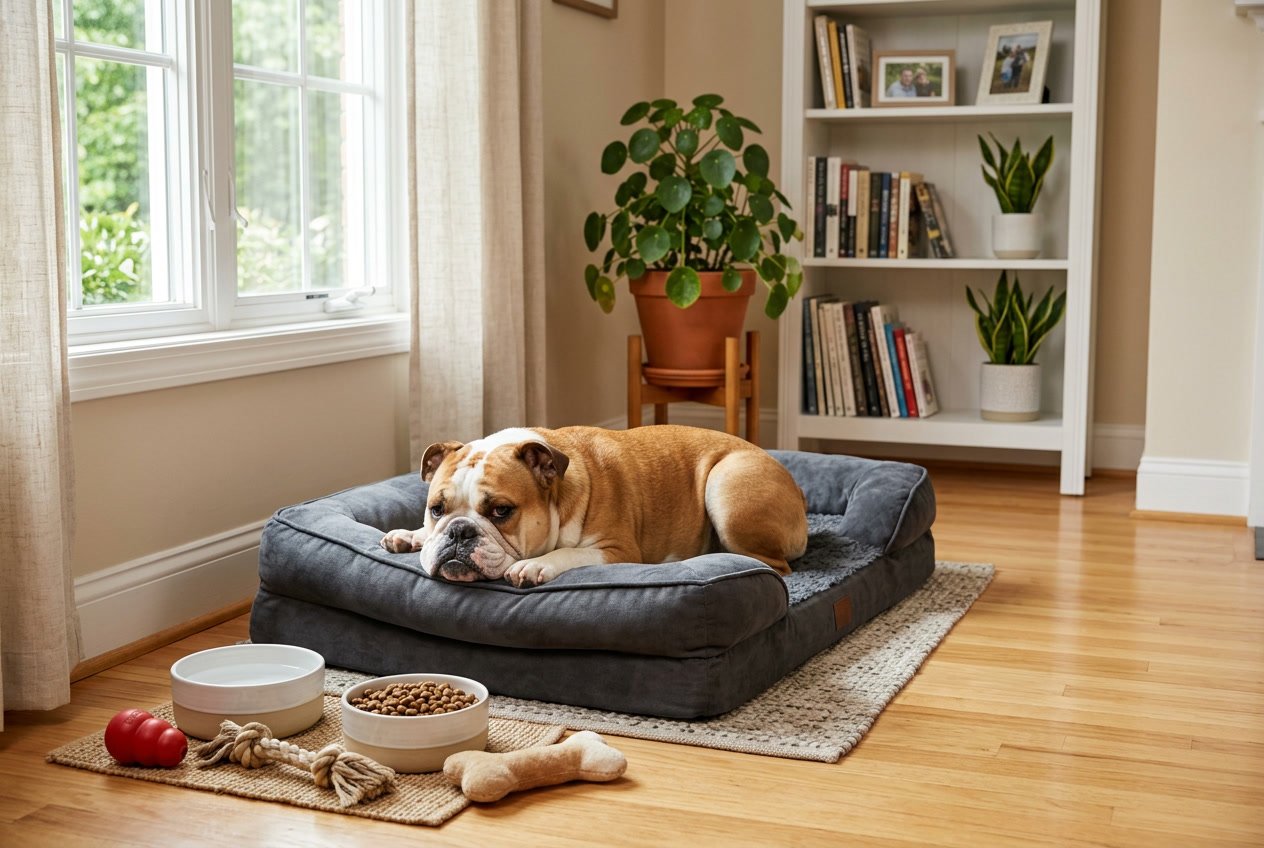
You need to shape your home around your bulldog’s physical limits and daily habits. Focus on safety, stable temperatures, and proper rest areas to protect their health and comfort.
Indoor Comfort and Safety
Your bulldog should live indoors in a clean, organized space. English bulldogs do not handle outdoor living well due to their short noses and low heat tolerance.
Remove small objects, cords, and toxic plants from areas your dog can reach. Use baby gates to block stairs if your bulldog has joint issues or poor balance.
Create a clear walking path inside your home. Bulldogs have heavy bodies and short legs, so slippery floors increase the risk of injury. Place non-slip rugs or mats on tile or hardwood floors.
Keep food and water bowls in a quiet spot away from heavy foot traffic. Clean bowls daily to prevent bacteria buildup.
You can find more ideas for a safe setup in this guide on creating a safe home environment for your bulldog.
Temperature Control for Bulldogs
Bulldogs are a brachycephalic breed, which means they have short nasal passages. This makes it harder for them to cool their bodies through panting.
Keep your home climate-controlled. Air conditioning is not optional in hot weather. Experts stress the need for cooling systems in a comfortable, climate-controlled home for bulldogs.
Use fans to improve air flow, but do not rely on them alone during heat waves. Provide shade if your dog spends short periods outside.
In cold weather, limit long exposure to low temperatures. English bulldogs have short coats and can get chilled quickly.
Watch for warning signs such as heavy panting, drooling, weakness, or pale gums. Act fast if you notice them.
Setting Up Bedding and Rest Areas
Your bulldog needs a firm but cushioned bed that supports their joints. Many bulldogs develop hip and elbow problems as they age.
Choose a low-entry orthopedic bed to reduce strain when they lie down or stand up. Place it in a draft-free area away from direct heat vents.
Set up at least one quiet rest area where your dog can sleep without noise or disruption. Bulldogs sleep many hours each day, and consistent rest supports their breathing and joint health.
Wash bedding weekly to control odor and skin irritation. Bulldogs often have skin folds that trap moisture, so clean fabric helps reduce irritation.
Keep the bed in the same location to maintain routine. Bulldogs respond well to stable, predictable environments.
Bulldog Nutrition and Feeding Guidelines
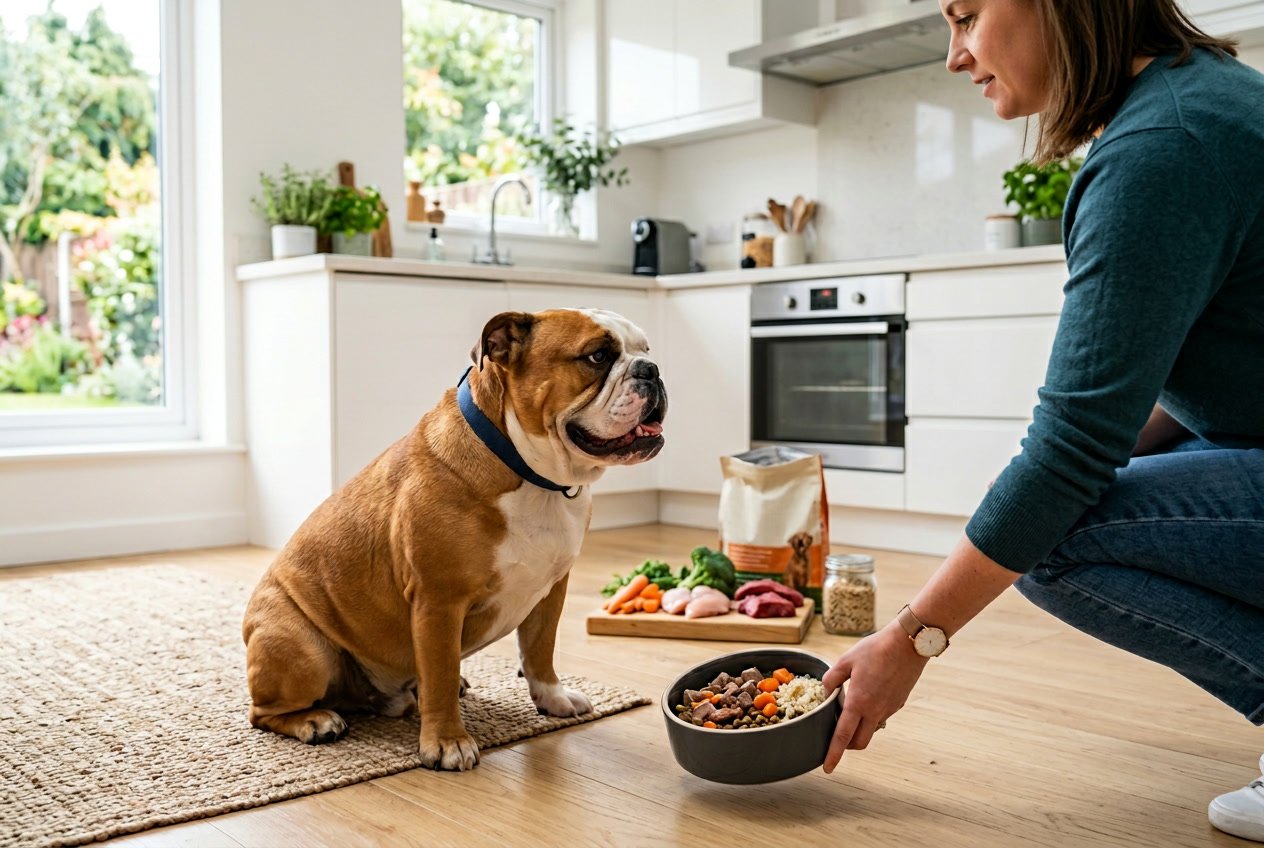
Feed your bulldog the right amount, on a steady schedule, and watch for food reactions. Focus on quality protein, proper portions, and clean water every day.
Choosing the Best Diet
Choose a high‑quality dog food made for medium, stocky breeds like the bulldog. Look for real meat as the first ingredient and avoid foods filled with corn, wheat, or soy.
Bulldogs need a balanced mix of nutrients:
- Protein: supports muscle and tissue repair
- Healthy fats: support skin and coat
- Fiber: helps digestion
- Calcium and phosphorus: support strong bones
If you raise English bulldog puppies, feed a puppy formula with about 22% protein and 8% fat. This supports steady growth without excess weight gain. Many breeders and vets follow guidance similar to this bulldog puppy nutrition guide.
Avoid overfeeding. Bulldogs gain weight fast, and extra weight strains their joints and breathing.
If you buy from bulldog breeders, ask what food they use. Keep the same food for at least a week before switching. Change food slowly over 7 to 10 days to prevent stomach upset.
Feeding Schedule by Life Stage
Feed bulldog puppies three to four small meals per day. Split their daily calories into even portions to prevent bloating and low blood sugar.
As a guide, many owners follow portion advice similar to this how much to feed a bulldog chart. Adjust based on your dog’s weight, body shape, and activity level.
For adult bulldogs:
- Feed two meals per day
- Measure each portion with a standard cup
- Monitor body condition every month
You should feel your dog’s ribs without pressing hard, but not see them clearly.
Senior bulldogs often need fewer calories. Reduce portions slightly if activity drops. Some older dogs benefit from food with added joint support, such as glucosamine.
Hydration and Food Allergies
Give your bulldog fresh, clean water at all times. Bulldogs overheat easily, especially in warm weather, so they must stay well hydrated.
Wash water bowls daily to prevent bacteria growth. In hot months, check the bowl often and refill as needed.
Bulldogs often deal with food allergies. Common triggers include:
- Beef
- Chicken
- Dairy
- Wheat
Signs include itching, ear infections, red skin, or loose stools. If you notice these issues, talk to your vet about a limited‑ingredient or novel protein diet. This detailed Bulldog diet and nutrition guide explains common allergy concerns and feeding schedules.
Do not switch foods often without reason. Keep meals simple, consistent, and measured to support long‑term health.
Essential Grooming and Hygiene
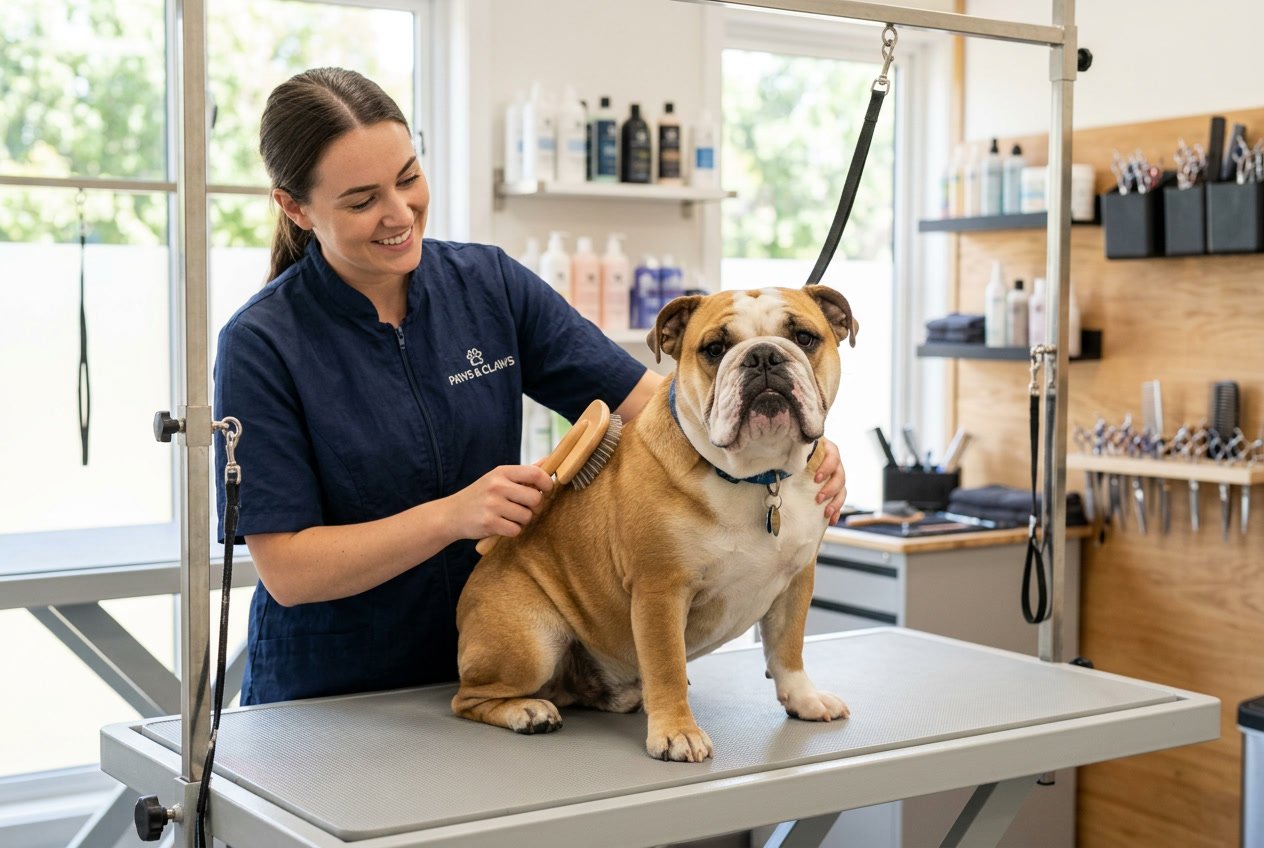
You need a steady routine to keep your bulldog clean and comfortable. Focus on wrinkle care, proper bathing, dental cleaning, and regular checks of nails, ears, and the tail pocket.
Cleaning Facial Wrinkles and Skin Folds
Your English bulldog’s wrinkles trap moisture, dirt, and food. If you ignore them, bacteria and yeast can grow and cause redness, odor, or infection.
Clean the facial folds at least once a day. Use a soft cloth or dog-safe wipe to gently clean between each fold. Pay close attention to the nose rope and deep cheek folds.
After cleaning, dry the skin fully. Moisture causes most skin problems in bulldogs.
Check the eyes while you clean the face. Watch for signs of cherry eye such as a red mass in the inner corner. Also look for tearing, squinting, or lashes rubbing the eye, which may signal entropion. Contact your vet if you see swelling or discharge.
Inspect other skin folds on the neck and body each week. Keep them clean and dry.
Bathing and Coat Care
Bulldogs have short coats, but they still need regular care. Bathe your dog every 4 to 6 weeks, or sooner if your dog gets dirty.
Use a mild dog shampoo made for sensitive skin. Bulldogs often develop skin irritation, so avoid strong scents and harsh products.
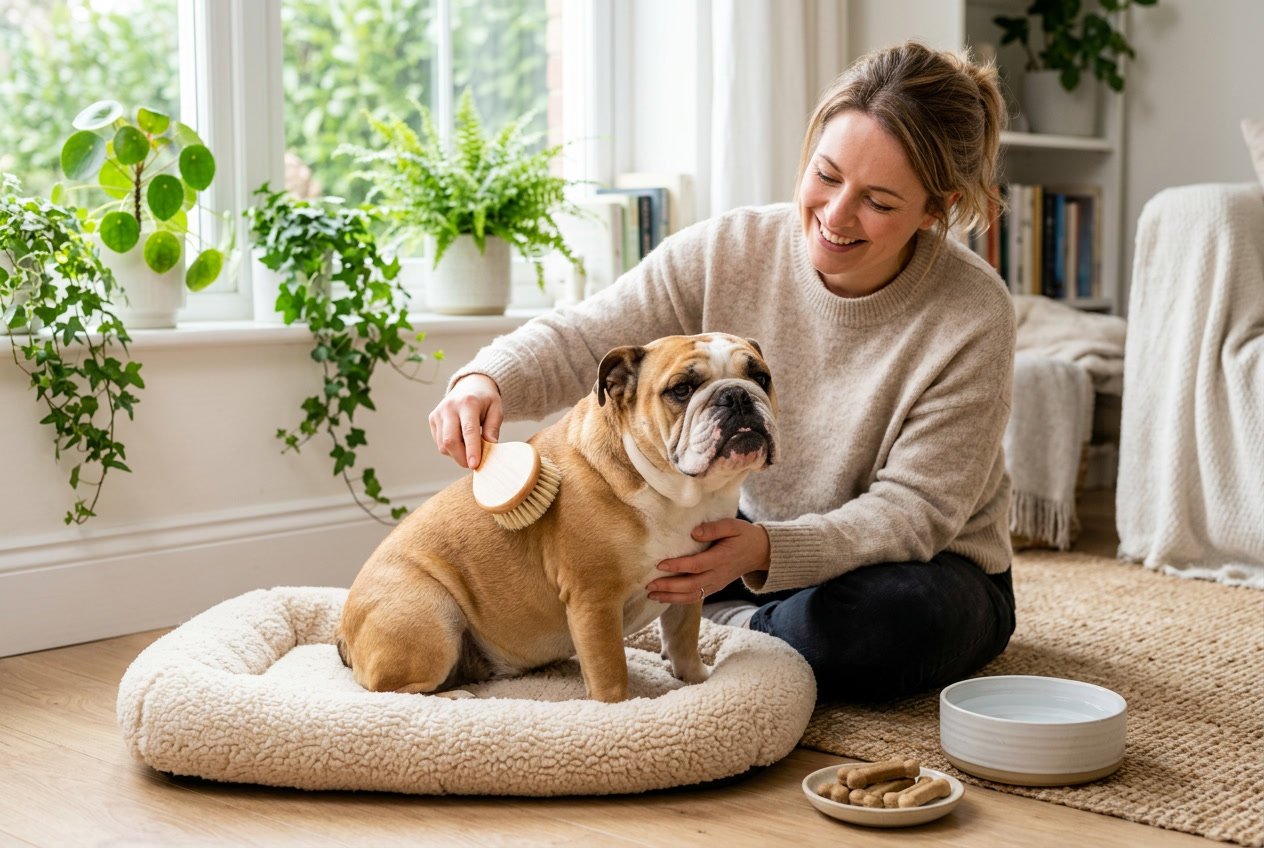
Before bathing, brush the coat with a soft bristle brush. This removes loose hair and spreads natural oils. Brush once or twice a week to control shedding.
During the bath:
- Rinse well to remove all shampoo
- Avoid getting water in the ears
- Clean between toes and under the tail
Dry your bulldog completely, especially in skin folds. Damp skin can lead to infection.
Oral and Dental Hygiene
Dental care prevents bad breath, gum disease, and tooth loss. Bulldogs can develop tartar quickly, so you need a set routine.
Brush your dog’s teeth at least three times a week using dog toothpaste. Never use human toothpaste.
Lift the lips and brush along the gum line. Focus on the back teeth where plaque builds up.
You can also use:
- Dental chews approved by your vet
- Water additives made for dogs
- Regular professional cleanings
Check the gums for redness or bleeding. Healthy gums look pink, not dark red or pale. If your bulldog drops food or avoids chewing, schedule a vet visit.
Nail, Ear, and Tail Pocket Maintenance
Trim your bulldog’s nails every 3 to 4 weeks. If you hear nails clicking on the floor, they are too long.
Use dog nail clippers or a grinder. Trim small amounts at a time to avoid cutting the quick. If you are unsure, ask a groomer or vet for guidance.
Clean the ears once a week with a vet-approved ear cleaner. Bulldogs can trap moisture in their ears. Wipe away debris with cotton, not cotton swabs.
Many English bulldogs have a deep tail pocket under the tail. Check this area weekly.
- Gently wipe the pocket
- Dry it fully
- Look for redness or odor
Ignoring the tail pocket can lead to painful infections. Regular checks keep your bulldog comfortable and prevent costly problems.
Exercise, Activity, and Weight Management
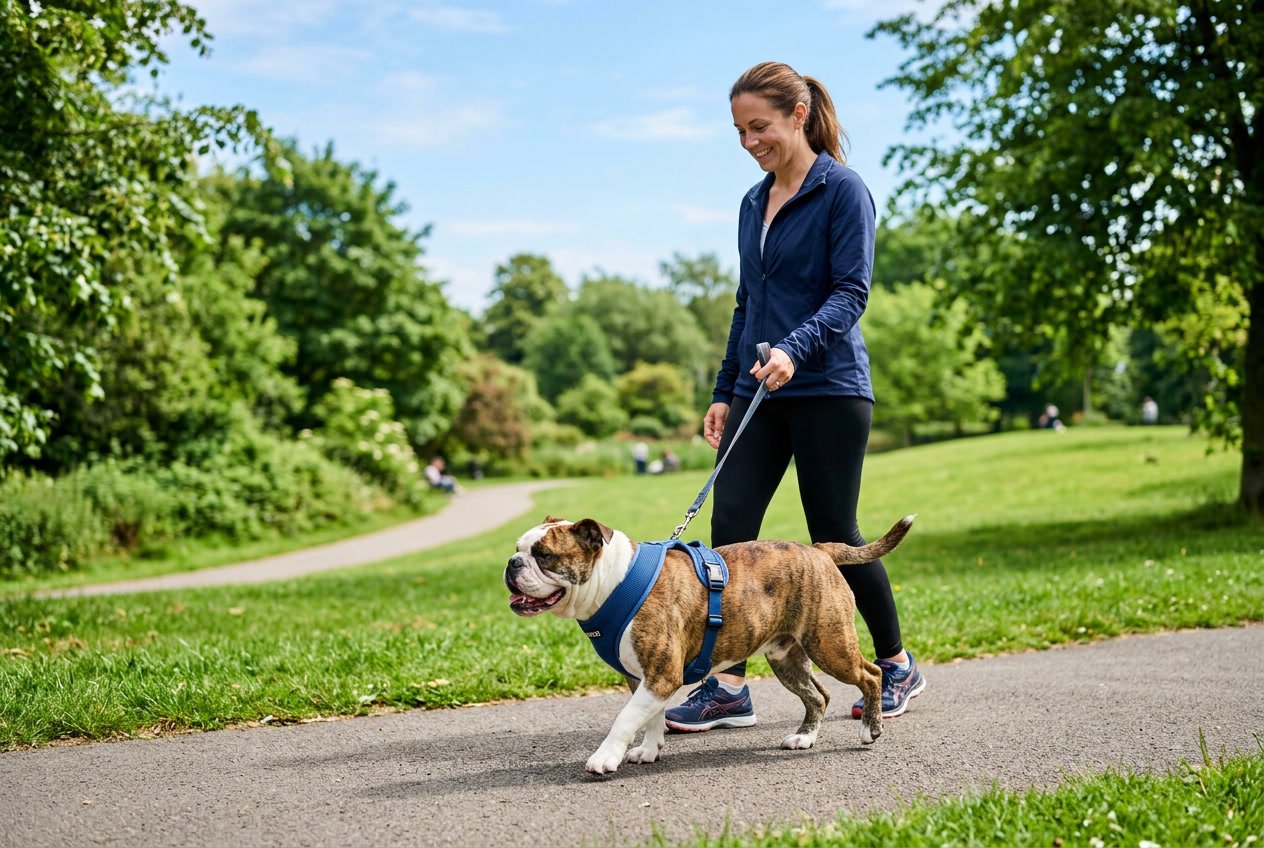
You must balance daily movement with rest to protect your bulldog’s joints and breathing. Short, steady exercise and careful feeding help prevent obesity and long term health problems.
Recommended Exercise Routines
Adult bulldogs need about 20 to 30 minutes of exercise each day, as explained in this guide on how much exercise bulldogs need. Split this into two short walks to avoid strain.
Walk at a steady pace. Avoid running, long hikes, or high heat. Bulldogs overheat fast because of their short noses.
For bulldog puppies, keep sessions brief. Use 5 to 10 minute play periods several times a day. Increase time slowly as they grow.
Follow these basic rules:
- Walk in the early morning or evening
- Bring water on warm days
- Stop if your bulldog pants heavily or lies down
- Avoid stairs and rough ground for young puppies
If your dog is overweight, start with very short walks. Increase time slowly, as recommended in this overview of bulldog exercise benefits and gradual routines.
Preventing Obesity
Obesity is common in bulldogs. Extra weight strains their joints and worsens breathing problems.
You control your bulldog’s weight through food portions and daily activity. Measure each meal. Do not free feed.
Use these habits to manage weight:
- Feed on a fixed schedule
- Limit treats to small training rewards
- Choose low calorie treats
- Weigh your bulldog every month
Regular exercise helps burn calories and reduce obesity risk, as noted in this article on exercise and activity requirements for American Bulldogs.
You should see a slight waist when looking from above. You should feel ribs under a thin layer of fat, not thick padding.
If your bulldog gains weight quickly, talk to your vet. Rapid weight gain can signal poor diet control or low activity.
Safe Playtime and Socialization
Play builds muscle and keeps your bulldog mentally active. Choose low impact games like gentle fetch on grass or short tug sessions.
Avoid intense chasing games. Bulldogs tire quickly and may struggle to breathe.
Use safe indoor activities on hot days:
- Puzzle toys
- Short training sessions
- Basic obedience drills
- Controlled play with calm dogs
Always supervise play with other dogs. Bulldogs have a strong build but may not back down during rough play.
For safe routines that match the breed’s limits, review these bulldog exercise limitations and safety tips. Keep sessions short, give breaks, and watch for heavy panting, drooling, or slowing down.
Start socialization early with bulldog puppies. Introduce new people and calm dogs in short, positive meetings. This builds confidence without stress.
Common Bulldog Health Issues and Prevention
Bulldogs face specific health risks due to their body shape and genetics. You protect your dog by spotting early signs, scheduling regular vet visits, and acting fast when problems appear.
Recognizing Bulldog Health Problems
You need to watch your bulldog closely for changes in breathing, skin, eyes, joints, and bathroom habits. Many bulldog health issues develop slowly, so small signs matter.
Common warning signs include:
- Loud or strained breathing
- Limping or stiffness after rest
- Red or swollen eyes
- Frequent scratching or skin odor
- Straining to urinate
Bulldogs often deal with breathing trouble, skin infections, and joint pain. You can review detailed examples of common bulldog health issues and warning signs to understand what to monitor at each age.
Schedule routine vet exams at least once a year. Early treatment prevents minor problems from turning into serious ones and supports long-term bulldog health.
Understanding Brachycephalic Syndrome
Bulldogs have short noses and flat faces. This shape puts them at risk for brachycephalic syndrome, also called brachycephalic airway obstructive syndrome.
You may notice:
- Snoring even when awake
- Gagging or coughing
- Trouble exercising
- Overheating in warm weather
This condition narrows the airways and makes breathing harder. According to information about brachycephalic airway obstructive syndrome in bulldogs, regular vet checks help monitor breathing problems linked to their anatomy.
You can reduce risk by keeping your bulldog at a healthy weight. Avoid heavy exercise in heat or humidity. Use a harness instead of a neck collar to prevent airway pressure.
In severe cases, your vet may suggest surgery to widen the nostrils or shorten soft tissue in the throat.
Managing Hip Dysplasia
Hip dysplasia affects many bulldogs due to genetics and body structure. The hip joint does not fit correctly, which leads to pain and arthritis over time.
You might see:
- Difficulty standing up
- Bunny-hopping when running
- Reluctance to climb stairs
- Muscle loss in the back legs
Joint issues appear often in this breed, as explained in guides covering bulldog health issues such as joint problems.
You can manage hip dysplasia by controlling weight and feeding a balanced diet. Extra weight puts stress on the joints.
Your vet may recommend:
- Joint supplements
- Anti-inflammatory medication
- Physical therapy
- Surgery in severe cases
Start prevention early by choosing a breeder who screens for joint disease.
Eye and Bladder Health Concerns
Bulldogs often develop eye problems because of their facial structure. Two common issues are cherry eye and entropion.
Cherry eye appears as a red mass in the inner corner of the eye. Entropion causes the eyelid to roll inward, which irritates the eye surface.
You should watch for:
- Excess tearing
- Squinting
- Eye discharge
- Rubbing the face on furniture
Some resources list eye ulcers and other concerns among the top bulldog health conditions owners must know. Early treatment prevents long-term damage.
Bladder stones also affect some bulldogs. These stones can block urine flow and cause pain.
Signs of bladder stones include:
- Straining to urinate
- Blood in urine
- Frequent attempts to urinate
Your vet may confirm stones with imaging tests. Treatment may involve diet changes, medication, or surgery. Provide fresh water at all times and schedule routine exams to protect your dog’s urinary health.
Caring for Bulldog Puppies
Bulldog puppies need steady nutrition, early training, and close health care from the start. If you set clear routines and work with responsible bulldog breeders and your vet, you help your puppy grow into a stable adult dog.
Puppy Nutrition and Growth
Feed your bulldog puppy a high‑quality commercial puppy food made for medium breeds. Many experts suggest feeding young puppies three times a day to support steady growth and stable energy, as explained in this guide on how to take care of an English Bulldog puppy.
Keep portions measured. Overfeeding can cause fast weight gain, which puts stress on developing joints. English bulldog puppies already have heavy builds, so you must protect their hips and elbows early.
Provide fresh water at all times. Avoid table scraps and fatty treats, which can upset digestion.
Use this simple feeding plan:
- 8–12 weeks: 3 small meals daily
- 3–6 months: 3 meals daily
- 6–12 months: 2–3 meals based on vet advice
Track weight at each vet visit. Ask your vet if your puppy’s body shape looks healthy rather than guessing by size alone.
Early Socialization and Training
Start socialization between 8 and 16 weeks. During this window, your puppy learns what feels normal and safe.
Introduce your bulldog puppy to calm adults, gentle children, and friendly vaccinated dogs. Keep sessions short and positive. Avoid loud or chaotic settings that may overwhelm them.
Bulldogs can be stubborn, but they respond well to clear rules and rewards. Use small treats and praise. Keep training sessions to 5–10 minutes.
Focus on:
- Name recognition
- House training
- Basic cues like sit and come
- Walking on a loose leash
Handle your puppy correctly. Support the chest and back legs when lifting, as advised in these English bulldog caring tips. Never lift by the front legs or scruff, since this can cause injury.
Reputable bulldog breeders often begin early socialization. Ask what exposure your puppy already had before you brought them home.
Health Checks and Vaccinations
Schedule a vet visit within a few days of bringing your puppy home. Early exams help confirm your bulldog puppy is healthy and free from parasites.
Follow a standard vaccine plan. Most puppies receive shots every 3–4 weeks until about 16 weeks of age. Your vet will also set up deworming and flea prevention.
English bulldog puppies can face breed‑specific health issues. Flat faces can lead to breathing problems. Their wrinkles need regular cleaning to prevent skin infections. Learn more about common breed concerns in this overview of Bulldog health and care.
Brush your puppy’s teeth daily with dog‑safe toothpaste. Trim nails every few weeks. Clean facial folds with a soft, damp cloth and dry them fully.
Keep all records from your vet and from your bulldog breeders. Clear paperwork helps you track vaccines, health tests, and future care needs.
Frequently Asked Questions
You need a clear routine, proper feeding, safe exercise, and steady grooming to keep your bulldog well. You also need to watch for signs of good health and understand specific needs, especially for females.
What are the daily care needs of a bulldog for a first-time owner?
You should feed your bulldog on a set schedule, clean facial folds, and provide short walks each day. Bulldogs thrive on routine and calm structure.
Wipe the skin folds with a damp cloth and dry them fully to prevent irritation. Check the eyes and tail pocket for redness or odor.
Keep your home cool. Bulldogs overheat easily, so limit heat exposure and provide fresh water at all times. A detailed routine appears in this Bulldog care guide with essential daily tips.
What is the best feeding schedule and diet for a bulldog puppy?
Feed a bulldog puppy three to four small meals per day until about six months of age. After that, move to two measured meals daily.
Choose a high-quality puppy formula made for medium breeds. Look for real meat as the first ingredient and avoid fillers that can upset digestion.
Measure each meal to prevent weight gain. Bulldogs gain weight easily, and extra weight strains their joints and breathing.
Which grooming routine and care products are recommended for bulldogs?
Brush your bulldog once or twice a week with a soft bristle brush or rubber grooming mitt. This removes loose hair and spreads natural oils.
Clean facial folds daily with a damp cloth or vet-approved wipe. Dry the area well to prevent yeast or bacterial growth, as noted in these expert bulldog care tips on fold cleaning and heat safety.
Bathe your dog every four to six weeks with a mild dog shampoo. Trim nails every few weeks and brush teeth several times a week to reduce dental disease.
How can you tell if a bulldog is happy and healthy at home?
A healthy bulldog eats well, maintains a steady weight, and breathes without extreme strain at rest. Mild snoring is common, but loud, labored breathing is not normal.
Your dog should show interest in family members and respond to sounds and movement. Clear eyes, clean skin folds, and firm stools also signal good health.
Schedule regular vet visits at least once a year. Early checks help catch skin, joint, or breathing problems.
How much exercise does a bulldog need, and what activities are safest?
Give your bulldog two short walks per day, about 10 to 20 minutes each. Keep the pace steady and avoid long runs.
Choose flat paths and shaded areas. Avoid exercise in hot or humid weather because bulldogs can overheat quickly.
Indoor play with soft toys or short training sessions also helps burn energy. This guide on caring for an English bulldog explains why moderate daily walks support skin and overall health.
What special considerations are there when caring for a female bulldog?
Monitor heat cycles, which usually occur every six months. During this time, keep her indoors or supervised to prevent unwanted breeding.
Watch for signs of discomfort, swelling, or unusual discharge. Contact your vet if you notice strong odor, fever, or behavior changes.
Discuss spaying with your veterinarian. Spaying can prevent uterine infections and reduce the risk of certain cancers.