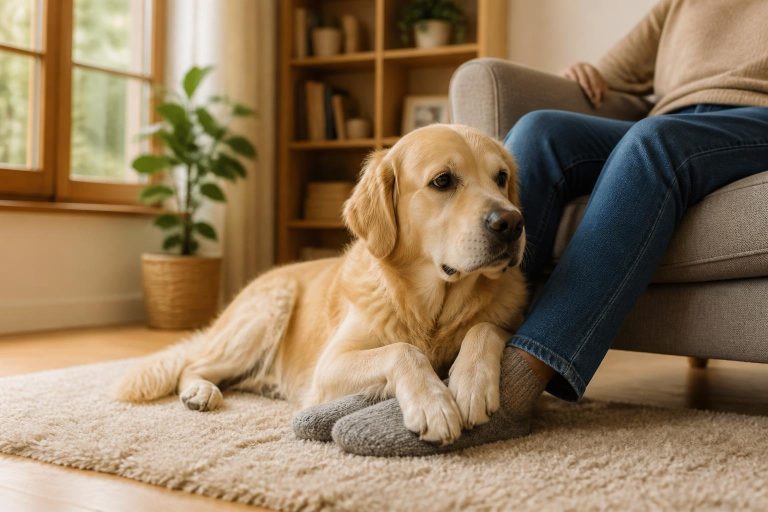
10 Tips for the First 30 Days After Adopting a Dog: Essential Guide for New Pet Parents
Bringing a new dog home is an exciting time, but the first 30 days require careful attention to help the animal adjust successfully. The initial month after adoption is critical for building trust, establishing routines, and creating a foundation that will shape the dog’s behavior and comfort level for years to come. Many new owners feel overwhelmed during this transition period, unsure of how to balance patience with structure.
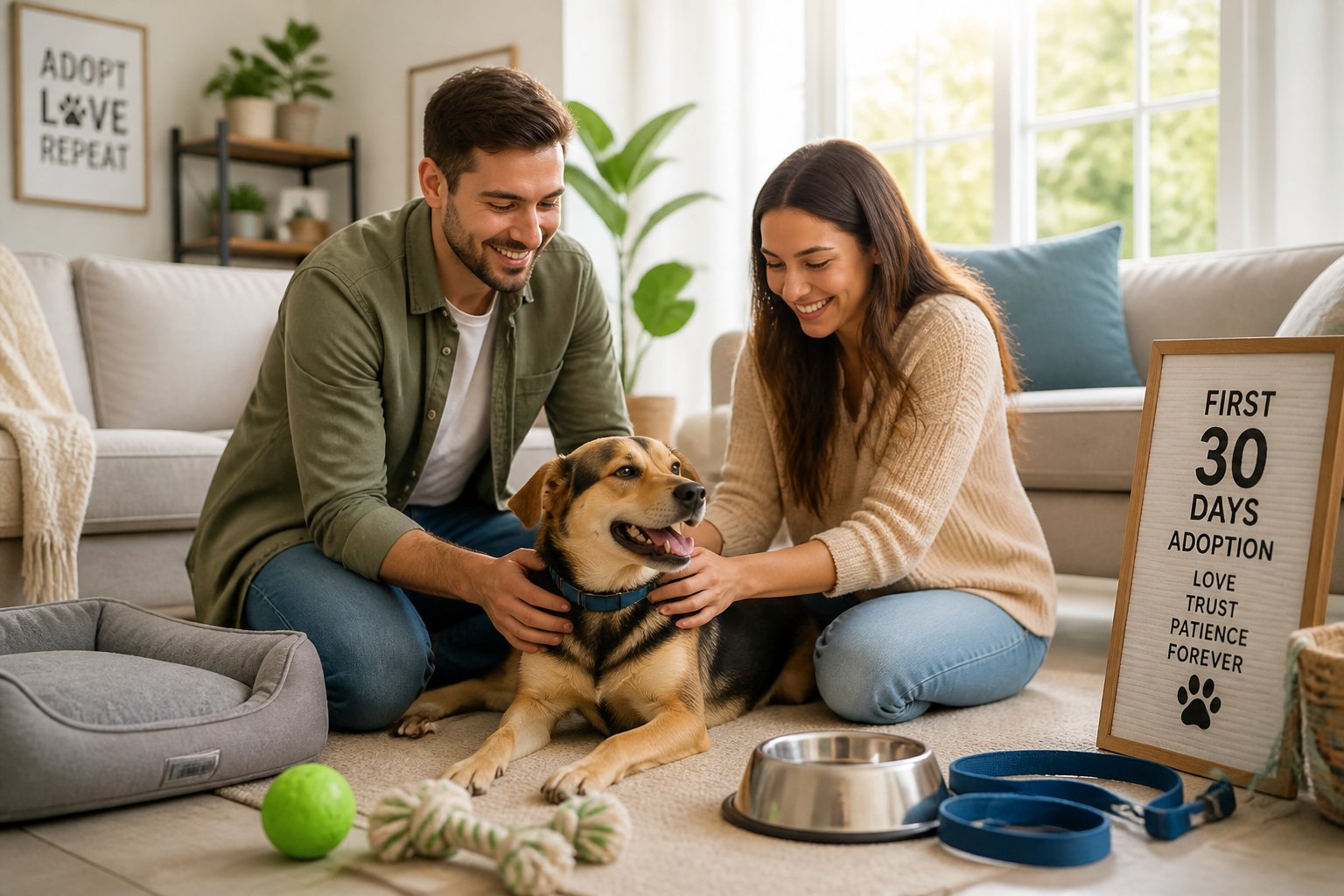
This guide covers essential steps for the first month with an adopted dog. From preparing the home before arrival to establishing feeding schedules and house training strategies, each tip addresses a specific aspect of helping a new dog settle in. The article also explores training foundations, health considerations, and ways to provide enrichment that supports the dog’s physical and emotional needs.
Understanding what to expect during these early weeks helps owners avoid common mistakes and respond appropriately to their dog’s behavior. Whether the dog comes from a shelter, rescue organization, or previous home, the adjustment process requires consistency and realistic expectations from everyone in the household.
Planning and Preparation Before Arrival
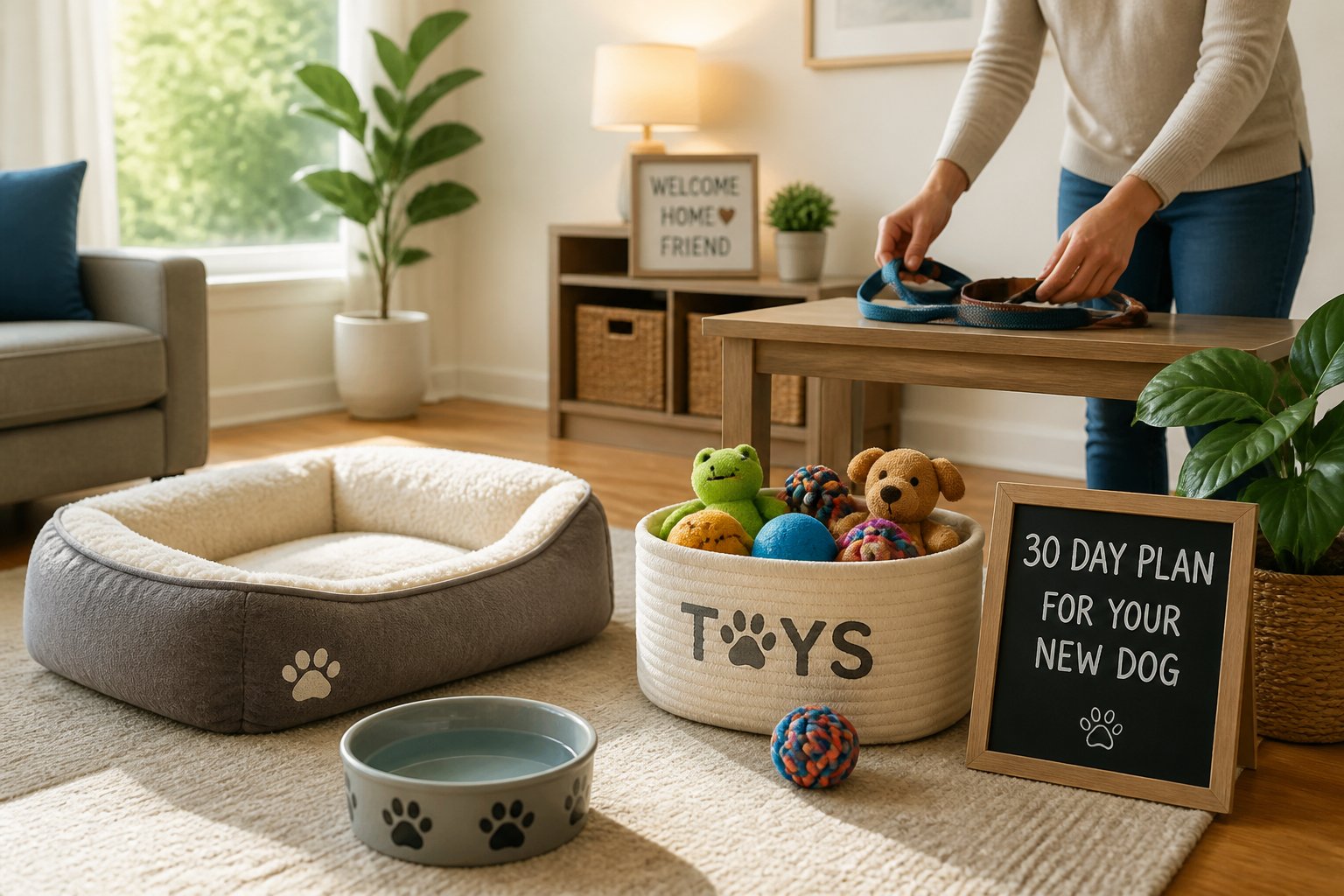
Getting ready before adopting a dog makes the transition easier for everyone involved. The right setup, supplies, and safe space help a new rescue dog feel secure from day one.
Home Setup and Dog-Proofing Essentials
Dog-proofing protects both the home and the adopted dog during those first crucial weeks. Owners should secure electrical cords by tucking them behind furniture or using cord covers. Household chemicals, medications, and toxic plants need to move to high shelves or locked cabinets where a curious dog cannot reach them.
Small items like coins, rubber bands, and children’s toys can be choking hazards. These items should be picked up and stored away before the rescue dog arrives.
Trash cans need secure lids or should be placed in cabinets. Many dogs explore new environments by sniffing and tasting everything they find. Installing a pet gate helps limit access to certain rooms, especially during the adjustment period. This gives owners better control over what the dog can explore while they learn the house rules.
Check fences and gates in outdoor areas for gaps or weak spots. A frightened or excited dog might try to escape through even small openings.
Gathering Supplies for a Smooth Transition
Having the right supplies ready prevents last-minute store runs when the focus should be on the new family member. Essential items include food and water bowls, high-quality dog food (preferably the same brand the shelter or rescue used), and a comfortable dog bed.
A properly fitted collar and leash are necessary for safe walks and outdoor time. ID tags with current contact information should attach to the collar immediately.
Basic Supply Checklist:
- Food and water bowls
- Dog food (same brand from shelter if possible)
- Collar and leash
- ID tags with phone number
- Dog bed or crate with bedding
- Enzymatic cleaner for accidents
- Grooming supplies (brush, nail clippers, shampoo)
- Toys for mental stimulation
- Waste bags for walks
An enzymatic cleaner works better than regular cleaners for eliminating odors from accidents. Grooming supplies like brushes and nail clippers help with basic maintenance at home.
Designating a Safe Space
A designated safe space gives an adopted dog somewhere to retreat when feeling overwhelmed. This area should be quiet, away from heavy foot traffic, and stocked with a dog bed, water bowl, and a few toys.
Many rescue dogs benefit from a crate as their safe space. The crate should be large enough for the dog to stand, turn around, and lie down comfortably. Never use the crate as punishment.
Some dogs prefer an open space like a corner of a quiet room with their bed and toys. A pet gate can section off this area while still allowing the dog to see and hear family members. This helps the dog feel included without being overwhelmed by constant interaction.
The safe space should remain accessible at all times during the first 30 days. Family members need to respect this area and avoid disturbing the dog when they choose to rest there.
Establishing Routine and Structure
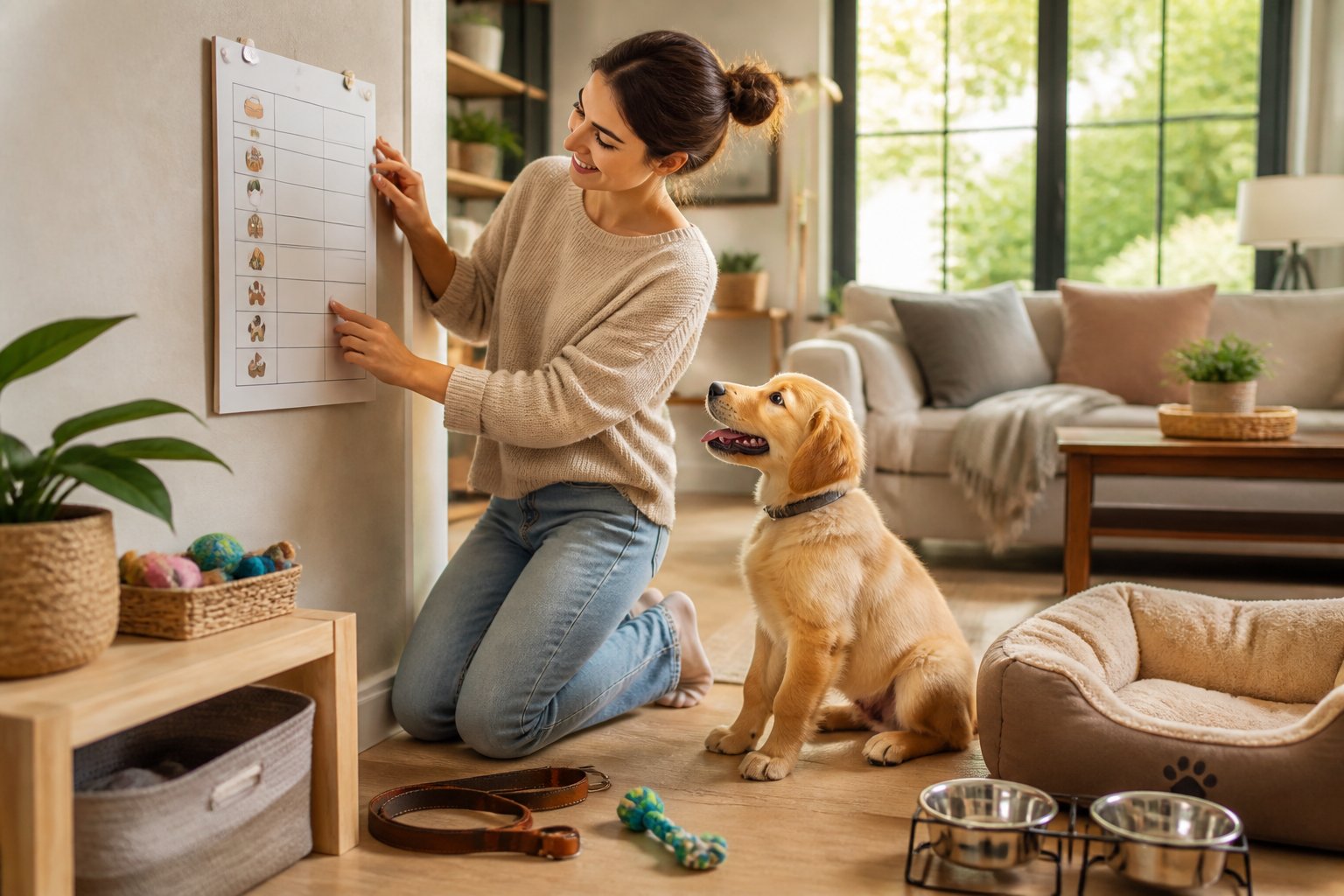
Dogs thrive on predictability, and a consistent daily routine helps an adopted dog feel secure in their new home. Clear schedules and defined household responsibilities create the foundation for successful adjustment during the first 30 days after adopting a dog.
Creating Consistency With Schedules
An adopted dog needs a predictable daily schedule to reduce anxiety and build trust. Owners should establish set times for feeding, typically twice a day at the same hours. This helps the dog know when to expect meals and aids in house-training.
Walking your dog at consistent times each day creates a reliable routine. Most dogs benefit from walks in the morning and evening, with additional potty breaks spaced throughout the day. Puppies and some adult dogs may need more frequent trips outside.
Bedtime should occur at the same hour each night. A regular sleep schedule helps the dog understand when the household winds down. The same applies to playtime and training sessions, which work best when they happen at similar times daily.
Consistency extends to rules and boundaries. If the dog isn’t allowed on furniture, this rule must apply every day without exceptions. Mixed signals confuse dogs and slow down the adjustment process.
Assigning Responsibilities in the Household
Every household member should know their specific duties for the newly adopted dog. One person might handle morning feeding while another takes care of evening meals. Clear assignments prevent missed tasks and ensure the dog receives consistent care.
Primary caretaker duties include feeding, medication administration, and vet appointments. Secondary responsibilities cover activities like walking your dog, playtime, and training sessions. Families should create a written schedule to track who does what.
Children can participate in age-appropriate tasks. Younger kids might help fill water bowls, while older children can assist with walks or basic training. Adult supervision remains necessary regardless of the child’s age.
When multiple people share dog care duties, they must use the same commands and training methods. An adopted dog learns faster when everyone in the household enforces the same rules and expectations.
Introducing Your Dog to Their New Environment
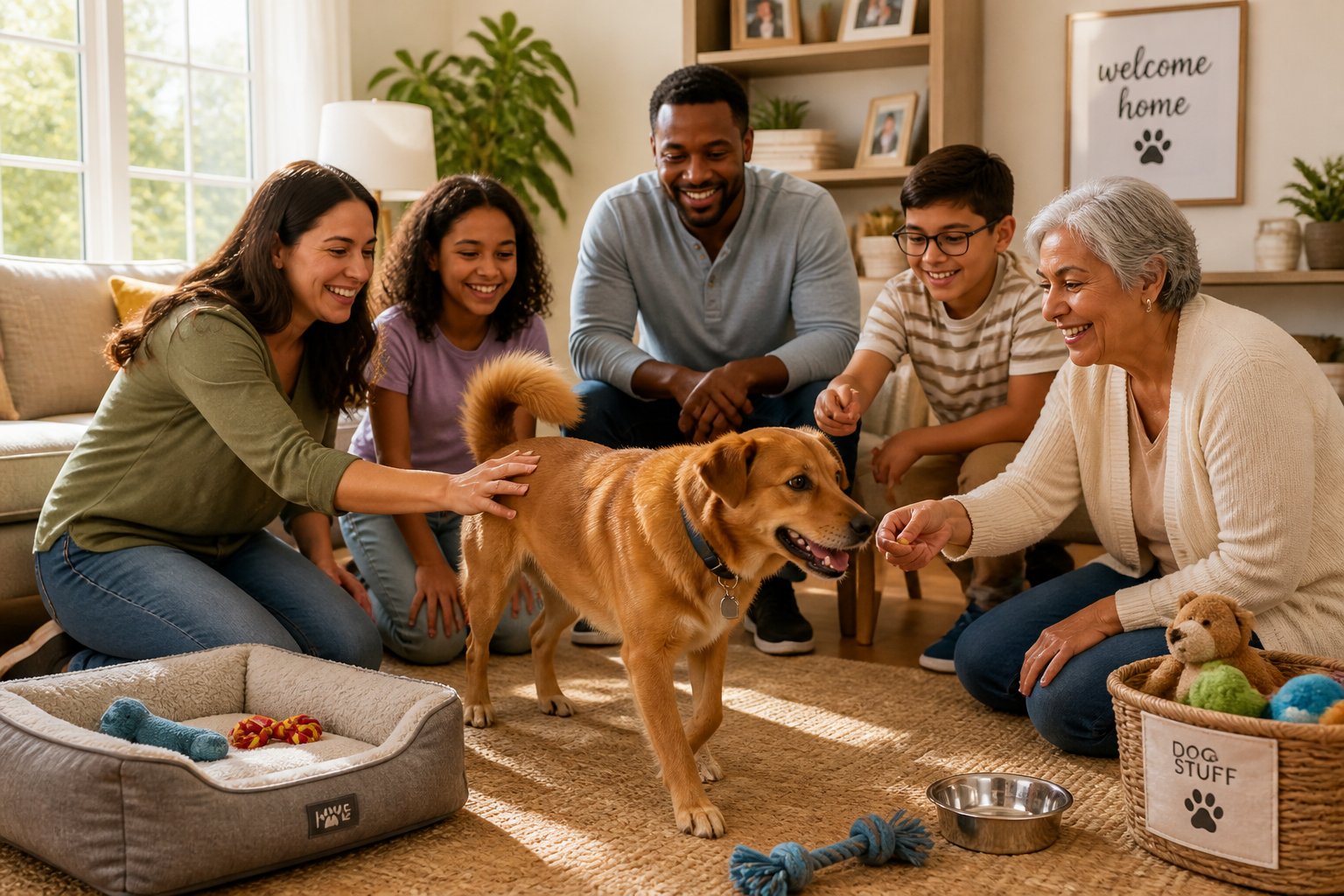
The first few days at home set the foundation for a rescue dog’s successful transition. Owners should focus on giving their adopted dog time to decompress while carefully managing introductions to household members and other pets.
Decompression and Adjustment Period
A newly adopted dog needs a quiet, safe space to adjust during the first 30 days. This decompression period helps reduce stress and allows the dog to process their new surroundings at their own pace.
The initial 24-72 hours are critical. Owners should set up a designated area with a bed, water, and food where the dog can retreat when feeling overwhelmed. This space should be away from high-traffic areas of the home.
Expectations should remain realistic during this time. Some rescue dogs may hide, refuse food, or seem withdrawn. Others might appear overly excited or anxious. Both responses are normal adjustment behaviors.
Key activities to limit during the first week:
- Loud noises and sudden movements
- Multiple visitors or house guests
- Walking your dog in crowded areas
- Changes to feeding schedules
The dog should gradually explore the home one or two rooms at a time. Rushing this process can trigger anxiety and setbacks in the bonding process.
Introducing to Family Members and Resident Pets
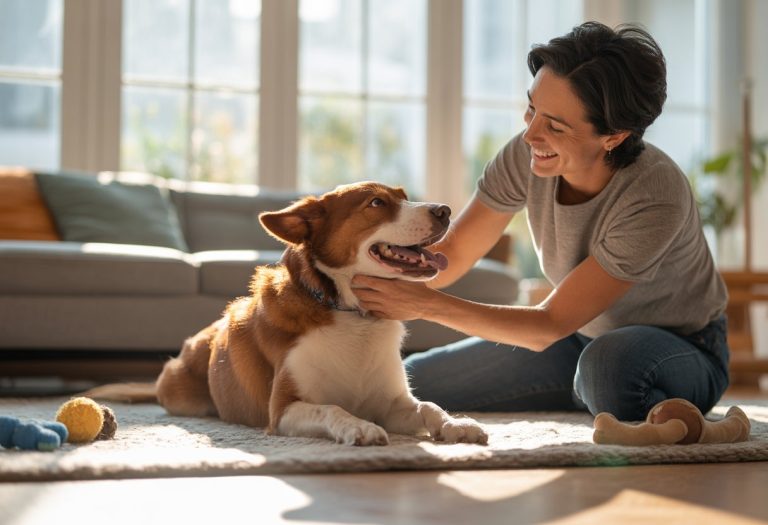
Family introductions should happen slowly and calmly. Children need clear instructions to speak quietly, move gently, and give the dog space to approach them first rather than crowding the animal.
For homes with resident pets, initial meetings should occur on neutral territory when possible. Each animal should be on a leash with a separate handler. They can sniff and observe each other from a distance before any direct contact.
A pet gate serves as an excellent tool for gradual introductions at home. It allows animals to see and smell each other while maintaining a physical barrier. This setup prevents rushed interactions that could lead to conflicts.
Signs the introduction is going well:
- Relaxed body language from both animals
- Calm sniffing and mutual interest
- Play bows or friendly tail wags
If either animal shows signs of stress, fear, or aggression, the introduction should pause. Owners may need several days or weeks of controlled meetings before allowing full access between pets.
Foundations for Training and Positive Behavior
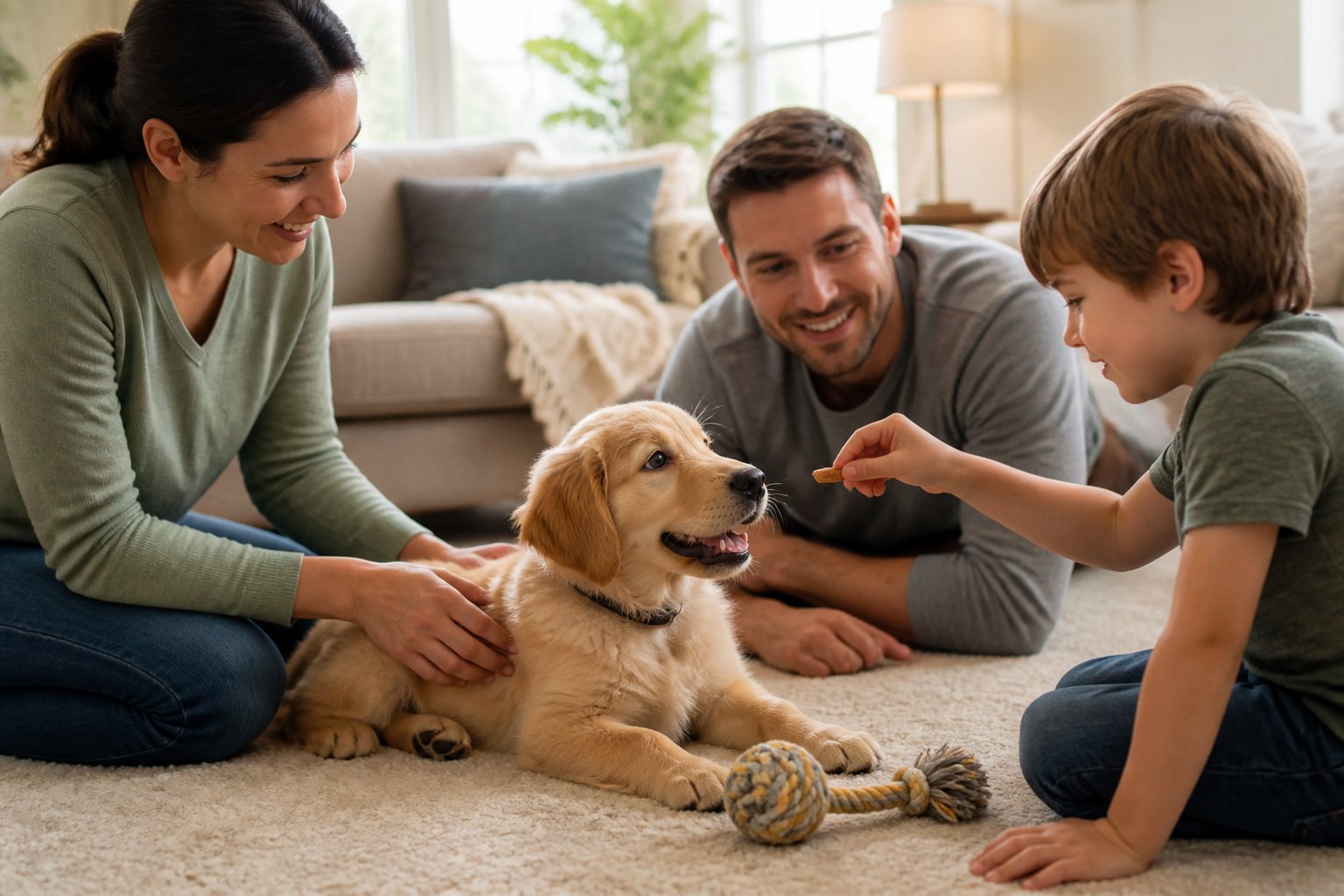
The first month sets the stage for how a dog learns and behaves in their new home. Starting with basic commands, establishing crate routines, addressing guarding behaviors early, and working with the right trainer creates a foundation built on trust and clear communication.
Beginning Basic Commands and Obedience
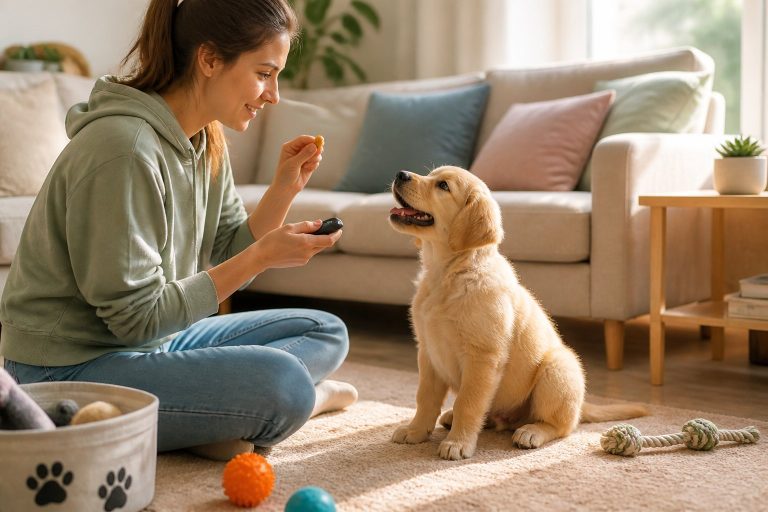
New dogs should learn simple commands like “sit,” “stay,” and “come” during the first 30 days. These commands help dogs understand what their owners expect and make daily life easier.
Training sessions should last only 5-10 minutes at a time. Dogs learn better with short, focused practice rather than long sessions that cause frustration or boredom.
Treats and praise work best for teaching new behaviors. When a dog sits on command, they should receive an immediate reward. This helps them connect the action with the positive outcome.
Consistency matters more than perfection. Everyone in the household should use the same words and hand signals for each command. If one person says “down” while another says “lie down,” the dog gets confused and learns slower.
Practice commands in different rooms and locations. A dog might sit perfectly in the kitchen but ignore the same command outside. Training in various spots helps them learn that commands apply everywhere.
Crate Training Techniques
Crate training gives dogs a safe space and helps with house training. The crate should be large enough for the dog to stand, turn around, and lie down comfortably.
Start by making the crate appealing. Place soft bedding inside along with a few treats or a favorite toy. Leave the door open and let the dog explore at their own pace.
Feed meals inside the crate with the door open for the first few days. This builds positive associations with the space. Once the dog enters willingly, start closing the door for short periods while they eat.
Gradually increase crate time in small steps. Begin with just 5 minutes, then 10, then 15. Stay nearby at first so the dog doesn’t feel abandoned. Never use the crate as punishment.
Managing Resource Guarding Behaviors
Resource guarding happens when dogs protect food, toys, or spaces from people or other pets. Some newly adopted dogs guard resources because of past experiences with scarcity.
Watch for early warning signs like stiffening, growling, or showing teeth when someone approaches their bowl or toy. Addressing these behaviors early prevents them from becoming serious problems.
Trade with the dog instead of taking items away. Offer a high-value treat in exchange for a toy or bone. This teaches them that giving up items leads to good things.
Create distance during feeding times if the dog shows guarding behaviors. Feed them in a separate room or away from other pets and children until the behavior improves.
Finding a Positive-Enrichment Dog Trainer
A positive-enrichment dog trainer uses rewards and mental stimulation rather than punishment to shape behavior. They help dogs learn while building confidence and strengthening the bond between dog and owner.
Look for trainers certified by organizations like the Certification Council for Professional Dog Trainers. These credentials show the trainer has studied modern, science-based methods.
Ask potential trainers about their methods before signing up. They should focus on positive reinforcement and avoid tools like shock collars or harsh corrections.
Group classes provide training and socialization at the same time. The dog learns basic commands while getting used to other dogs and people in a controlled setting. Private sessions work better for dogs with specific behavioral challenges.
Promoting Comfort, Care, and Enrichment
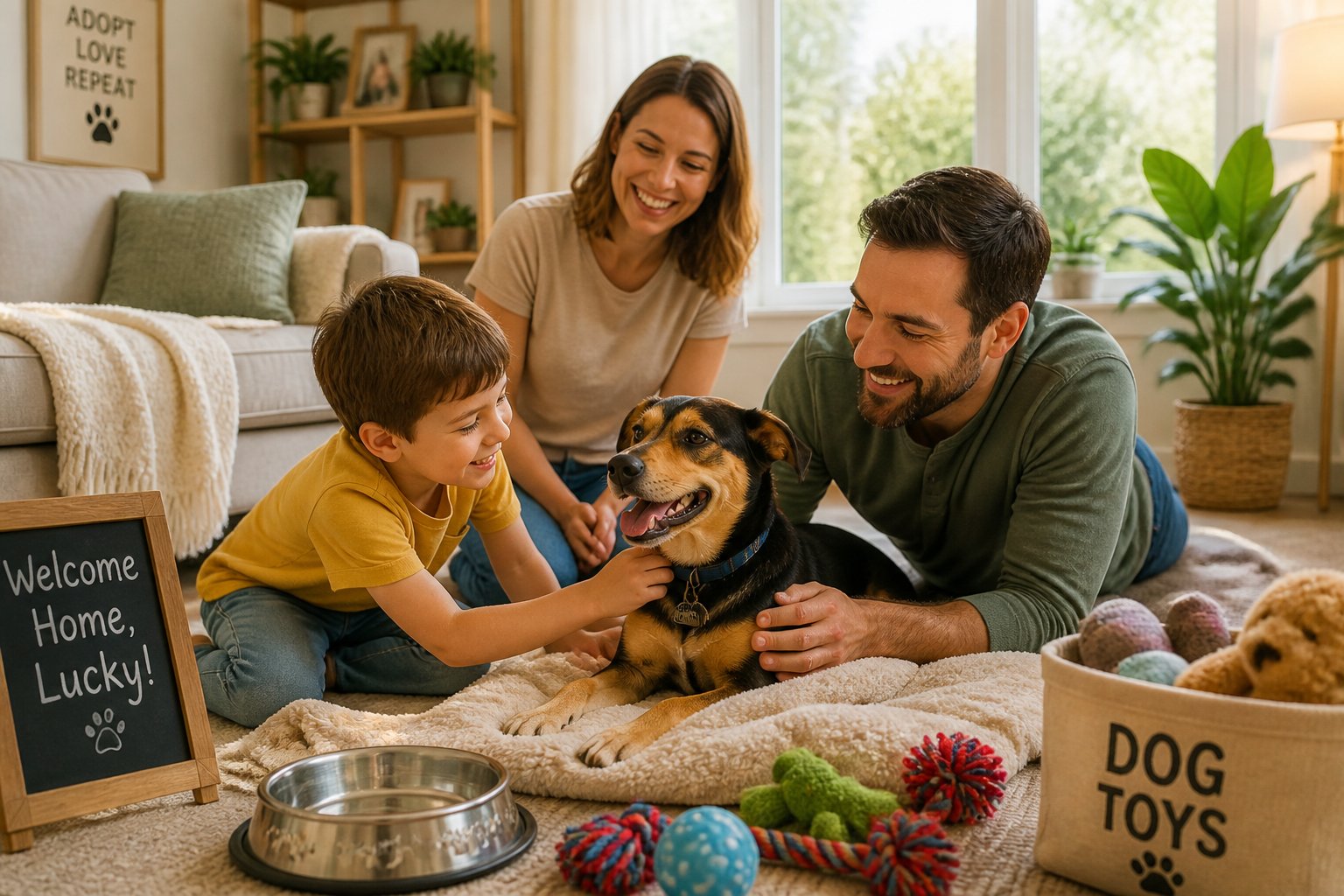
A newly adopted dog needs both physical activity and mental challenges to settle into their new home, along with the right supplies to support their daily care and comfort.
Providing Physical and Mental Stimulation
Walking your dog daily helps them adjust to their new neighborhood while burning excess energy. New adopters should start with shorter 15-20 minute walks and gradually increase the duration as the dog becomes more comfortable. These outings also provide important bathroom breaks and help establish a predictable routine.
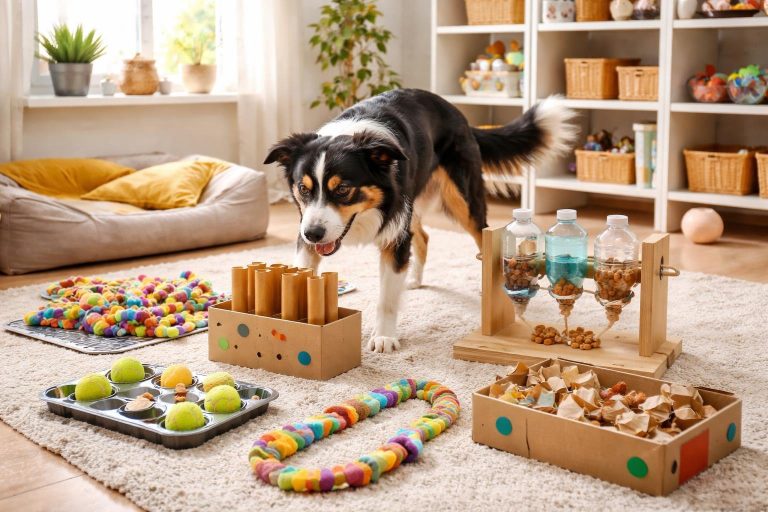
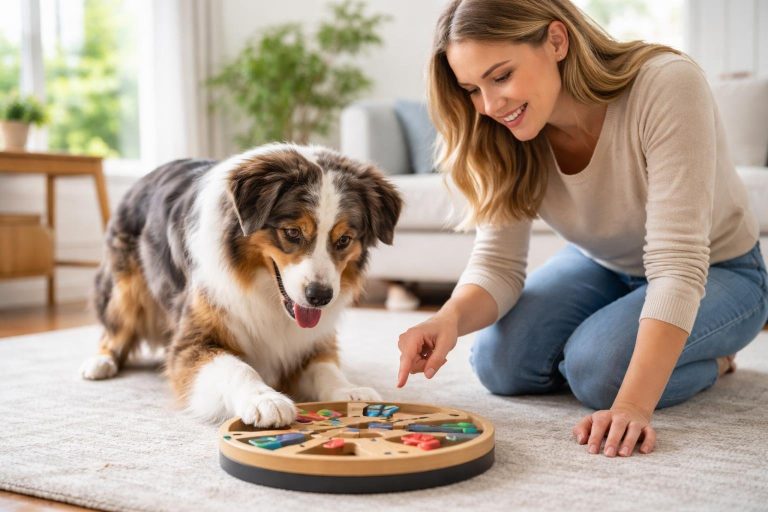
Mental stimulation prevents boredom and destructive behaviors during the first 30 days after adopting a dog. Puzzle feeders make mealtimes last longer and engage a dog’s problem-solving skills. Hide-and-seek games with treats encourage natural sniffing behaviors and build confidence in the new environment.
Training sessions of 5-10 minutes teach basic commands while strengthening the bond between dog and owner. Simple commands like “sit” and “stay” give dogs structure and help them understand expectations. Short sessions prevent frustration and keep the experience positive for both parties.
Selecting Appropriate Toys and Accessories
A comfortable dog bed gives an adopted dog their own safe space to retreat when feeling overwhelmed. The bed should be placed in a quiet area away from heavy foot traffic. Some dogs prefer beds with raised sides that create a den-like feeling.
Grooming supplies needed in the first month include:
- Brush appropriate for the dog’s coat type
- Nail clippers or grinder
- Dog-safe shampoo
- Toothbrush and toothpaste
Chew toys satisfy natural chewing instincts and reduce anxiety. Durable rubber toys work well for strong chewers, while softer plush toys comfort dogs who enjoy carrying items around. Interactive toys that dispense treats keep dogs occupied during alone time.
House Training and Cleanliness Strategies
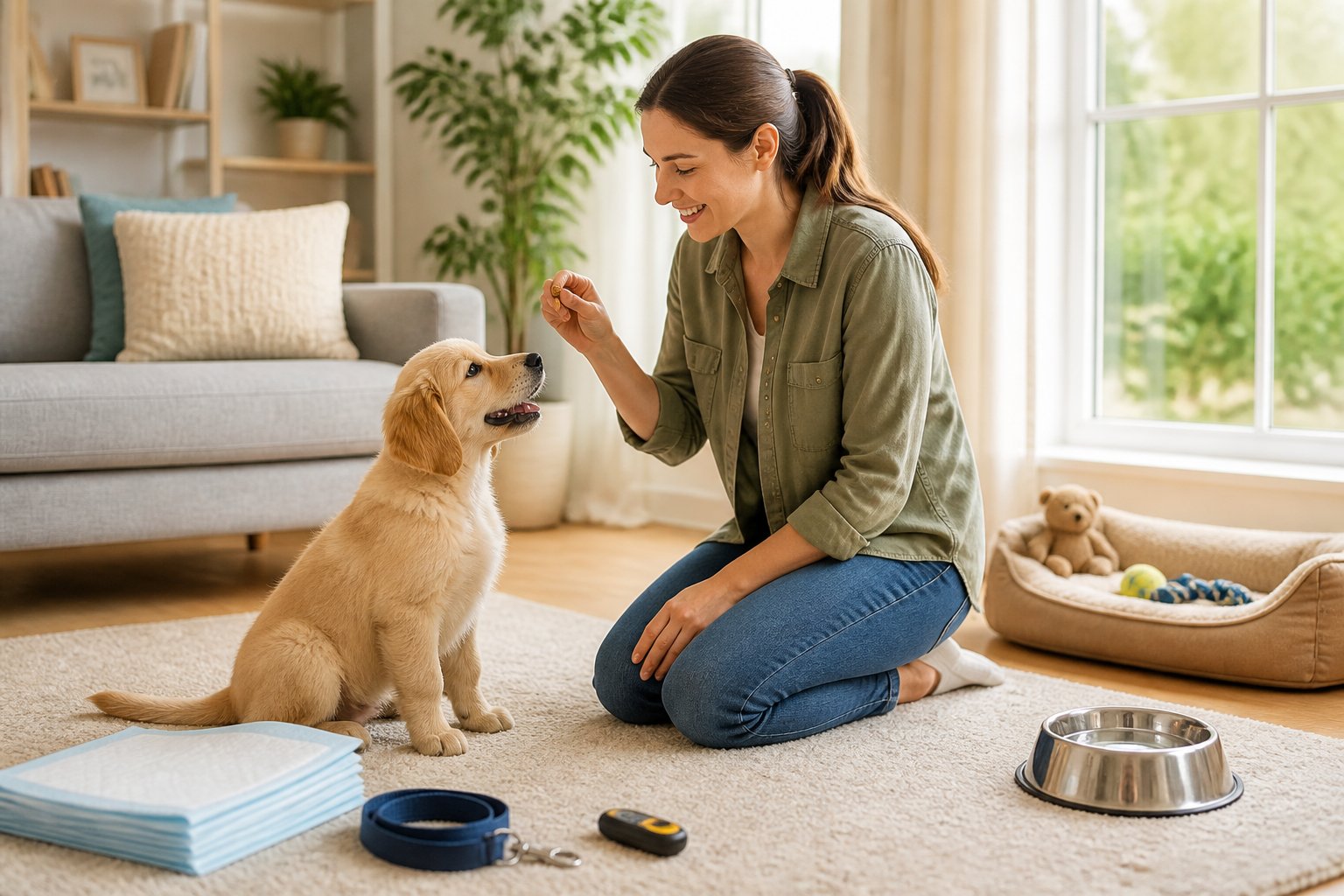
Setting up a consistent potty routine and having the right cleaning supplies ready makes house training faster and less stressful for both the dog and the owner.
Implementing Consistent Potty Routines
A predictable schedule is the foundation of successful house training. Dogs thrive on routine, so owners should take their new dog outside first thing in the morning, after meals, after playtime, and before bed.
Puppies typically need bathroom breaks every 2-3 hours during the day. Adult dogs can usually hold it for 4-6 hours, but newly adopted dogs may need more frequent trips while adjusting.
Owners should choose one designated potty spot in the yard. Taking the dog to the same location each time helps them understand what’s expected. Using a simple command like “go potty” creates a verbal cue the dog will learn to associate with eliminating.
Close supervision prevents accidents inside the house. When the owner can’t watch the dog directly, confining them to a crate or small room reduces the chance of mistakes. The moment the dog finishes eliminating outside, owners should offer immediate praise or a small treat. This positive reinforcement teaches the dog that going potty outside leads to good things.
Using Tools to Support House Training
An enzymatic cleaner is essential for handling accidents. Regular household cleaners don’t fully remove the odor markers that dogs can still smell. These lingering scents can encourage the dog to eliminate in the same spot again.
Enzymatic cleaners work by breaking down the proteins in urine and feces at a molecular level. Owners should soak the affected area thoroughly and let it air dry rather than wiping it up immediately.
Baby gates help restrict access to certain rooms during the adjustment period. This limits the areas where accidents can happen and makes supervision easier. Puppy pads can serve as a temporary solution for dogs who aren’t fully house trained yet, though outdoor training should remain the primary goal. A crate that’s appropriately sized gives the dog a safe space while taking advantage of their natural instinct not to soil their sleeping area.
Early Health and Wellness Considerations
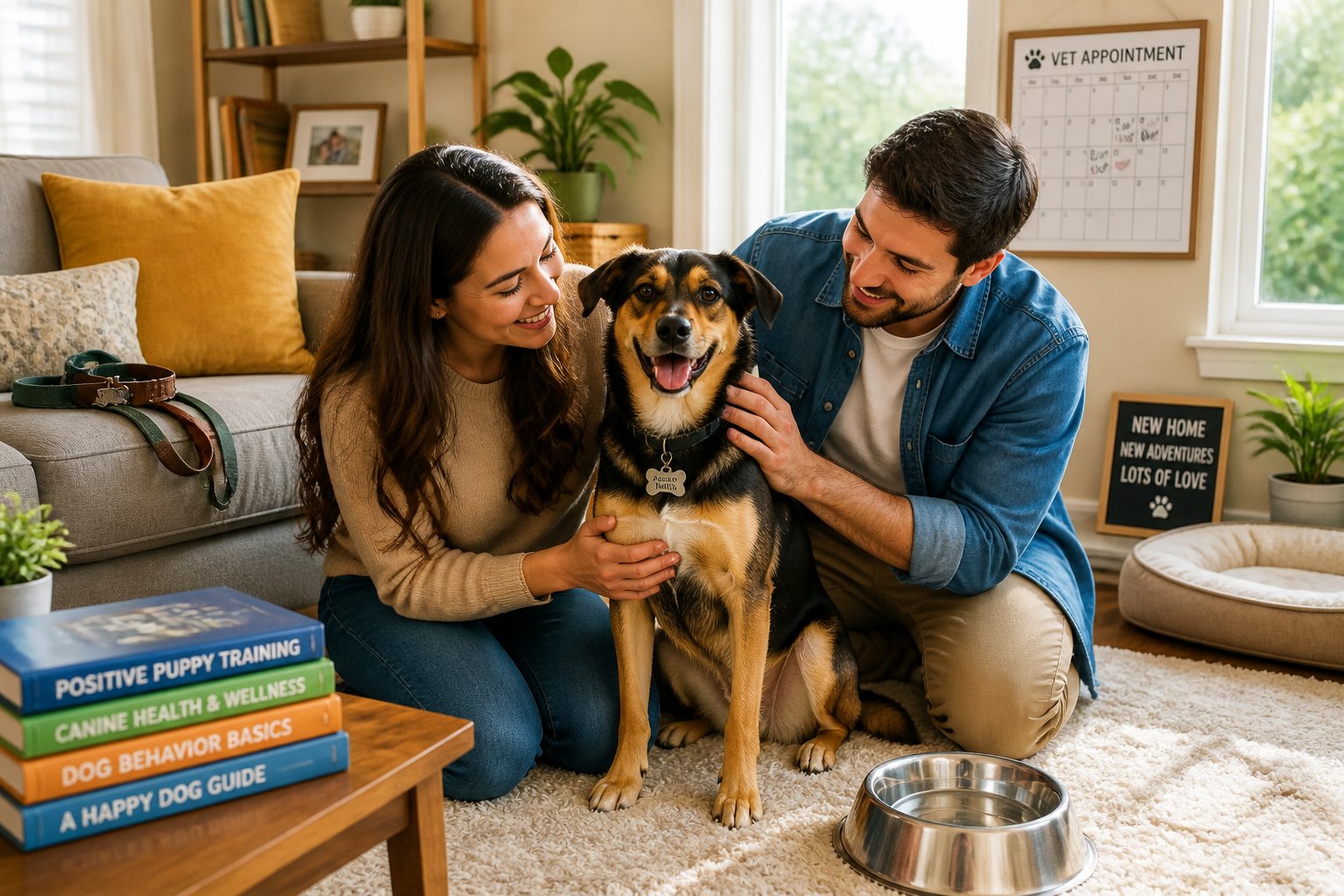
Getting an adopted dog checked by a vet within the first week helps catch any hidden health issues early. A careful diet change prevents stomach problems during an already stressful time.
Scheduling a Veterinary Visit
New dog owners should book a vet appointment within the first 7 days of bringing their adopted dog home. This early checkup establishes a health baseline and catches problems that shelters or rescues may have missed.
The vet will perform a complete physical exam, checking the dog’s teeth, ears, eyes, heart, and joints. They will review vaccination records and give any shots the dog needs. Most vets also test for parasites like heartworms, intestinal worms, and fleas during this visit.
Owners should bring any medical records from the shelter or rescue organization. They should write down questions about the dog’s behavior, eating habits, or any concerns they notice. This appointment is also the time to discuss spay or neuter procedures if the dog hasn’t had them yet.
The vet can recommend the right flea, tick, and heartworm prevention for the area. They will set up a schedule for future checkups and vaccinations.
Transitioning Diet Safely
Changing a dog’s food too quickly causes diarrhea, vomiting, and stomach pain. New owners should ask the shelter what food the dog has been eating and buy the same brand if possible.
The safest way to switch foods takes 7 to 10 days. Start by mixing 75% old food with 25% new food for the first 2-3 days. Then move to a 50-50 mix for another 2-3 days. Next, feed 25% old food with 75% new food. Finally, switch to 100% new food.
Owners should feed their adopted dog at the same times each day to create routine and stability. They need to watch the dog’s stool during the transition period and slow down the change if loose stools appear.
Frequently Asked Questions
New dog owners often have similar questions about the adjustment period, from managing the first week to understanding normal behavior changes. These answers address the most common concerns that arise during the first 30 days.
What should I do during the first week after adopting a rescue dog?
The first week requires patience and minimal expectations. Owners should create a quiet, safe space where the dog can decompress without pressure to socialize or explore the entire home. This means limiting visitors, keeping interactions calm, and avoiding overwhelming the dog with too much attention.
A consistent routine helps the dog understand what to expect each day. Owners should establish regular feeding times, bathroom breaks, and quiet periods. The dog may not eat much or seem interested in playing during these first few days, which is normal.
Short, supervised explorations of the home work better than giving full access immediately. Owners can gradually introduce new rooms and spaces as the dog shows signs of comfort. Keeping the dog on a leash indoors during the first few days can prevent accidents and help with supervision.
How does the 3-3-3 rule apply to a newly adopted dog’s adjustment period?
The 3-3-3 rule describes three phases of adjustment that many rescue dogs experience. The first three days involve decompression, where the dog feels overwhelmed and may not show their true personality. They might not eat normally, hide, or seem shut down during this time.
The next three weeks bring gradual settling as the dog starts to understand the household routine. They begin showing more of their real personality, both positive behaviors and potential challenges. This is when owners might see issues like separation anxiety or resource guarding emerge.
After three months, most dogs feel truly at home and have bonded with their family. They understand the rules and routines and display their full personality. Not every dog follows this exact timeline, but it provides a helpful framework for understanding the adjustment process.
What are common red flags to watch for when adopting or rehoming a dog?
Aggressive behavior toward people or other animals requires immediate attention. This includes snapping, lunging, growling with stiff body language, or biting. While some fear-based reactions are normal initially, escalating aggression needs professional evaluation from a trainer or behaviorist.
Health issues like persistent vomiting, diarrhea, lethargy, or loss of appetite beyond the first few days signal a problem. Owners should schedule a veterinary visit within the first week to establish baseline health and catch any issues early.
Extreme fear that doesn’t improve with patience and gentle encouragement may indicate deeper trauma. A dog that remains completely shut down, refuses to eat for several days, or shows panic responses to normal household activities needs professional help. These behaviors don’t necessarily mean rehoming is needed, but they require expert guidance.
How can I introduce a newly adopted dog to a resident dog safely?
The first meeting should happen on neutral territory like a park or quiet street, not inside the home. Both dogs should be on leashes with different handlers who can maintain control. They should walk parallel to each other at a distance, gradually getting closer if both dogs remain calm.
Owners should watch for relaxed body language, play bows, and loose wagging tails as positive signs. Stiff postures, fixed stares, raised hackles, or growling indicate the dogs need more distance. Multiple short meetings work better than one long interaction.
Once home, the resident dog should have access to their normal spaces first. The new dog can explore while the resident dog is in another room or outside. Feeding them in separate areas prevents food-related tension.
Supervision remains essential for at least two weeks, even if the dogs seem friendly. Owners should separate the dogs when they can’t actively watch them. Gates and crates allow the dogs to see each other while preventing unsupervised interaction.
Why might a newly adopted dog seem sad or withdrawn, and what is normal during the first month?
Withdrawal during the first few days reflects stress and confusion about the new environment. The dog doesn’t understand where they are, who these new people are, or what will happen next. This uncertainty often causes them to shut down emotionally as a coping mechanism.
Many dogs sleep excessively during the first week because stress is exhausting. They may hide in corners, under furniture, or in their crate. Limited interest in food, toys, or interaction is common and usually improves within a week.
The dog’s personality typically emerges gradually over the first month. What seems like sadness often transforms into curiosity and engagement as the dog realizes the home is safe. If the dog remains completely withdrawn after two weeks or shows signs of worsening depression, a veterinary check rules out medical issues.
What routines and boundaries should I set in the first 30 days to help a new dog settle in?
Feeding schedules should stay consistent, with meals at the same times each day. This predictability helps the dog feel secure and aids with house training since bathroom needs follow eating patterns. Owners should use the same food the shelter or previous owner provided, then gradually transition to new food if desired.
Potty breaks need a regular schedule based on the dog’s age and needs. Adult dogs typically need to go out first thing in the morning, after meals, after play sessions, and before bed. Taking the dog to the same spot and using a verbal cue helps them understand expectations.
House rules should be clear from day one. If the dog won’t be allowed on furniture long-term, owners shouldn’t allow it during the adjustment period. If certain rooms are off-limits, those boundaries need consistent enforcement. Everyone in the household must follow the same rules to avoid confusing the dog.
A daily routine that includes walks, feeding, play time, and rest periods helps the dog anticipate what comes next. This structure reduces anxiety and helps the dog understand their new life. The schedule doesn’t need to be rigid, but general consistency makes the transition smoother.